|
Proverbs 5:12 And you say, "How I have hated instruction! And my heart spurned reproof!"
Pride goes before a fall . . . into sexual sin. This entire chapter is a father's advice and counsel to his son. The issue which is being discussed is that of sexual immorality - with an emphasis on the adulterous and immoral woman. Toward the end of his instruction Solomon tells his sons that there will come a day when their adultery will be brought to light by God. When that day happens, we are told that the one who followed after these sins will not be truly repentant. Instead he will speak of how he hated all that teaching about adultery being sin. He ignored all that garbage that the Bible had to say about morals. He will say it even as his life is in shambled about him - due to his sexual immorality. The two words used in this verse are instructive to us about what our attitude becomes toward God's call for holy living. The first word is "sane" which means to hate. The word means to loathe, dislike, and even despise another, their actions or their words. Here the sexually immoral man hates the instruction of the Bible on sex. He also "spurns" reproof. The word for "spurn" is the Hebrew word "na'as" which means to revile, reject, and scorn. This word has the idea that the one doing this is very unhappy and angry as they do this. Thus when reproof comes their way - they can spew angry and unhappy words as they hate what they are hearing. I've had the unfortunate responsibility to confront people about sexual immorality - and have faced the vitriol that comes toward those who dare to speak against the spirit of this age, which fully embraces a full and free expression of sexuality without any limits. A quick look at the Biblical record of people who were given over to sexual immorality shows that they were very rebellious to the message of God's Word. Whether that was an appeal to the Law of God - or the appeal of one of God's prophets, they hated when they were rebuked. Just like this passage says, they spurned God's reproof and would not listen to the teachers God sent them. Sexual sin blinds us to the truth - and the further we go into it - the worse that blindness becomes. All that is visible is the desire for more that knaws at those who reject the morality God calls us to follow. God warns us in Romans chapter 1 that ignoring His commands concerning sexuality, (which are simply this - sex is only acceptable in a marriage relationship between a man and a woman - all other sexual activity - heterosexual immorality, monosexuality, or homosexuality are sin) ignoring them is sin. When we reject this - God gives us over to our sin - first in more bondage to fornication heterosexually - and eventually to homosexuality, as a sign that we are further being given over to our sin. What is a little frightening is that by the end of Romans - we have a society that has rejected pretty much all that God commands - and heartily approve of others who live as they do - rejecting God's way. There is a steady move away from God, away from listening to Him and His Word, and away from any kind of teachable mindset. A wise man sees far enough into a sexually immoral lifestyle to know that it will hurt him in many ways. We've seen from prior verses that health and relationships are destroyed by it. Now we see that one's relationship to truth is greatly harmed by it - as well as their relationship with the God Who gave His Word to us. Some think they can tinker with immorality without consequence to their relationship with God. After reading and looking at today's proverb - the wise man knows better, and instead submits himself to God's Word. The stakes are just too high to ignore what God says here.
0 Comments
Proverbs 29:22 An angry man stirs up strife, and a hot-tempered man abounds in transgression.
A man who flares his nostrils and who is easily filled with passionate anger about things is not going to be a godly or wise man. That is what today's proverb teaches us. Let's look at how anger that is not controlled by the Spirit of God can be a very dangerous thing in our lives. The "angry man" in this proverb is one who often flares his nostrils. That picture to the Hebrew was a picture of a man who often became angry. We read that this is not wise because such a man often stirs up strife. His easily angered temperament will be the source of much fighting. He will not be long suffering and patient. He will grumble and complain thereby stirring up strife and anger in others. This will lead to a situation where he seems to be constantly surrounded by others who are angry - or who have grievances against the ones he is angry with as well. There will be a controversy swirling about him that never seems to die down. Problems and broken relationships will be all around him as the proverbial pot is always being stirred. This man is likened to a "hot-tempered" man. His temperament is set so that it will boil over very easily. He becomes angry quickly - and that anger will lead to arguments and problems often. Contrary to this is the man surrendered to the Holy Spirit whose fruit is peace, patience, gentleness - and - self-control. Slights and problems roll off the Spirit filled man like water off a duck's back. He is a peacemaker and as such is known as one of the sons of God. King Saul had these bad traits in his life. He perceived a slight when the women sang that He had slain thousands and David ten thousands. Jealousy and envy bred anger in King Saul that boiled over in many angry and hot-tempered acts. He was well known for dealing with his anger not by patience and long-suffering, but by throwing spears. He threw them at David because of his jealousy. He threw them because he did not want to deal with his own sin - and came to hate David for how God was with him. He eventually threw them at his own son because he dared love and protect David. His hot-tempered ways led him to kill all the priests in the city of Nob because he raged against the priest seeking The Lord on David's behalf. His uncontrolled anger led him away from God and into abounding levels of transgression and sin. That is what our proverb warns against today. We are warned that an uncontrolled temper let loose in fits of anger will land us in an abundance of sin. If we are not careful we will wind up like Saul whom God would not answer - and whom God removed because of his sin. Patience is a virtue. It is a godly thing to be able to handle a slight - an insult - a perceived put down - and act graciously and godly - without a descent into a fit of anger. A wise man knows that it is not the estimation of men that matters - but the Word of God. Be careful therefore to learn graciousness, kindness, and the ability to be slow to anger. That is the heart of our God - and when we are filled with His Spirit and instructed by His Word - ours as well. Like a madman who throws Firebrands, arrows and death, So is the man who deceives his neighbor, And says, "Was I not joking?" Proverbs 26:18-19
I like to call this the, "Practical Jokes" proverb. That is because it describes what can happen when practical joking gets out of hand. Unfortunately, I've watched a few of these in my day and they can get ugly in a hurry. The proverb speaks to us of a certain madman. This guy is out of control. He is throwing three things in his insanity. The first is firebrands - which are akin to something like a flaming arrow. This crazy guy is also shooting regular arrows. The third thing he is dealing in is death. The first two are easy to understand, but this last one is a little more cryptic. I see the final thing in light of what happens due to the deception. He is throwing around these things that hurt physically - but he is also throwing something that hurts emotionally, relationally, and spiritually. He is throwing "death" - he is killing relationships and injuring people so that they are dead to him emotionally. His actions are hurting things and killing someone's ability to be around him - interact with him - and receive anything from him. So we see three pretty rough things going on here. All three are destructive and can cause great harm. The interesting thing is that since he is a madman - his aim may not be the best. From how this is stated, it seems as if a rather random pattern is being followed in how these things are being shot and thrown. Thus he will not hit everyone, but when he does, it is going to hurt badly. It might even kill someone. What could this be describing? Let's look, because the answer is given in verse 19. Verse 19 tells us that the comparison is to a man who deceives his neighbor - then tells him he was only joking. First of all we need to see that this man does these things to his neighbor. The term here implies more than just a casual relationship. Some passages imply a relationship as close as a close friend or even a lover. What he is doing to his neighbor is that he is "deceiving" him. The word here is "ramah" and it means to intentionally deal craftily with someone. Other ways it is used is to indicate lies, betrayal, crass jokes, and even pulling a trick on someone. That is definitely the case here in Proverbs 26:18-19. What is going on is that a trick or a crass joke is being played on a person by his neighbor, which is pretty much the definition of a practical joke. If we did not know the nature of this proverb through the word "ramah" - things become much clearer as we see that after this man deceives his neighbor - he eventually lets him know about it by saying, "Was I not joking?" There it is - a practical joke, pure and simple. But why is this such a strong statement? Is God adamantly opposed to all practical jokes? From what I read here I cannot say one way or the other. This is just a warning about consequences. A day is coming when the practical joker is going to play a joke on someone and it is going to blow up in his face. He is like that madman randomly shooting arrows. Most will fall relatively harmless to the ground. They won't hit any real target. But every once in a while he will strike something - actually someone. When that happens - problems are coming. In some cases real harm comes to someone in a practical joke. Somebody gets physically hurt - and at times it is a bad injury. In other situations the pain is much worse - because it is emotional and relational. I've actually watched relationships broken forever or for a long time because of a practical joke gone bad. These are very sad things to watch because the joke was meant to be funny (at least to the one doing it - and to everyone watching the person humiliated). But at times the humiliation breeds anger. That is why God warns us about it. In all honesty - when I consider that most practical jokes are done to humiliate someone - or at least to laugh at their expense - I think that a wise man should probably avoid them. He knows that such an action may result in an offended brother. And from other proverbs he knows that if this happens that brother will be very hard to win back. That is why the wise man decides against such actions. But before you think I am a 'stick in the mud' on this issue - you should know that I have been the mark of many practical jokes. How do I respond them? I laugh with those who did them . . . sometimes threaten retaliation . . . and usually end up forgetting them and thinking, "You got me good!" It is good to have a sense of humor - and an ability to laugh at yourself. Just remember that some won't - and when that happens - it's going to be bad - very bad. He who hates disguises it with his lips, But he lays up deceit in his heart. When he speaks graciously, do not believe him, for there are seven abominations in his heart. Though his hatred covers itself with guile, his wickedness will be revealed before the assembly. Proverbs 26:24-26
This proverb is about how people can hate you in their heart while all the time speaking what seem like pleasant words from their mouths. It has to do with deceitfulness, guile, and ultimately . . . wickedness. A wise man read these things and learns that just because someone is "for you" with their words does not mean that they are really with you in the end. There are some who speak wonderful words in public, but their feelings and their support in private is a wholly different matter. Most people do not speak openly about their hate of another. To do such a thing would immediately characterize them in a very negative light. It would also expose them in such a way that they would have no more influence with that individual - or with anyone who thinks favorable of them. Therefore it is better for the ungodly man to disguise his hatred. This, according to God's wisdom, is done with his lips. He speaks graciously of the one he hates, All this is done for the sake of appearance only. The whole time he speaks graciously and kindly of this man - he has quite another thing going on inside his heart. We are told that he is laying up deceit in his heart. He is deceiving others - and in some ways even deceiving himself. He hates the man he speaks kindly of - and considers him an enemy. We are warned that when we come to a man like this, we need to look into his heart. There is lying within his heart - and there are also abominations - 7 of them to be exact. What are these abominations? There are a couple of possibilities. Jesus spoike of seven woes in Matthew 23. These were curses on the Pharisees and Saducees for the hypocrisy that they practiced. Here we have a man who hates his friend or acquaintence, being the picture of hypocrisy by speaking well of him and yet hating him in his heart. The seven thing Jesus speaks of may be similar to the abominations in this man's heart. This also may be related to the seven things God says He hates in Proverbs 6:16-19. The list here is full of things God absolutely despises. The way I lean on this is that the number seven used here speaks more of perfection. There is a perfect hate - that leads to a perfectly abominable attitude and heart filled with evil and hypocritical actions and thoughts toward this one who is hated. The warning here I think is twofold. First of all, don't be a man like this. Don't be someone who speaks hypocritically of another - saying positive, gracious things about them while all the while holding hatred and wicked, abominable thoughts and plans in your heart. To live this way is so harmful to our spirit. It is also to embrace attitudes that are completely foreign to Almighty God and those who are transformed by the Holy Spirit to be more like Christ daily. The second lesson for us is learned as we hear a warning from God. Such a man as this will be exposed in the end. His hypocrisy and his falsehood will be revealed. The assmbly will see the duplicity of this man - for God Himself will expose him in the end. Consider this one example as we draw our thoughts about this proverb to a close. Judas was the ultimate example of this proverb. He was with Jesus for three years - and yet in the end sold him for a slave's price as he betrayed the Lord. During that time Judas never exposed himself publicly as an enemy of Christ. Even his betrayal was false as he betrayed the Son of God with a kiss. He was unwilling for his heart of hatred and greed to be exposed publically - and yet it was exposed. In the gospels we learn that Judas was a thief who stole money out of their money box. He was a man who criticized the beautiful expression of Mary's love when she anointed the Lord's feet with her perfumed oil worth a year's wages. Judas spoke only because he knew such a stash would have netted him so much more money he could embezzle later. God fully exposed Judas' hypocrisy - revealing in the gospels all the lies, deceit, and guile that he hid for three years. In the end he was exposed - showing both his hypocrisy and his horrific end - hanging from a tree dead and hopeless. Do not be a betrayer - a liar - and a fraud in your friendships. Speak the truth - and if it is hard truth to hear - speak it in love. Don't hide things by sounding one way with your friend - and a wholly different way when you are not physically with him. This is a lifestyle that God calls an abomination. Be a true friend - an honest one - and one who is the same whether seen or unseen. Such a friend is like The Lord. He who digs a pit will fall into it, And he who rolls a stone, it will come back on him. Proverbs 26:27
This is not a proverb that explains why bad things happen to Wylie Coyote - even though at first glance it might. It is actually about those who plan to do evil to others. Those who set traps to catch others and have bad things happen to them are warned in this proverb that what they do will eventually happen to them. Let's take a look at what this means - and also see an example or two. Those who dig a pit do so to catch someone in it. In biblical times people would dig pits and cover them for the purpose of catching more than just animals who would fall into them. These pits would be dug and covered with camouflage as well as wetted down on the sides so that whoever was caught in them would not have opportunity to escape. Those who caught the person would then either take them captive as a slave - or kill the one who fell into the pit. The reason a stone would be rolled is to be put on a steep hill so that it could then be rolled down to kill or badly injure someone who was coming through the valley. This was a tactic of thieves who wanted to steal what travellers would have as they went through valleys and along roads that were next to hilly or mountainous areas. The idea with a pit or with a stone was to injure or kill someone for evil purposes. God warns that those who do such things will fall into a pit themselves. God also warns that the stone that is rolled with come back on them. This is not a reference to an actual pit or an actual stone rolling on them - but was a warning that God was going to hold them responsible for their wicked actions. A good example of this would be the story of Joseph and his brothers. The brothers threw Joseph into a pit with the original intention of killing him because of their jealous hatred of him. Joseph and his stinking varicolored coat reminded them every day that their father loved him more than them - so why not teach the little runt a lesson. Of course killing your brother is a little intense. In the end they decided just to sell him into lifelong slavery (their sibling rivalry was way more intense that what I remember with my brothers). They covered their tracks by dipping the hated coat in blood and telling their father that a wild animal killed Joseph. But the pit they dug - and the rock they rolled was going to come back on them one day. The first "pit-experience" was when their father almost died from grief. Then there was the famine that came and caused them to have to go to Egypt where they had to ask for food from . . . wait for it . . . their snotty little brother who was now the second ruler of Egypt. What was very good for them was that their brother had far more mercy on them in their pit that they had on him when he was in theirs. They had rolled their stone on him - but he refused to roll his on them. He chose forgiveness rather than revenge. The varied pits that you can fall into are as numerous as the ones you dig for others. It is amazing as I grow older to see all the various pits that people have fallen into after they've dug ones for someone else. It is a fact of life that what goes around comes around. That is the simple, one-sentence way to define this particular proverb. I just hope that we all remember that the next time we grab our shovels and start digging for someone else. It is better to live in a corner of the roof Than in a house shared with a contentious woman. Proverbs 25:24
I find it interesting that a man who had hundreds of wives - felt the need to comment identically on the contentious and quarrelsome ones. This is almost an exact repeat of a previous proverb in chapter 21, verse 9. What Solomon has to say about this is pretty severe. To live on a corner of a roof would be very uncomfortable in Israel. The houses of that time had flat roofs - and Scripture required them to build a wall around the top so that people would not fall off of them. Often they would have a set of stairs on the side of the home that led to the top of the house. But to live there would be very uncomfortable. In the summer months the roof would be unbearably hot with the sun beating down upon the poor man's brow. In the winter, or the rainy season, it would be wet and cold there. Yet Solomon states that this would be better than to be in even a palace with a contentious woman. It might be good for us to see what a "contentious" woman looks like - or better acts like. The word used here is "madon" and its basic meaning is strife or dissension. It refers to a quarrel or dispute that is so filled with anger and bitterness that it cannot be stopped once it starts. That is why Proverbs 17:14 counsels us to abandon such a disupute before it breaks out. But the contetious woman knows no such self-restraint. Her pride and unwillingness to submit to God results in her not only entering into disputes - but even engineering and starting them. This same word is used in Proverbs 18:19 to speak of how strife creates strong barriers between people. The contentious woman doesn't care about this because her heart is already bitter and filled with resentment. Rather than avoid conflicts that result in relational barriers - she fights from hers and builds it higher. A few other verses that use this word indicate to us the following: 1) This kind of contention spreads to other people (Proverbs 6:14, 19), 2) it comes from someone who is hot-tempered and given to fits of anger (Proverbs 15:18), and 3) it is stirred by hatred which is lodged in this woman's heart - which is why she rejects loving, selfless responses and chooses her rage instead (PRoverbs 10:12). What an terrible picture is painted of this contentious woman who loves and embraces anger, bitterness, and loveless rage. Now you might understand why this guy wants to live on the edge of his roof. He chooses this rather than to be in a house with this lady. Life is miserable for him - and he would choose misery among the elements than even a few moments with this train-wreck of a woman. But, honestly for Solomon, such a situation wasn't exactly prevented by having so many wives and so many concubines. Living among that many women vying for the affection of one very selfish, sexually out of control man, could not have been a picnic. This is why the second reference to this circumstance should be used for wisdom in two ways for us. First - be careful not to marry a bitter woman who overflows with resentment and anger. Second - don't create one either by being a man who is unwise in how he approaches the marriage covenant. Be faithful to one woman in your lifetime. And love her in such a way that she will not ever have the problem of being a contentious wife. 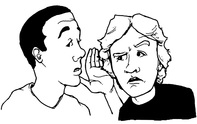 The north wind brings forth rain, And a backbiting tongue, an angry countenance. Proverbs 25:23
A wise man does not participate in backbiting or gossip. It is a very destructive thing when we do. Therefore a wise man does everything he can to make it very clear that he will not participate in it. That is what God wants to give us wisdom about in today's proverb of the day. This particular proverb creates a problem for us - in that in Israel the north wind does not bring rain. It is the southeastern winds that do that task. Some think that because of this that this proverb may be one Solomon learned from Egypt, because that particular area does have rain originate out of the north wind. Regardless of which geographic region this proverb originated, the fact is that when the wind blew from the north in this region, it brought with it clouds and rain. The one thing that is accepted by just about every commentator is that this cloudiness and stormy weather promised by the north wind is compared to the stormy, angry countenance that should be given to someone who is about to begin gossiping about someone else. The phrase, "a backbiting tongue" comes from the Hebrew word "seter" which means a covering or a secret hiding place. The idea it brings with it is that of secrecy. The problem with this word is that the one speaking is wanting secrecy only from one person - the one about whom he is talking. He is more than willing to talk about them - he just is not willing to talk TO them. This is the problem with gossip and backbiting (or secret talking). The one doint it is usually unwilling to make his complaint public where the other person can either answer or repent and initiate change. No such grace is extended to the focus of the gossip. The desire is not to help them - or to see them delivered from some sin or fault. The desire is to destroy the person. They are denigrated in the eyes of others. Since this is done behind their back - there is no way they can change. On top of all this - the people who hear about the gossiped-one's faults - are usually being turned against him. Thus the one who is the subject of the gossip is doubly damaged. First he is not being confronted about whatever sin led to the gossip - and second, he is being isolated by the gossip. In the end he or she is hated and shunned - which is what the gossip had as their goal in the first place. Most gossip is either started or continued due to a bitterness or lack of forgiveness of the one about whom they are gossipping. That is why this is such a wicked sin. How do you stop a gossip from pouring their poison into your soul? This passage tells you how. Just like a cold north wind brought clouds and rain into the area from which this proverb arose, so also an angry countenance brings a stop to the gossip and backbiting. This is not a brief glance, or a telling look. The word here in the Hebrew is "zaam" and it means to be indignant and enraged. The root word literally means to "foam at the mouth." So this is no quick glance - it is a look that says, "Stop this now!" That is how to do it. There is no real gracious way to deal with a gossip - except to be indignant that they would include you in their wicked work. That is accomplished by giving them a very angry look that says in effect, "Not with me, bro!" A wise man is a peacemaker - not a gossip. His desire is healing and grace - not to gather a group against someone with whom he has a gripe. Such things are to be dealt with face to face with the one with whom you have the problem. Oh, how much would be healed in the church this way. Oh, the damage that would be prevented by walking in such grace and loving truth with each other. But because such wisdom is ignored, relationships are destroyed, friendships and ended, and even churches are split. That is why whenever gossip comes to knock at the door of your soul, you should answer with an angry, enraged countenance that says, "No way! Don't bring that junk in here!" Do not associate with a man given to anger; Or go with a hot-tempered man, Or you will learn his ways And find a snare for yourself. Proverbs 22:24-25
Having angry friends will eventually train you to be an angry man. That is the gist of today's proverb. The statement, "do not associate" speaks of friendship. It speaks of those with whom we have close relationships. We are to avoid thos who are "given to anger" - meaning those who give themselves over to their anger. They do not control their anger - their anger controls them. If we wonder what a man given to anger looks like, we receive a little better description of him immediately afterward. He is referred to as a "hot-tempered man." The Hebrew here is very descriptive - referring to this man as a "hot-headed" man. The picture is of the angry man who becomes red in the face as he blows his top. We've all seen that before and need no further description to know about what the Bible is speaking. The reason why we are not to have a friend who has serious anger problems is because of the principle of friendship. Here is the old west version of this principle Those we hang with may be the reason we are being hanged. In modern terms this principle is simply this. We will learn the behavior of our friends. The Bible puts it this way, "Do not be deceived, bad company corrupts good morals." (1 Corinthians 15:33) Therefore if we become close friends with a red-faced man - we will eventually be like him. We will learn his ways. The end of this is even more problematic. We will, through this situation, find a snare for ourselves. The snare mentioned here is that we ourselves will become a "red-faced man." The anger that is in our close associate - will begin to manifest itself in our lives. Just a few days ago I was listening to a message by pastor Ken Graves and he made a devastatingly true comment about those who say that they have an "anger problem." Pastor Graves stated, "You don't have an anger problem, you have a self-love problem." That is a crushing thing to grasp when God first reveals it to you. Of course, this is only true because we pamper ourselves and justify our anger. We don't like it when people treat us badly - because we love ourselves so dearly. People should realize that we are worthy of far better treatment. If they just knew how truly awesome we are - like we know ourselves to be awesome - they'd treat us much better. Therefore we are justified in our anger - because a truly awesome person is being wronged! There, dear brothers, is the snare. The snare is not anger itself - but the self-love that perpetuates it. God commands us to be angry - but not sin - and not to let the sun go down on our anger. There are truly righteous reasons to be angry (and none of them involve a love of self). Jesus was angry when He cleansed the temple courts. His anger was a righteous indignation that His Father's glory was being denigrated by making the place of worship and prayer a den of thieves. But other times Jesus was insulted, called terrible names, and even beaten and crucified - and did not react angrily. Maybe we should associate with Him and learn His ways? The Word tells us that if we take His yoke upon us and learn of His ways - we will find peace for our souls. God's promise is that as we behold as in a mirror the glory of the Lord - we will be changed into that same image from glory to glory. Our character will truly reflect the glory of Jesus temperment. We will be changed from "red-faced" men to being "glory-faced' men. It is better to live in a desert land Than with a contentious and vexing woman. Proverbs 21:19
Here we have a proverb about making a wise choice of our mate - or more specifically the wise choice of the right kind of wife. We see two words used to describe the wrong kind of woman, as well as one phrase used to describe what we will want to do if we choose one like this. The first word used to describe a woman to avoid is the word contentious. This is the Hebrew word "madon" and it means one who is filled with strife and contention. This is a person always ready for a quarrel or dispute. These things come from a heart that is not right with God and a temper that is not under control. The man who marries such a woman will find that this contention, quarrelling, and strife will fill his home. There will always seem to be a problem - and that problem will lead to arguments and strong contentions. The home itself will not be a refuge - but a fight club. The second word used here is the word vexing. This is the Hebrew word "kaas" which means vexation. This is a word we seldom use any longer - but it means to provoke someone to anger. The wrong kind of wife is one who herself is angry - and who seems to have as a goal provoking everyone else to anger as well. She is ready for a fight, which we get from the previous word - and she delights in being angry. What a difficult life this would lead to for the man who marries such a woman. God then warns us what will happen if we marry such a woman. We will not enjoy living in our home. In fact we would choose to live in the wilderness than stay there. The stated New Testament purpose for a godly woman is to create a good home in which her husband and children can live. But when a woman is angry, bitter, and itching for a fight, such a home will not be possible. Her husband and family will prefer living in an inhospitible wilderness than that house - because the wilderness would seem far more hospitable than being with that woman in that house. What a warning to us to choose our mates wisely. It is also a warning to go beyond how a woman looks to how well kept her heart is. Beauty will pass - and the vanity of looks will one day give way to the attractiveness of one's heart. In that day a man will know that it was a wise thing that he sought first a woman who feared God than a woman who was a physical beauty alone. Beauty is skin deep - but the ugliness of a wicked heart will torture for a lifetime. He who assaults his father and drives his mother away Is a shameful and disgraceful son.
Proverbs 19:26 Here we have a proverb that is very strong in what it says. We have a son who is assaulting his dad - and driving his mother away from him. This is very strong language - so strong that many of us could not imagine a young man doing something like this. Yet this proverb is given as a warning to both the son who would act this way - and the parents who would rear such a child who chooses such things. This young man "assualts" his father. The Heberw word here is "sadad" and it means to destroy and ravage, to oppress and assualt, to spoil and lay waste or devastate. I find it interesting that the NASB chose the word assault because it speaks more of the physical idea expressed in this word -rather than how other translastions use the words, "do violence" or "wasteth." Regardless, there is a violent reaction in this son toward his father. He does not like him -and the biblical concept of honoring him is completely absent in his attitude and actions. Mattoon uses this definition in his commentary on this passage, "The word "wasteth" is from the Hebrew word shadad {shaw-dad'}. This word means "to deal violently with, devastate, ruin, destroy, spoil, assault, or utterly ruin." (Treasures from Proverbs, Vol. 1, Mattoon). Mattoon gives the idea that there is not just violence here - but a lifestyle that devastates and ruins a father. There are many sons whose lifestyles ruin their parents. Some do it through drugs, while others have run ins with the law that bankrupts their parents. Others live ungodly and immoral lives that ruin the family name. Whatever it is - the son who does this is a shameful and disgraceful young man. Not only does this young man act ungodly toward his father - he also "drives his mother away" too. He lives in a way that is so ungodly that it literally drives his mother away from him. He chases her away - making her want to run from her own child. This is such a shameful and disgraceful lifestyle because the statement is true that mothers will stick with you longer than anyone else. Your mother's love is pretty much the last thing you can lose in life. If you run her off - you've pretty much gone as low as you can go. There is also another way that this passage can be understood - and it has to do with the wicked doctrine of Dr. Freud and his disgusting psychological babble that has done much to destroy our families. Dr. Freud has gotten the reputation of blaming everything in our lives on our parents. Thus we have a couple of generations which he has spoiled with his ignorant philosophy of blaming everything on mom and dad. We even have Christian counsellors who instruct their clients that they should have a hatred for their parents who have messed them up in their lives. What is the fruit of such counselling? It is a generation more spoiled than any we can remember in the history of our nation. We have a generation of children who have no honor or respect for their parents. The fruit of that is that we are now rearing generation after generation in this self-destructive pattern. It leads only to more and more shamfeul and disgraceful sons and daughters. God intends for us to honor father and mother. It is not a suggestion, it is a command. The generation that ignores this command will not do well. The promise of God is that when we honor our parents it will go well with us and that we will live long in the land God gives us. I know this proverb looks like it speaks only to physical violence (which if you watch the news is far more prevelent than one would want) but there is a verbal violence toward parents today that needs to be abandoned. I am not saying that our parents were perfect - but most of us should wake up to how good we had it with loving ones. Maybe we can look at the dearth of this promise in the last several generations - (i.e. things are NOT going well - we are NOT living long in this land) and stop the madness of being so disrespectful and dismissive of our parents. Then maybe we can stop the next generation from being even more shameful and disgraceful as the one before us today. |
 Proverb a DayEach day, we'll take a look at a verse from the chapter of Proverbs for the day. Our hope is to gain wisdom each day - and from that wisdom - to have understanding to make godly decisions in the throes of everyday life. 
Thank you for visiting our website! Everything on this site is offered for free. If, however, you would like to make a donation to help pay for its continued presence on the internet, you can do that by clicking here. The only thing we ask is that you give first to the local church you attend. Thank you!
Archives
August 2018
|
 RSS Feed