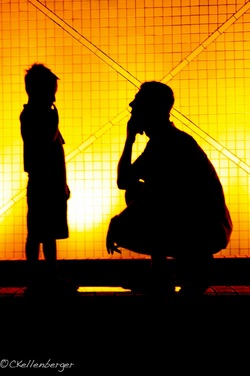
 Proverbs 29:17 Correct your son and he will give you comfort; He will also delight your soul.
It is a common error for parents to think that if they discipline their children, they will not like them later in life. This is especially the case when at the time of the discipline the child makes a comment to the effect that they hate you. Another winner at this juncture is when a child announces in overdramatic fashion that you are ruining their life. Let me assure you from having reared 6 children of all personality types - when you discipline them you are not ruining their lives. What you are doing is insuring that at a later date you will find comfort and delight in a child who knows how to control himself and make wise choices. Correcting your son involves discipline. The word here is "yasar" and it means to discipline, chasten, instruct, teach, and even punish. This process of correction therefore takes into account all the aspects of rearing a child. It means so much more than just spanking or punishing a child when they do wrong. It involves instructing and teaching them even as you chasten and punish them. It is not enough to tell a child something is bad - you have to eventually explain why something is bad or a wrong choice. When you do this, you take the time to encourage them toward godly, right behavior. When you rear a child in this fashion you will find that your son gives you two wonderful things. First, we are told that he gives us "comfort." The word here means to give someone a sense of rest and repose. It can also mean a rest in the way you feel when you are satisfied with something. A well-disciplined child, although a chore during the process, will give a parent rest as they make godly, wise choices later in life. I know from a little experience and from helping others that when a child makes unwise choices - it can rob you of any sense of rest or relaxation. Some parents seem to spend a majority of their latter years rescuing a child from one disaster after another. That is not rest! The second blessing that comes to parents who correct their children is delight. The Hebrew word here is "ma'aden" and it means something of beauty or when referring to food, something that tastes wonderful. One of the blessings that I have is that of thoroughly enjoying my children. We have 6 of them - and they are a delight to the soul of their mother and father. When they visit we speak deeply of spiritual things - and we have a blast together - often laughing and enjoying each other's company. That is what is promised here. Now just a word in closing on this proverb. The delight often comes later in life - because rearing a child is a full contact sport! There were many times when we struggled to know what to do - and how to deal with rebellion in our children. There were times when my wife and I were dropped to our knees in broken-hearted prayer on their behalf. We both know that the reason they are godly today is because of God's grace and mercy - not our wonderful, book worthy parenting. So do not lose heart if at first you read this and wonder about such words as comfort and delight. That comes after you've spent 15-20 years of work together rearing them - praying for them - and often wondering what may become of them. That part is the "correcting" phase. It is not always delightful - but is very useful to God not only to bless your children - but to drop you to your knees for a few times of God's work in you as well. POSTSCRIPT: Recently, individuals have quoted articles from this section and stated that we teach child abuse at Calvary Chapel Jonesboro. To this I feel the need to respond. First, biblically, we are told that if we have a problem with our brother to go to our brother - not the internet - and confront our brother. To date, these individuals have yet to contact me to discuss these things. That should say volumes in itself. Second, we do not teach child abuse at our fellowship. This blog is an endeavor to teach what is in the Bible for the edification and upbuilding of God's people. Anyone who has been to our fellowship knows that in our classrooms we administer NO physical discipline. We correct with words and with "time outs" and eventually with a report to parents. From our nursery throughout every age group our people are instructed NEVER to administer physical discipline. We believe this right alone belongs to a parent. Even then we teach the following about any application of physical discipline. Discipline is about the heart of a child. Physical or corporal punishment is ONLY to be administered in a spirit of love for the child. Teaching and loving verbal correction is key - as is prayer for the child's eventual salvation in Jesus Christ. Any physical punishment administered due to anger or rage is out of line and wrong. The parent is to discipline the child with appropriate discipline - not abuse. In the end the child should be taught - and in every circumstance hugged, loved, and prayed with after any physical punishment to assure them of our love. The idea of a "beating" is completely out of step with what the Scriptures are teaching. Instead the idea of loving discipline is intended.
1 Comment
Proverbs 29:15 The rod and reproof give wisdom, but a child who gets his own way brings shame to his mother.
I find it an interesting thing to listen to the "child-rearing" experts argue in our day. I include in this those who speak for and against the idea of spanking or corporal punishment for a child. This proverb answers both groups with wisdom. Let me address both groups with what is taught in this passage. First, let me address those who say that any kind of spanking is wrong. Some even assert that this is child abuse. This runs up against the Scriptures which here teach us that we are to use the rod and reproof with a child to train them up in the way that they should go. Note it says the rod and reproof. The reason I draw your attention to this is because is lists both. There are some who assert that the "rod" is meant to be the rod of one's mouth - or - their words. That doesn't work for two reasons. First of all the rod of our mouth is as least a stretch for how the Scriptures address this instrument that is used for the purpose of punishment and instruction. This rod was usually either a stalk of bamboo that was cut into a two to three foot long rod. There were also small limbs of trees (usually of a flexible type) that were stripped of all other branches and used for the purpose of administering discipline. The other problem is that there are other passages in Proverbs that speak of striking the child with the rod. It is foreign to the Scriptures to have a child-rearing discipline that is without the use of corporal punishment. It was used to administer a controlled amount of pain to be associated with disobedience to deter a child from continuing in a type of behavior. It was not ever meant to be abusive or excessive - it was meant to be instructive. This is where many who "spank" need to be addressed by this passage as well. Unfortunately there are some who represent "spanking" as the administering of rod - and that alone. I've heard some adults say things like this, "My parents beat me - and that was good enough for me." This gives the impression that all that is done is spanking. That is foreign to the Bible too. Note that the passage says the rod and reproof are used. This means that not only is corporal punishment used - but instruction as well. The child is taught that certain behaviors are not appropriate. They are wrong - and as such are foolish. If we spank "only" and do not take the time to instruct our children - they will grow up wanting to avoid "bad behavior" because of an aversion to the pain it may cause - but they do not understand anything except to avoid the pain. There is a higher purpose behind good parenting under God. The important thing to note here is that the rod and reproof give wisdom. The purpose here is for a child to learn to be wise. Too often any form of parental discipline is done because children are annoying and interrupting a parent. That is NOT good child-rearing! We want to teach our children to be wise as they learn to view all things from God's perspective (the basic definition of wisdom). They are "spanked" to help turn them from foolish, sinful, wicked behavior. But as they are disciplined - they are pointed to God's way, which is infinitely superior. And even as discipline is applied they need to be taught the gospel. Oh that we would not miss this vital thing in discipling our children. All things point to the gospel of Jesus Christ. As we rear them to be good kids - we must not see this as the end because we can NEVER make them good enough to stand before God. That is why as we are instructing them to obey our commandments, we must teach them that God's commandments and Law are infinitely higher and MUST be obeyed. We must instruct them that their disobedience to us is proof that they are sinful and fallen. This helps them to see that their sinfulness is ultimately against God, Whom they have chosen to disobey. Disobedience to us must be punished, but there is a much higher punishment for disobedience to God's Law. Even in discipline we show them mercy, love, and grace - so that they can see that even greater is God's mercy, love and grace shown in the gospel. Then let them know the most important truth. Tell them that there is One Who came to pay the ultimate price of their disobedience before God. That One is Jesus Christ Who died on the cross to pay the price of their rebellion and make them right with God. Oh, dear parents - even in discipline we need to point to the gospel! Tomorrow, I'll finish commenting on this particular proverb. The reason for this is that I do not want to casually glance over the shot fired across the bow of motherhood here. God is not beating up on mothers with what He says. Much to the contrary - He is speaking of their importance. More on that tomorrow. It is my hope that what today's proverb has taught you is the importance of fighting the right battle when it comes to corporal punishment of children. Some want to make it all about spanking or not spanking. God does not place the importance of what He is saying here about such things. He is seeking to have godly parents focus on teaching and training their children to be wise. He wants the foolishness of a fallen child to be countered - first by the discipline of parents - and then ultimately by the gospel. POSTSCRIPT: Recently, individuals have quoted this article and stated that we teach child abuse at Calvary Chapel Jonesboro. To this I feel the need to respond. First, biblically, we are told that if we have a problem with our brother to go to our brother - not the Internet - and confront our brother. To date, these individuals have yet to contact me to discuss these things. That should say volumes in itself. Second, we do not teach child abuse at our fellowship. This blog is an endeavor to teach what is in the Bible for the edification and up building of God's people. Anyone who has been to our fellowship knows that in our classrooms we administer NO physical discipline. We correct with words and with "time outs" and eventually with a report to parents. From our nursery throughout every age group our people are instructed NEVER to administer physical discipline. We believe this right alone belongs to a parent. Even then we teach the following about any application of physical discipline. Discipline is about the heart of a child. Physical or corporal punishment is ONLY to be administered in a spirit of love for the child. Teaching and loving verbal correction is key - as is prayer for the child's eventual salvation in Jesus Christ. Any physical punishment administered due to anger or rage is out of line and wrong. The parent is to discipline the child with appropriate discipline - not abuse. In the end the child should be taught - and in every circumstance hugged, loved, and prayed with after any physical punishment to assure them of our love. The idea of a "beating" is completely out of step with what the Scriptures are teaching. Instead the idea of loving discipline is intended. Stripes that wound scour away evil, And strokes reach the innermost parts. Proverbs 20:30
Physical punishment . . . here is a topic that brings out the most strident opposition in a lot of people. When it refers to children some call it child abuse - and when it comes to the punishment of those who break the law the phrase "cruel and unusual punishment" is used. So what exactly is God's take on the idea of corporal punishment and some kind of physical response to disobedience and criminal activity? There are two levels to understand this Proverb - that of the physical and the responsibility of parents and the state - and a purely spiritual level and how it relates to our growth in a relationship with the Lord. I'll begin with what is being addressed most clearly here - which is the response of parents and governing officials to disobedience and crime. Our justice system has turned away from the biblical view of crime and punishment. We try to rehabilitate criminals without thought that they need to acknowledge that they've stepped over a very serious line in their behavior. The results are not encouraging at all. We have overcrowded jails and prisons where repeat offenders abound. We've gotten to the point where we have more people interested in the rights of the criminals than in the rights of those they infringed upon with their godless behavior. Our prisons therefore have revolving doors on them - and with the present focus, there are few who are rehabilitated while incarcerated. Put our current record next to one of a modern state that practices physical punishment for a crime. Several years ago a young American citizen was arrested from a crime in one of these states. He was convicted and sentenced to a caning. People in the United States, especially among liberals, went ballistic. Yet the facts should be viewed without all the hysteria. Their crime rates are much lower than ours. What they see currently and have seen in the past is that truly stripes and strokes do scour away evil in the heart. They do reach the innermost parts of a person. They are a very powerful deterrent to crime and disobedience. The spiritual level is little diffeerent. God disciplines those He loves and, according to Hebrews 12, He scourges every son He accepts. How does God deal with His own children? He disciplines them with scourgings - stripes and strokes that scour away the evil of our hearts and make us think twice about being disobedient again. We are fallen beings and have a sad tendency to ignore God and His commandments and turn instead to what our flesh cries out for constantly. The way God deals with this is to bring us into discipline. Anyone who has ever experienced this discipline knows that it is stern but loving. There is no doubt that God loves us when He disciplines us - but He is dead serious about it too. He knows what is at stake - and is wanting to deter us from walking in rebellion and sin. These things will hurt us - and in some cases even destroy us - therefore He takes it very seriously a trip to the proverbial spiritual woodshed. But do not ever be mistaken . . . God does these things because He loves us. The same should be said for parents and for a society that crafts effective physical punsihments for those who break the law. Physical punishment and corporal punishment may be unpopular with the liberal elements of our society - but in all honesty, they are wrong. Yes there need to be limits put in place - there needs to be a humane way to practice the death penalty - and there should be wisdom in a parents administration of discipline. Yet there also should be a full acknowledgement that the sinful nature of man will not respond to a call to reform alone. It is in the best interests of a family - and indeed a society to practice physical and corporal punishment. How do we know? The Word of God informs us. POSTSCRIPT: Recently, individuals have quoted this article and stated that we teach child abuse at Calvary Chapel Jonesboro. To this I feel the need to respond. First, biblically, we are told that if we have a problem with our brother to go to our brother - not the internet - and confront our brother. To date, these individuals have yet to contact me to discuss these things. That should say volumes in itself. Second, we do not teach child abuse at our fellowship. This blog is an endeavor to teach what is in the Bible for the edification and upbuilding of God's people. Anyone who has been to our fellowship knows that in our classrooms we administer NO physical discipline. We correct with words and with "time outs" and eventually with a report to parents. From our nursery throughout every age group our people are instructed NEVER to administer physical discipline. We believe this right alone belongs to a parent. Even then we teach the following about any application of physical discipline. Discipline is about the heart of a child. Physical or corporal punishment is ONLY to be administered in a spirit of love for the child. Teaching and loving verbal correction is key - as is prayer for the child's eventual salvation in Jesus Christ. Any physical punishment administered due to anger or rage is out of line and wrong. The parent is to discipline the child with appropriate discipline - not abuse. In the end the child should be taught - and in every circumstance hugged, loved, and prayed with after any physical punishment to assure them of our love. The idea of a "beating" is completely out of step with what the Scriptures are teaching. Instead the idea of loving discipline is intended. Judgments are prepared for scoffers, and blows for the back of fools. Proverbs 19:29
The New Testament reminds us in Romans that if we obey the Law, we will have no fear of judgment or punishment. Thus, the man who is driving the speed limit does not have his heart jump when he sees the speed trap too late on the highway. He has no fear of being caught doing anything wrong - because he's not doing anything wrong. But the scoffer who has no regard for the Law - who actually mocks it and speaks out against it - he has no such peace. The fool who is ignorant of the law and who loves his folly and sin - he too will know no such peace. We are reminded that judgments are prepared for the scoffers. This refers to the Word of God. The fact that many miss is that God has already pronounced His judgments on those who scoff at His Word. He has given His commandments and also offered His warnings to those who ignore them - and who indeed ignore Him. There is no lack of passages in Scripture to remind us that God will judge the wicked - and that those who reject Jesus Christ face a terrifying specter of God's unreserved wrath. Therefore, if you are a scoffer, you can know exactly what you will get from God for your scoffing. We are also reminded that there are blows for the backs of fools. The fool is the one who enjoys his folly - and ignores God's Word. He loves his foolishness and will not turn away from it. He has no use for anything that restrains what he wants - what His flesh cries out for each moment of each day. Thus the only way to reach this one and turn him from his way is by blows to the back. This brings howls of protest from those who think any kind of punitive action that involves physical striking as punishment is evil. But the facts tend to speak for themselves. Countries that bring quick judgment to bear on those who disobey the law - are also countries that do not have an abundance of lawless behavior in their country. A few years ago a young man was caned in Singapore for breaking their law. Our nation was horrified as they considered what was about to happen. But the facts in Singapore stand on their own. The type of lawlessness this young American man embraced was almost non-existent in their culture. Their culture is this way because people see the cost of their actions - in literal blows that will come to them. Therefore they stay away from such behaviors. The cries that such laws and actions increase violence are not founded in fact. The violent societies are those who refuse to bring blows upon the backs of the fools who violate their laws. There is actually LESS violence in societies who punish with physical blows. There is a very real deterrent when you are facing real consequences for your actions. Our nation has become obsessed with the rights of criminals. We are so concerned about possibly infringing upon their rights that we have forgotten the victims of their actions. In our march toward perfect justice (which does not exist) we have committed the greatest injustice to those injured by scoffers and fools. What needs to happen is for our nation to return to the principles of true justice and righteousness. This will also require us to return to judgments that make a fool pay for his actions. He will no longer be coddled by the justice system, but rather held accountable for choices that have injured and affected others. Maybe then we can move away from our current insanity - and toward a more just and righteous society. POSTSCRIPT: Recently, individuals have quoted articles from this secion and stated that we teach child abuse at Calvary Chapel Jonesboro. To this I feel the need to respond. First, biblically, we are told that if we have a problem with our brother to go to our brother - not the internet - and confront our brother. To date, these individuals have yet to contact me to discuss these things. That should say volumes in itself. Second, we do not teach child abuse at our fellowship. This blog is an endeavor to teach what is in the Bible for the edification and upbuilding of God's people. Anyone who has been to our fellowship knows that in our classrooms we administer NO physical discipline. We correct with words and with "time outs" and eventually with a report to parents. From our nursery throughout every age group our people are instructed NEVER to administer physical discipline. We believe this right alone belongs to a parent. Even then we teach the following about any application of physical discipline. Discipline is about the heart of a child. Physical or corporal punishment is ONLY to be administered in a spirit of love for the child. Teaching and loving verbal correction is key - as is prayer for the child's eventual salvation in Jesus Christ. Any physical punishment administered due to anger or rage is out of line and wrong. The parent is to discipline the child with appropriate discipline - not abuse. In the end the child should be taught - and in every circumstance hugged, loved, and prayed with after any physical punishment to assure them of our love. The idea of a "beating" is completely out of step with what the Scriptures are teaching. Instead the idea of loving discipline is intended. He who withholds his rod hates his son, But he who loves him disciplines him diligently. Proverbs 13:24
Child discipline is an issue today that is quickly being taken over by worldly psychologists and child-advocates who think that spanking a child or administering any kind of coporal punishment is child abuse. Yet from what we see in Proverbs today, child abuse should be defined a little differently. It should be defined as those who refuse to apply the rod of discipline to their children in a loving way so as to train them to be unselfish. The rod is mentioned here - and is it mentioned because the parent is supposed to apply the rod to the child's rear-end in a controlled way for the purpose of training that child properly. This is to be done without a fit of anger or rage - for disciplining under that kind of spirit will often lead to over-disciplining a child - or hitting them out of anger - rather than out of a desire to train and teach. The wise man and woman discipline their child - because to refrain from discipline is to hate your child. These are strong words - and need to be examined. When we refuse to discipline a child - we are leaving them to the dictates of their sinful nature. Contrary to the world-view of modern psychology, the Bible does not teach that man is basically good. The Bible teaches that we are evil because of man's fall into sin. Because of that event - and the effect it had on all mankind - we are basically selfish and self-centered. Left on our own, we will become little monsters who demand our own way. There is also another problem with the sinful nature and the way it works in our hearts. The natural man does not submit himself to rules or authority very well. A child will learn to say, "No" early in life, and needs to be trained to submit to authority and to rules. Our sinfulness has us react to rules by wanting to buck them and do our own thing. This needs to be an area of child training. We need to teach our children to obey - and to submit to the authority that is over them. Without this they will not function well in society. When a child learns to be obedient, learns to be respectful, learns to work hard and be selfless in his attitude and actions it is a blessing to all those around him. Consider what an entire society would look like with this kind of parenting? The Bible says that we need to discipline our children "diligently." I will be honest with you - that this is difficult to do. At times I would only discipline my children when they annoyed me enough to merit my all-important time and effort. Hope you got the sarcasm in that statement. Disciplining your children diligently requires a full commitment to seeing character and godliness developed in them. You cannot just discipline them when you get mad because they are making your life difficult. Discipline requires a full commitment of your life. This may seem like a lot, but let me give another testimony about this kind of child-rearing. We have 6 children - 2 guys and 4 girls. We are not model parents by any stretch of the word. God has given us much grace as we stumbled and tried our best in this whole thing called parenting. But one thing we have noticed is that when you give yourself to parenting after this model - you truly enjoy being with your children throughout your life. We love being with our kids - and have the best time when we are. They are a delight to our hearts. I remember sharing with someone in a grocery store that we have 6 children. Her response was whether we were still sane - and how much Prozac we needed to handle that many kids. I smiled when she said this, but quickly stated that our kids were a delight - and that God gave us much grace and that is what helped us rear 6 kids. That is the joy of living this way and rearing your children. It is a blessing not only to your children as they mature - but it is a blessing to you and your wife as well. The truth is that God is maturing not just your kids - He is maturing you as well. POSTSCRIPT: Recently, individuals have quoted articles from this section and stated that we teach child abuse at Calvary Chapel Jonesboro. To this I feel the need to respond. First, biblically, we are told that if we have a problem with our brother to go to our brother - not the internet - and confront our brother. To date, these individuals have yet to contact me to discuss these things. That should say volumes in itself. Second, we do not teach child abuse at our fellowship. This blog is an endeavor to teach what is in the Bible for the edification and upbuilding of God's people. Anyone who has been to our fellowship knows that in our classrooms we administer NO physical discipline. We correct with words and with "time outs" and eventually with a report to parents. From our nursery throughout every age group our people are instructed NEVER to administer physical discipline. We believe this right alone belongs to a parent. Even then we teach the following about any application of physical discipline. Discipline is about the heart of a child. Physical or corporal punishment is ONLY to be administered in a spirit of love for the child. Teaching and loving verbal correction is key - as is prayer for the child's eventual salvation in Jesus Christ. Any physical punishment administered due to anger or rage is out of line and wrong. The parent is to discipline the child with appropriate discipline - not abuse. In the end the child should be taught - and in every circumstance hugged, loved, and prayed with after any physical punishment to assure them of our love. The idea of a "beating" is completely out of step with what the Scriptures are teaching. Instead the idea of loving discipline is intended. Foolishness is bound up in the heart of a child; The rod of discipline will remove it far from him. Proverbs 22:15
Ah, we come to the NOT-Dr. Spock proverb. If you do not know who Dr. Spock is the first thing I should tell you is that he is not the pointy-eared science officer from the Star Trek series. He is a child psychologist from the 1960's who announced to the world through his writings that spanking a child was wrong. Unfortunately an entire generation decided that he was right (after all he is a psychologist!) and that God was wrong. If you are wondering the results of that choice, take a look at our society today. Foolishness is bound up in the heart of a child. This is a view that is also rejected by the vast majority of psychologists and educators today. We are told that we need to let children "express themselves." When we try to impose our views upon them - we are only warping them in our image. I can only tell you that when we add a biblical worldview to the practice of guiding and disciplining a child - people in the academic world tend to go ballistic. But the biblical fact is, well . . . fact. The Bible reprents mankind as fallen and ruined due to sin. That includes little ones fresh out of the womb. I know that it is very easy to look at little ones and think, "Oh, they are so cute - they're just little angels." The problem is that they are NOT little angels. The Biblical view is that they are little fools - and will remain that way unless we apply the rod of discipline in their lives. Children will basically be selfish and self-centered. The will have a tendency toward sin - and if left to themselves without discipline will become little tyrants. Some will howl with disapproval for this statement saying that not all children are this way. I've helped rear six children and would be the first to say that different children have different ways that they express their sinful nature - but every one of them needed discipline to keep from being fools. Some of my children were active in their rebellion - others were passive in how they disobeyed - but without a doubt they all disobeyed naturally. God's Word says that what we are after is their hearts. Note that we read that foolishness is bound up in a child's heart. We are not aiming for their bottoms - although that is where the discipline usually is administered. We are aiming for their hearts. We want them to see that they are fallen and that they need God. We want them to see that they are foolish and need the wisdom of God. We want them to see that they are sinful and need the forgiveness of God. We also want them to see that they are bound in sin and desperately need the deliverance of God. Finally, we need for them to see that they are fatally flawed and need the regeneration of God that comes with salvation. They need their "heart of stone" to be replaced at salvation with the heart of flesh that God promises in the new covenant. One reason we do this is because they must learn that discipline is the way of life. God will continue to discipline them as Hebrews 12:5-9 says. If we are His children - we WILL be disciplined. Thus we are to be trained by our parents early to learn to receive discipline and to learn from it. The rod of discipline is applied to help remove the foolishness from our hearts. As it does its work, we will grow in wisdom and understanding - and will learn to put away foolish things from our lives. There are some who will argue that the "rod" mentioned here is just words. But the word itself means a rod or stick - a club or the stick in a spear. I will not argue with those who say that at times God refers to the rod of His mouth. But when it comes to child training there are other passages in Proverbs that make it clear that we are to spank our children in disciplining them. This being said, I will also state clearly that over-spanking a child is abuse - and that God's Word refers to "LOVING" discipline that should be administered. Simply grabbing a child and swatting them is very ineffective. There should be instruction, clear boundaries, discipline, as well as reassuring love that is given after any kind of spanking that is given to a child. Our children need to know that we are not disciplining them because they are annoying us. We are discplining them so that they will become pliable in the hands of God - and so that they will learn not to embrace foolishness when it presents itself in their minds or through their friends and aquaintences. This is the kind of discipline that will train up that child. It is also the kind that will help them love their parents - and later the Lord for what He is doing. They will see that this is a very positive thing done out of love and always done with their ultimate best interests in mind. POSTSCRIPT: Recently, individuals have quoted articles from this section and stated that we teach child abuse at Calvary Chapel Jonesboro. To this I feel the need to respond. First, biblically, we are told that if we have a problem with our brother to go to our brother - not the internet - and confront our brother. To date, these individuals have yet to contact me to discuss these things. That should say volumes in itself. Second, we do not teach child abuse at our fellowship. This blog is an endeavor to teach what is in the Bible for the edification and upbuilding of God's people. Anyone who has been to our fellowship knows that in our classrooms we administer NO physical discipline. We correct with words and with "time outs" and eventually with a report to parents. From our nursery throughout every age group our people are instructed NEVER to administer physical discipline. We believe this right alone belongs to a parent. Even then we teach the following about any application of physical discipline. Discipline is about the heart of a child. Physical or corporal punishment is ONLY to be administered in a spirit of love for the child. Teaching and loving verbal correction is key - as is prayer for the child's eventual salvation in Jesus Christ. Any physical punishment administered due to anger or rage is out of line and wrong. The parent is to discipline the child with appropriate discipline - not abuse. In the end the child should be taught - and in every circumstance hugged, loved, and prayed with after any physical punishment to assure them of our love. The idea of a "beating" is completely out of step with what the Scriptures are teaching. Instead the idea of loving discipline is intended. A rebuke goes deeper into one who has understanding Than a hundred blows into a fool. Proverbs 17:10
God gave me a wonderful man who has a heart after Him to be my mentor. His name is John Dale Rector. John Dale spent 3 years of his life teaching and training me in the things of the Lord. He taught by precept and by example. He also had his hands full as I was a proverbial bull in a china shop with my zeal that lacked wisdom. Thus John Dale had to spend more than his fair share of time rebuking me for my excesses. Thus he taught me a very important verse of Scripture and had me memorize it early in my walk with the Lord. The verse says, "Let a righteous man strike me, it is a kindness." That particular verse has a lot to do with what today's proverb has to teach us. I am an advocate for both verbal and corporal punishment. There is a time for rendering blows to fools. One of those times in during childhood where the responsibility of the parent is to train up a child in the way he should go. It is a time where through loving discipline (which includes spanking) a parent seeks to teach a child what he should and should not do. The parent is not trying to dominate the child or to crush his spirit. The parent IS seeking to help a child grasp what is acceptable and unacceptable to God and to society. But the end of that corporal punishment is to train a child to be a young man or woman who knows two things. First he or she knows how to accept rebuke from the Spirit of God. This happens as he or she is walking through life and about to make un ungodly or unwise decision. The Spirit of God then rises up within to remind of Scripture, to offer correction and guidance with the Word. Some times the Spirit just activates our conscience and we are smitten with a bad sense or feeling - or we just know that what we are about to do, or have done, is wrong. What we desire to do with our children (and in training disciples in the church) is to have them be responsive to that rebuke - to that warning from within. The second way that a parent and discipler wants to train up their charge is to have them be responsive to people who come to them with a word of rebuke. It would be wonderful if everyone who offered such rebuke were being constructive with it - but we all know that is a perfect world and not the real one. The truth is that even non-constructive criticism can be beneficial to us. Therefore we want to be open to all rebuke. The wise thing is to receive the rebuke and be thankful for it. Then take it to the Lord and ask Him to confirm what is in agreement with what He is doing through the Word of God. Then take what God affirms and use it to grow into all the fullness of Jesus Christ in our character and actions. This is how to allow rebuke to go deep within us - rather than just bounce off of us as we reject it outright. The Scripture tells us that in order for this to happen, we have to be one who has "understanding." This is the ability to discern and perceive truth from error - right from wrong - God from the flesh and the world - the work of the Holy Spirit from the work of the devil. We discern an pay attention to what God saying to us. Because of this we truly understand the will of God - and grow wiser because we have learned to see things from His perspective. The proverb tells us that this ability to receive rebuke and understanding from goes deeper into us than a hundred blows into a fool. An interesting thing is that God instructed not to give corporal punishment beyond 39 blows at any time. There is the penalty of imprisonment and even the death penalty that is applied by the state to crimes against society. But God knows that a hundred blows as opposed to 39 would not bring wisdom and understanding into a fool. There is a point where no amount of corporal punishment is effective. The fool rejects all of it - verbal rebuke as well as any kind of physical punishment. Thus we know that all that is left to us is intercessory prayer that God will ultimately break the fool and open his heart to begin to understand. When I read this proverb, I am thankful to those whom God uses to offer rebuke into my life. Let me be perfectly honest that often it is hard to receive the rebuke - and yes, it hurts. But those who wound us can be healers. Remember that when a surgeon does his work he has to injure us before he can take out the cancer that will kill us. We consider the incision made by his knife a good thing - because it is ultimately working healing into our lives. Remember that the next time you receive some verbal surgery through a brother or sister in Christ who loves you. Those words will bring blessing into your life if you receive them and allow God to work through them. If it is hard to remember that - just remember this instead. I'd rather have some verbal surgery - than a hundred blows on my back! POSTSCRIPT: Recently, individuals have quoted articles from this section and stated that we teach child abuse at Calvary Chapel Jonesboro. To this I feel the need to respond. First, biblically, we are told that if we have a problem with our brother to go to our brother - not the internet - and confront our brother. To date, these individuals have yet to contact me to discuss these things. That should say volumes in itself. Second, we do not teach child abuse at our fellowship. This blog is an endeavor to teach what is in the Bible for the edification and upbuilding of God's people. Anyone who has been to our fellowship knows that in our classrooms we administer NO physical discipline. We correct with words and with "time outs" and eventually with a report to parents. From our nursery throughout every age group our people are instructed NEVER to administer physical discipline. We believe this right alone belongs to a parent. Even then we teach the following about any application of physical discipline. Discipline is about the heart of a child. Physical or corporal punishment is ONLY to be administered in a spirit of love for the child. Teaching and loving verbal correction is key - as is prayer for the child's eventual salvation in Jesus Christ. Any physical punishment administered due to anger or rage is out of line and wrong. The parent is to discipline the child with appropriate discipline - not abuse. In the end the child should be taught - and in every circumstance hugged, loved, and prayed with after any physical punishment to assure them of our love. The idea of a "beating" is completely out of step with what the Scriptures are teaching. Instead the idea of loving discipline is intended. Apply your heart to discipline And your ears to words of knowledge. Proverbs 23:12
This is a simple admonition here in Proverbs - and yet if we will look at it carefully, it will yield to us some very helpful information. The first thing we see is that we are to apply our heart to discipline. The word "apply" here means, "to bring to" - thus what God is saying to us is that we need to bring our hearts to something. Here we read that what we bring our hearts to is discipline. The word discipline is "musar" which means to instruct with discipline. It refers most often to the discipline given by a father - both by word and by the rod. It is very easy when discipline is applied to us for us to not allow it to reach the heart. We may hear the words - and receive the correction - but we do not bring our hearts to it. True correction and discipline is for the heart - not the bottom. It might be applied to the rear end with the rod - but the aim in these things needs to be directly to the heart. Those who protest the use of the rod see the issue being striking a child - and they see it as evil in all circumstances. But the godly parent is not aiming for the rear end alone. They want to instruct with their discipline. They want their words and their use of the rod to affect the heart of the child. If you have their heart - in the end you will truly change their behavior. What Solomon is saying though, is for the one receiving the discipline. Apply your heart to what God is trying to teach you. If you are like me - there are times when you bristle at discipline. It is not pleasant to have God apply the rod to us. It is not a delightful thing for us to be corrected and rebuked. But when God grants us discipline it is only for our best interests. We can be absolutely assured of this. Therefore we need to train ourselves to receive it joyfully - gratefully - and educationally. If we do, maybe we won't need a second dose of discipline to complete the job for us. The second admonition here is that we also apply our ears to words of knowledge. Knowledge here refers to more than just head-learning. Solomon is telling us about a knowing of God and His ways. He refers to a working knowledge - a practical knowledge - intimate knowledge - knowledge that truly changes the way we act. The verb "apply" is assumed here - thus we are told to bring our ears to this knowledge that God is seeking to give us. It is more than just hearing it - it is concentrated listening. It is listening to learn and to apply it to one's life. This is key to us becoming wise. If we will truly bring our hearts and ears to what God is seeking to communicate to us, we will be blessed greatly. God longs for us to be wise and to know and follow Him with all our hearts. These two practices - bringing our hearts to times of discipline - and bringing our ears to hear obediently what God says to us - will assure that we grow and personally experience all the godliness that God desires to give us when He works and speaks in our lives. POSTSCRIPT: Recently, individuals have quoted articles from this section and stated that we teach child abuse at Calvary Chapel Jonesboro. To this I feel the need to respond. First, biblically, we are told that if we have a problem with our brother to go to our brother - not the internet - and confront our brother. To date, these individuals have yet to contact me to discuss these things. That should say volumes in itself. Second, we do not teach child abuse at our fellowship. This blog is an endeavor to teach what is in the Bible for the edification and upbuilding of God's people. Anyone who has been to our fellowship knows that in our classrooms we administer NO physical discipline. We correct with words and with "time outs" and eventually with a report to parents. From our nursery throughout every age group our people are instructed NEVER to administer physical discipline. We believe this right alone belongs to a parent. Even then we teach the following about any application of physical discipline. Discipline is about the heart of a child. Physical or corporal punishment is ONLY to be administered in a spirit of love for the child. Teaching and loving verbal correction is key - as is prayer for the child's eventual salvation in Jesus Christ. Any physical punishment administered due to anger or rage is out of line and wrong. The parent is to discipline the child with appropriate discipline - not abuse. In the end the child should be taught - and in every circumstance hugged, loved, and prayed with after any physical punishment to assure them of our love. The idea of a "beating" is completely out of step with what the Scriptures are teaching. Instead the idea of loving discipline is intended. Train up a child in the way he should go, Even when he is old he will not depart from it. Proverbs 22:6
Here is probably one of the most well known proverbs that there is. It has to deal with how to rear a child. Too often it is quoted more like, raise up a child and church - and he won't rebel or depart from going to church or doing the church thing. Many a devastated parent reads this verse and wonders why little Johnny doesn't go to church any longer - or want anything to do with the Lord. Let's take a close look at this verse to see what is DOES say and what is DOES NOT say to us as we seek to rear our children for the Lord. The word train is very important to know here - as we see that the "training" of the child in the way he should go is imperative to the blessing of him not departing from that way when he is old. This word is the Hebrew word, "chanak" which means to train or to dedicate. The root word for "chanak" means to narrow something - thus to initiate, discipline, or train it to that narrow path. Ah, here we begin to see what God is saying to us about child training. We are to narrow the child's way - by training and instruction - so that the child's way conforms itself to God's way. This narrowing had to do with the opening of a path. It was a constricting of that opening so that someone went a specific way as they sought to enter the path before them. Let's take a moment and talk about how this is applied to child training. When we talk about "narrowing" a child's way - we are talking about discipline. When they are little it means instructing - but also if necessary corporal punishment (spanking if you will) in order to train the child that there are certain things you just do not do. If you choose to do these things there will be punishment. It means we MUST correct our children when they act out in a way that is contrary to God's way. When we refuse to do this - we are not helping our child find his way - we are confusing them. Study after study has shown that children desire boundaries - and that they will test the ones that are imposed to see if they are truly boundaries or not. Create godly boundaries for a child (oh, and by the way, live by them yourself as well) and a child will have a great deal of stability in his or her life. In many ways, to rear a child in this way is simply to prepare him for a life of discipleship later. Jesus calls us to "Make disciples of all the nations." This means our own children as well. When we teach them that disicpline is the "way of life," we prepare them for the reality that reward and punishment - really are the way of life. They will face such things all the remainder of their days. It is best to begin young teaching them such things - and showing them through our discipline that there are very real consequences for actions outside of the Scriptures. Too many see child reading in this permission society as letting a child find his own way in the world without the parents doing much to get in his way. This is a sure way to lose a child - to have them follow after their own sinful nature and ruin themselves by indulging their flesh and walking in an ungodly path. Adam Clarke spoke of this passage as teaching a child how to narrow the opening of his path so that he was directed in God's way, no matter what chioce he had to make. Clarke spoke of how we needed to show the child the path - instruct him on the duties, dangers, and blessings of the path - and then do all we can do guide the child so that he takes God's path. Thus when a child faces the reality of life in this world - and the choices that are placed before Him - then that child will be able to reason from the Scriptures and know how to conduct himself or herself in the world. We are told to train up this child in the "way" he should go. Way is our old Hebrew friend, "derek" and it means a path, a way - and was probably the word used most often to speak of choices someone would make that would lead to a lifestyle - or way of living. Note here that we are to train up this child to the lifestyle and way - the path of life in which he "SHOULD" go. Here we face a very serious problem when we present this to the average worldling of today. A way in which someone "should go" indicates that one way is superior to another - something this world finds anathema to their worldview. They think all lifestyles and all paths are the same. Thus to say a child has a way he "should go" rather than to just let the child find his own way and follow his own heart until he knows his own path - that is nothing more than legalism and a domineering way of rearing a child. The worldling parent is not supposed to care if the child goes in a way that is not acceptable to the parent. The child will find his own way - and besides, it is the height of arrogance to think we KNOW how someone should go! The Bible has a much different view here. God gives us a Law that guides us into the right way and away from the wrong way. There are certain moral choices that are soundly right - and others that are horribly wrong. There are choices in the area of sexuality that are the right way to live - and others that are wrong (not just an alternate lifestyle - just wrong). Taking the time to teach a child these ways - and guide them into these paths - that is what child training is all about. There is a right way - God's way - and that is how we are to teach our children to walk. We are to train them that right way - and also to instruct them on the consequences of walking in the wrong way. We should show them, not just God's instructions, but also God's judgments on certain ways of living and certain choices that they might make. Then there is the promise. It is a bold promise. Even when he is old he will not depart from it. As the child grows older - with instruction, discipline, warnings, encouragements and everything else a parent should use to teach him - that child will not depart from God's way. The example of the parent is also vital here because we teach not just with words - but with our actions as well. When they see these things - hear these things - watch these things modeled before them - then then will know the way in which to walk. This proverb involves so much more than just taking a child to church and youth group. It involves serious child training using God's Word as our blueprint. It involves selling out on how we live ourselves and laboring to teach our children God's Word on morals and meaning. We labor - striving to show them God's way - striving to help them see the forks in the road - but also the consequences of taking the wrong turn there. These are the things that matter if we are to be successful in rearing children for the Lord. If we instruct and lead in a way that narrows their choices into the wise and godly way - we can be assured that when they grow old, they will not depart from the way in which they were instructed. It is a promise that God's way - taught in God's way - modeled in God's way - will provide results as a child chooses His way as His own way in life. POSTSCRIPT: Recently, individuals have quoted articles from this section and stated that we teach child abuse at Calvary Chapel Jonesboro. To this I feel the need to respond. First, biblically, we are told that if we have a problem with our brother to go to our brother - not the internet - and confront our brother. To date, these individuals have yet to contact me to discuss these things. That should say volumes in itself. Second, we do not teach child abuse at our fellowship. This blog is an endeavor to teach what is in the Bible for the edification and upbuilding of God's people. Anyone who has been to our fellowship knows that in our classrooms we administer NO physical discipline. We correct with words and with "time outs" and eventually with a report to parents. From our nursery throughout every age group our people are instructed NEVER to administer physical discipline. We believe this right alone belongs to a parent. Even then we teach the following about any application of physical discipline. Discipline is about the heart of a child. Physical or corporal punishment is ONLY to be administered in a spirit of love for the child. Teaching and loving verbal correction is key - as is prayer for the child's eventual salvation in Jesus Christ. Any physical punishment administered due to anger or rage is out of line and wrong. The parent is to discipline the child with appropriate discipline - not abuse. In the end the child should be taught - and in every circumstance hugged, loved, and prayed with after any physical punishment to assure them of our love. The idea of a "beating" is completely out of step with what the Scriptures are teaching. Instead the idea of loving discipline is intended. Do not hold back discipline from the child, Although you strike him with the rod, he will not die. You shall strike him with the rod And rescue his soul from Sheol. Proverbs 23:13-14
Just a warning as I begin today's Proverb of the day . . . those who hold that any type of physical punishment on a child is child abuse will be greatly offended at the wisdom God gives us today. With that said - I will go on record as supporting the spanking of a disobedient and rebellious child. We've done it with all six of ours and they seem to have adjusted well - none of them are ax murderers or any other kind of violent offenders. All this being said - mostly tongue in cheek - there are proverbs about child rearing that I find humorous. This is one of them. This proverb begins by saying that we do not need to hold back discipliine from a child. This is actually one of the most "unloving" things you can do to your child. You are ensuring that the child will be used to getting his or her own way - and that they will indeed be a spoiled brat as they grow older. At the very least, you are making sure they will be selfish - and that the lessons they should have learned early in life will be learned with much harder lessons later in life. All children are born selfish and self-centered. This is due to the fall of man into sin. I realize that this particular view runs counter to most educational models of this present world. They believe that man is basically good and that if we just get out of man's way with our oppressive rules and regulations - man would find his own way to the next level of evolution. The Bible teaches that man is fallen - and that given his own way that man will ruin himself eventually. We watch this in our world in general from year to year - decade to decade - and millenium to millenium. But we can watch the same thing with a child. Every child needs discipline. Some will seem to more naturally be given to disicpline - while others are terrors from birth. You can be assured of a different ride based on the basic temperment of the child - but all need discipline. What I find funny about this passage is the next statement. "Although you strike him with the rod, he will not die." Some will try to argue that the rod refers to the mouth or some other ridiculous translation stretch. The rod refers to a stick or switch or some other instrument which you use to strike the child. The word "strike" here is the Hebrew "nakah" and it means to strike or to smite. It speaks of a physical strike. Now the intent here is not to damage the child - but to sting the child with the spanking so as to administer a physical response to disobedience. As the child grows older the striking or smiting should be eventually replaced with reason and understanding. But when they are little the physical pain is to direct them away from the wrong - and eventually into the right as their reasoning skills grow. They learn obedience from what they suffer in this part of being disciplined. What I find funny - is that the Bible tells us that the child won't die when you strike him or her. First, that should tell us that the intent is not to damage the child - but it also reminds me of the way a couple of my kids reacted to being spanked. Some would do all they could to not register any kind of response. Others though could have won an academy award with theirs. You would think they were about to die with the way they carried on about the spanking. We would talk and remind them why they were being disciplined - and afterward would hug them and remind them that we loved them. But during - oh, during the discipliine one would have thought that they were about to die. I think this statement here is for parents - to remind them that some of us do have the more dramatic children who will pitch a fit over their discipline. The second verse - verse 14 then reminds us of the reason for the discipline in the first place. We will strike our child with the rod - and rescue them from Sheol. Sheol is the place of the dead - it is the place where punishment is given until the final day of judgment. If left to themselves, children will run the way of their sin nature. They will not come to Christ on their own - neither will they often see the value of godly discipline and godly character. Character is not a given in a child (or an adult for that matter). Character is built from times of discipline and molding. Those moments honestly, are usually more painful that many of us would like to admit. To withhold discipline and spankings from a child is actually a cruel thing to do. Life is eventually going to administer discipline to us. We face it every day. Waking up in time to get to work is discipline. There are days when I do not find it pleasurable - but I discipline myself to do it for the good. Eating properly and exercising for my health can be a discipline that is not enjoyable. I would prefer eating 25 chocolate chip cookies - but discipline myself not to for the good in the end. I learn to exercise because the 30-40 minutes of discipline results in an entire day feeling good and being able to live a longer, healthier life. Rearing a child to think that discipline is not a part of life is cruel. They grow up wrongly thinking that everything is going to be easy and fun. I am not one of those who think we should make all learning fun. To be honest - some learning is just - well learning. It is hard to memorize - but it bears such wonderful fruit. It is hard to discipline myself to read 4 chapters of the Word every day - but it has yielded a strategic grasp of the Bible I could not have gotten any other way. Discipline is part of life. Proverbs itself tells me that reproofs for discipline is the way of life. If we lived in a pefect world where selfishness and self-centeredness were not affecting us - we could live in a world without discipline. But we do not. We live in a world where people are selfish - where we ourselves our selfish. That is why we need discipline. And those who receive it early in life from loving parents are far better off than those who think they are blessing their children by withholding it. POSTSCRIPT: Recently, individuals have quoted articles from this section and stated that we teach child abuse at Calvary Chapel Jonesboro. To this I feel the need to respond. First, biblically, we are told that if we have a problem with our brother to go to our brother - not the internet - and confront our brother. To date, these individuals have yet to contact me to discuss these things. That should say volumes in itself. Second, we do not teach child abuse at our fellowship. This blog is an endeavor to teach what is in the Bible for the edification and upbuilding of God's people. Anyone who has been to our fellowship knows that in our classrooms we administer NO physical discipline. We correct with words and with "time outs" and eventually with a report to parents. From our nursery throughout every age group our people are instructed NEVER to administer physical discipline. We believe this right alone belongs to a parent. Even then we teach the following about any application of physical discipline. Discipline is about the heart of a child. Physical or corporal punishment is ONLY to be administered in a spirit of love for the child. Teaching and loving verbal correction is key - as is prayer for the child's eventual salvation in Jesus Christ. Any physical punishment administered due to anger or rage is out of line and wrong. The parent is to discipline the child with appropriate discipline - not abuse. In the end the child should be taught - and in every circumstance hugged, loved, and prayed with after any physical punishment to assure them of our love. The idea of a "beating" is completely out of step with what the Scriptures are teaching. Instead the idea of loving discipline is intended. |
 Proverb a DayEach day, we'll take a look at a verse from the chapter of Proverbs for the day. Our hope is to gain wisdom each day - and from that wisdom - to have understanding to make godly decisions in the throes of everyday life. 
Thank you for visiting our website! Everything on this site is offered for free. If, however, you would like to make a donation to help pay for its continued presence on the internet, you can do that by clicking here. The only thing we ask is that you give first to the local church you attend. Thank you!
Archives
August 2018
|
 RSS Feed