 Proverbs 2:6-7 For the LORD gives wisdom; From His mouth come knowledge and understanding. He stores up sound wisdom for the upright; He is a shield to those who walk in integrity.
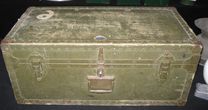
I can still remember when I first opened my father’s military trunk from the army. As I wiped off the dust and opened the latches on the big green U.S. Army foot locker my eyes were wide with wonder and awe at the old pictures, the Japanese flag, and the trinkets and treasures he brought home from Japan. It was as if I had an instant connection with him as I looked through the items and asked him what they were and the stories behind them. As he shared with me I wanted to soak up all I could from 1st Lieutenant Leroy Lawrence. I still have this trunk to this day. After he passed it was the item that seemed to always forge an instant connection with my dad. How would you like to have a huge trunk from your Father in heaven filled with all the information you need to walk through life successfully? How would you respond to an offer from God for a treasure trove of highly practical knowledge on how to live a safe, productive, life that is ever moving forward toward worthwhile goals? This is what God promises - along with a promise of HIs protection for you in Proverbs 2:6-7. In verse 7 the father, who is instructing his son, begins to speak of the benefits and blessings that come from having a heart that desires wisdom. He has taught his son to listen to him because he is offering him wisdom and understanding. The dad makes it clear in verse 6 that this wisdom and understanding does not come from him as the source. Jehovah is the One who gives wisdom. It is when He speaks that knowledge and understanding flow to us. All dads would be wise to remember this and to liberally season their instruction to their sons with the Word of God. What are the benefits that dad offers to his son? First of all when we turn to God and His Word for wisdom we will find that God begins storing up sound wisdom for us. The words “stores up” are the Hebrew word “saphan” which means to hide away resources. The idea here is that of God filling a treasure chest for us. What is He putting into it? Sound wisdom is being put there. This sound wisdom (tushiyyah) is a highly practical knowledge and understanding of things that will ensure success in God’s sight if followed. It ensures success when walking in God’s way - we will advance when following it. This is the treasure trove which God has for us as we learn His Word and desire His wisdom. What a wonderful thing to know that as we read, study, and treasure up His Word in our hearts - there are riches of wisdom and understanding that are being deposited into us for current or latter use. We are insuring our future spiritual growth as well as the leadership and guidance we will need to navigate a world that is becoming increasingly difficult to traverse. There is a second benefit to hearing and having wisdom in our hearts and lives. When we seek God for it - and listen when He gives it - we can be assured He is forging an ever growing shield that protects us as we walk through life. If you have yet to experience it, you will one day find that walking in wisdom will shield you from many things that would damage or even destroy your life. Paul spoke of this in Ephesians 6 when he mentioned the “shield of faith” which can extinguish all the flaming arrows of the evil one. Faith in the Word of God - that what it says is true and worthy of emulation - is what protects us. In a word - wisdom - is what protects us. These things are for the one who is upright. The one who walks in a straight path, ever quick to listen and to follow God’s directions and directives! It is also for those who walk in integrity. The word means - completeness - as in one who completely surrenders to God and is completely obedient to God’s commands. These things are the things God is storing up for us when we pursue a life of wisdom from Him. There is a second trunk I have come to treasure in my life. The second trunk is not visible. It is a storage chest of highly practical wisdom that God keeps deep within my heart and mind. There it can be opened whenever I need to know the right way to go in decisions large and small. It is filled with all the wonderful lessons I’ve learned as I’ve applied myself to read, study, and understand God’s Word. Such a treasure is not stagnant - but growing and expanding - even as I grow and expand my knowledge of what God has said - and Who He is. It is always there, ready to be opened, so that I can receive the counsel I need in that moment and walk in a manner pleasing to the Lord. May you be blessed to open His Word daily and by that choice - open the treasure chest of your heart so that God may fill it to overflowing with His Word - His wisdom - and with practical understanding of His way.
2 Comments
Proverbs 12:1 Whoever loves discipline loves knowledge, but he who hates reproof is stupid.
There was a time when the study of any subject was referred to as the “discipline” of it. When you learned Biology, you were studying the discipline of Biology, when it was English, it was the study of the discipline of English. Today’s proverb of the day tells us that those who love discipline love knowledge. Let’s take a closer look at what this means. There are several reasons why a love of knowledge requires a love of discipline as well. First of all we need to realize that without disciplining ourselves to spend adequate time studying, we will not learn anything. The word for discipline in this verse is the Hebrew word “musar.” This word means chastisement. The idea here is that of chastisement, reproof, and warning so that one would learn from them. Although this may seem strange to us at first, real knowledge always has an element of discipline to it. If we want knowledge it will come to us in two primary ways. First, we give ourselves to learning all we can to increase our knowledge. But the second aspect is to begin to “refine” knowledge. We take that first knowledge and use it to determine what is true and what is false. We test our knowledge in order to make sure it is right. Then we discern more knowledge as we take information and test it as well to add to what we know. In that process, we come to know what is true as well as what is false. We find good assumptions and poor ones. We come to know both truth as well as error - and how to distinguish between the two. Imagine a child who is not open to discipline and correction in the learning process. He begins with the assumption that 2 + 2 = 5. If that assumption is not corrected, he would not have knowledge - he would be believing a falsehood. Because he is not open to correction, his collection of false statements and wrong conclusions will grow. In the end we will find that we do not have an educated child - but a self-confirmed ignoramus. Because he hates reproof - he will remain stupid. But there will be more than just mere stupidity - there will be arrogance and an unwillingness to learn from anyone other than himself. This is where we run into the word “stupid” in this proverb. The King James Bible uses the word “brutish” instead. The actual word means both. The one who hates correction is stupid when it comes to factual learning. He will confidently assert a series of wrong statements when asked for information. But he is also brutish as well. The word “brutish” is not used much in our world so a definition is in order. Someone who is brutish is someone who resembles a brute or animal. They are coarse, stupid, and uncivilized. This is the way that someone who thinks that they have knowledge will react to being corrected or disciplined. They react badly. They become angry and tend to lash out at the one who offers them correction. Rather than receive the correction they bristle at it. They may even verbally attack the one who offers it - see them as ignorant and inferior because they don’t agree with their “facts.” This proverb becomes even more interesting when we realize that Solomon, the son of David and Bathsheba, wrote it. His father and mother engaged in a very evil relationship when they got together. David committed adultery with Bathsheba when he gave in to his lust. But when he learned that she was pregnant from their sexual encounter, he went deep into depravity. He tried to cover up his sin by having her husband Uriah come from the battle - hoping that he would have relations with his wife and think the child was his own. When that did not work, David made Uriah drunk and hoped he would cover his sin in a drunken sexual encounter with his wife. Both times Uriah was more honorable than David because he refused to do such a thing while all of Israel (except David) were engaged in battle. Then David chose to send Uriah with orders that would eventually ensure that he would be killed in battle. David had truly done a foolish and stupid thing. Was David a lover of knowledge? What would happen when God sent His prophet Nathan to David with full knowledge of his sin? What would happen when David was confronted with that knowledge? Would he receive it or would he reject it? Was he a lover of knowledge or was he stupid? David loved knowledge and responded wisely when reproved by Nathan. He broke and repented when faced with the ugliness and rebellion of his sin. Kings in general do not react this way when confronted with their shortcomings and sins. Many would either place the one who rebuked them in jail - or would have them beheaded. But then again, most kings were not lovers of knowledge as David was. We are faced every day with multiple opportunities to be a lover of knowledge rather than a stupid and brutish man or woman. The difference is in how we respond to discipline. Do we submit ourselves to it and learn, or do we reject it and remain in a world constructed of our own ignorance and stupidity? I was taught early by the man who discipled me to embrace reproof, correction, and discipline. He had me memorize a verse that said, “Let a righteous man strike me, it is a kindness.” He had me learn that verse, not so that I could be physically abused - but so that I would recognize the kindness of someone who corrected me. That is true even if the one offering the correction is not exactly offering it in the wisest way. He taught me that such correction is a kindness from God - Who ultimately wants me to turn from my foolishness and embrace His blessed wisdom. If we embrace discipline - both verbal discipline from others as well as self-discipline of ourselves to embrace knowledge - we will be truly blessed. We will find knowledge - and - we will not be numbered among the stupid. Proverbs 5:2 That you may observe discretion And your lips may reserve knowledge.
One of the ways that we know that we are being discreet in life is by what comes out of our mouths when we speak. What is fascinating about this passage is that the overall gist of the fifth chapter of Proverbs is that it deals primarily with the issue of immorality and those who fall into the trap the adulteress. One of the reasons why we need to gain wisdom and understanding is so that we may watch out to be discreet. The word "observe" in this passage means to guard and be careful. Zhodiates states that this word basically means to be on your guard. What you are guarding is "discretion." Yet the word is different than the discretion that is mentioned most often in the book of Proverbs. It means a thought - or the thoughts in our minds that are used to make up our plans. There is one major point though that needs to be distinguished about this word. It most often means evil plans and schemes that are contrary to God's ways. What Solomon is warning his son to watch out for in life is evil plans and schemes that begin to formulate in his mind. When it comes to maintaining purity in our lives, what happens in our heads is vitally important. We need to watch over our minds and what is running through them. Actions begin as thoughts - which in time turn into plans and schemes. The reason we watch and guard our minds is to make sure that when lust and immoral thoughts try to push in - we deal with them. It is not just enough to push these thoughts out - we need to bring them to the cross. The Word tells us to mortify these things - and that means to kill them! Nothing short of this will do. The second half of this proverb says that when we watch over the development of evil plans and schemes in our heads - it will help us to watch over our mouths. Our mouths will speak "a knowing" when we guard our minds. This knowing is once again primarily a discernment - but one that is specific to the situation. Remember that here this refers to sexual immorality and the wiles of the adulteress. We are warned in the very next verse that the adulteress captures men with her words and her flattery. These things often cause men to be deceived in their hearts and minds. The flattery of a woman giving them attention strokes their pride and their ego - something very dangerous to a man who doesn't watch what enters and walks through his mind. In time his pride and ego can lie to him and fill his mind with thoughts of further flattery. He begins wanting to spend more time with this woman - at lunch and eventually at secret meetings he keeps from his wife. We all know where this is going - toward an eventual adulterous relationship with this woman. Yet the real danger started with the thoughts that ran through his mind - and the words he began to speak to this woman because he didn't watch and guard against the adulterous thoughts that were fostered in his head. He may not wake up until the damage is irreparable. It is vital to our spiritual progress and protection to keep a close eye on what is going through our minds. This is the stuff that can cause us serious problems. What begins in just a seed form in our minds will eventually sprout and bear disastrous fruit. Better to deal with seeds by being wise - than have to cut down entire forests because of a lack of watchfulness. The sluggard is wiser in his own eyes Than seven men who can give a discreet answer.
Proverbs 26:16 The fourth verse we come to about the sluggard has to do with how his lack of any work ethic eventually affects his reason as well as his ego. He is wise in his own eyes - even though he does not put any work into what he thinks. He is a stranger to hard physical work - but now we learn he is also one to mental work as well. When he looks to someone for wisdom - he looks to himself. This is because of his ego - which is vastly overgrown while having no real reason to be so. He is too lazy to study - yet he thinks he knows far more than those who do. He is wiser than seven men who give a reasoned, well-studied, well-thought out answer. He is a genius in his own estimation - while his supposed genius is honestly ignorance of anything other than what he himself thinks. A legend in his own mind, he mentally gives himself the Nobel prize for everything. Anyone who has ever done good academic work knows that this is no place for the sluggard. Good quality academic work requires painstaking study and hours of sacrifice both thinking and writing (not to mention re-writing). Someone who has expertice in a subject area has put in years of effort in order to have it. The whole idea of a "masters" degree is that someone has "mastered" a subject area. The seminary I attended required that we read a 300-500 page text for each course taken. But, this was not all we were required to do. We also were required to do extensive reading while preparing papers as well as do 1500 pages of outside reading on the subject. Even after all this effort, we were just barely beyond ignorant in the subjects we studied. Most areas of theology had literally thousands of texts written on it -some had hundreds of thousands. The mental sluggard stands against seven men who work hard at honing their minds - and mocks all of them. He will take what little learning he has and string it together so as to think he is a mental heavyweight - when he doesn't even tip the scales of learning at a single pound. He spouts his opinion and then closes his mind to anything other than his highly self-valued moronity. He has no need to listen to others since his own ultimate genius has been voiced. Thus the mental sluggard continues his self-imposed banishment to ignorance in a miniature land of his own making. A wise man knows that he does not yet know as he should know. He is teachable above all things - and is willing to spend more time gathering information than spouting it to others. He who holds his tongue and opens his mind is wise! He may not agree with what is said to him - yet he takes all things in an effort to become wiser still. He does not see himself as wise in his own eyes. He sees God as ultimately wise - and is actively looking for those who will speak according to God's wisdom. If you are a mental sluggard beware of lacking the wisdom of seeing yourself as not yet wise. Few things can dwarf your intellect and your spiritual acumen like being wise in your own eyes. It is proof that your field of spiritual and mental vision is extremely narrow. A wise man scales the city of the mighty And brings down the stronghold in which they trust. Proverbs 21:22
Throughout history there have been battles won and cities conquered more due to the wisdom of men than due to the strength of their army. From these historical events we learn why it is better to be wise than just strong. Wisdom can bring down city walls and demolish fortresses once thought impregnable. It was not the strength and power of Menalaus' Spartan army that brought the mighty city of Troy to its knees. His army fought for 10 long years seeking to destroy that city and did not prevail. It was, however, the wisdom of an older Greek warrior that he used that eventually won him the city. That wise Greek warrior was the one who came up with the idea of the Trojan horse. This horse was build as an a false offering to the offended Trojan gods - but was filled on the inside with Greek soldiers. They waited until the middle of the night and crawled out of the belly of the horse to open the gates of the city to the rest of Menalaus' army - who subsequently sacked and destroyed the city. Thus it was wisdom, not power that won that battle. In like manner it was wisdom that brought down mighty Babylon. Balshazzar sat within the walls of that great city certain he was safe. Yet it was the wisdom of the Medo-Persian army that won the day. A branch of the Euphrates River wove through the city like a canal. When the general of the Medo-Persian army diverted the water to where the river dried up - there was a entrance under the wall of the city where the water once flowed. The Medo-Persian army followed the dry canal bed into the city. The Babylonians were defeated and their city taken before they even knew what was happening to them. Over and over again history records wise men who bring down the strongholds of the mighty. Every time it happens men are shocked that once again the battle does not always go to the strong or to the one with the largest army. The battle goes to the wise - and more often than not to the ones who trust in the Lord. Gideon was a marvelous example of God's wisdom using a far smaller army to defeat one hundreds of tiems larger than their own. The idea of holding torches, blowing trumpets, and the war shout of the men was used by God to defeat a much larger army. We also need to remember that God is able through His wisdom to tear down any strong man's stronghold in which they trust. Too often we become intimidated by the world and by what seems to be strongholds of thought - strongholds of besetting sin - strongholds of ungodliness - and a myriad of other strongholds that the enemy of our souls has erected in our society. But it is through God's wisdom that these are torn down and overcome. Remember then, dear saints that Jesus Christ is made unto us - wisdom. It is through Him and through the gospel that we can tear down any mental, spiritual, or physical fortress that holds men in bondage to sin, self, or Satan. Do not cower before any man - any doctrine - or any sin that lifts itself up agaisnt the knowledge of God through the gospel. God will prevail - and His spiritual weapons can demolish strongholds and any lofty thought brought up against the gospel of Jesus Christ. Hold fast to His wisdom and to His way - for that is the way to prevail and win any victory that must be won! Man's steps are ordained by the Lord, How then can man understand his way? Proverbs 20:24
Wisdom acknowledges the sovereignty of God. God is omniscient - which means He knows all things past, present, and future. God also is working all things together to bring about His will that all things work together for good - and also work together for His own greatest glory. These are basic truths hat we learn from the Scriptures. Passages like Romans 8:38 and Romans 11:34-36 make these things very clear. We read here in Proverbs that a man's steps are ordained by the Lord. I wish I could write a pithy little article that would once and for all solve the problem that seems to exist between our seeming ability to make choices - and God's ultimate sovereignty over all things. But if such an article could be written it would already have been by men far more educated and godly than I am. But let me lay before you a few facts. First - you are going to have to make a whole series of choices today. It would be better if you made them in concert with God's will. Second - God is working in your life even if you choose today to be a rebellious little toot. Third - God will ultimately get everything that He desires and is working toward. And finally fourth - there is nothing you can do to thwart God's ultimate plans for His own glory and for the gospel of Jesus Christ. These are things that are true - will continue to be true - and are even true if you choose to think they are not. God ordains our steps - He guides our way. For some this is relatively easy because they see God's will portrayed in the Scriptures and quickly submit - receive His power to do them - and enjoy bringing glory to God. Others are not so much this way. For them the process of God working in their lives involves more than a fair share of rebellion, self-will, and self-seeking. Thus for them the will of God is a process of guidance through the Word - and guidance through discipline. In the end God receives what He desires both ways - one just takes longer - and often involves more pain and hard-learned lessons. Regardless of how you come to His desired ends - they will be accomplished. The second half of this verse asks us a question, "How then can man understand his way?" This question is meant to be answered two ways. First of all, there is no real way for us to understand our way - at least in our own thinking. Consider for a moment Job. He walked with God - was considered blameless - yet he faced incredible suffering for God's ultimate purposes. The entire book of Job deals with him and his friends trying to "understand God's way." It consists of his friends telling him he was ungodly - that was why he had to suffer. It also consists of Job wrestling with the reason for his suffering Himself. There is little light of day in all this wrangling until 30 plus chapters into the book. Then God, first through Elihu, and then through His direct revelation asks Job a serious of questions. In all honesty these questions do not really answer the burning inquiry that Job - and those of us who read this historical account - have within our hearts. In the end, we come to the conclusion that God is God, God is good, and therefore no matter what happens in our lives - God ultimately purposes it for our good and His glory. We are left with the explanation of Proverbs - how can a man understand his way? There is an encouragement in all this though. That is the second answer to this question. How can a man understand His way? The answer is that he can only understand his way in relation to God. People spend their entire lives living for things that are worthless. Their lives are summed up as a cautionary tale for us to learn from in life. Consider the rich farmer who thought only of himself all his life. Some 30-50 years were spent allowing this man to accumulate a fortune. At the end of his life he had a bumper crop unlike any he ever had, and wondered what to do with it. His ungodly, ill-informed reply was to tear down his existing barns and build bigger ones. Then he could keep everything for himself - and retire rich and full. God then broke in on the scene informing him that he would die that night - and that all his wealth would mean nothing - except as a warning to all others who did not choose to be "rich toward God." What we would consider a total waste - God used to warn any generations about greed and self-serving living. A man understands his way in relationship with God. That is the only way to do this. A man understands his way by studying and understanding the Scriptures - which reveal to us the mind and heart of God. A man understands his way by turning to God and seeking to live for His ultimate purposes and plans. Philosophers may spend a lifetime trying to grasp a life of meaning and purpose - yet - if they only use their own understanding are like the blind leading the blind. As the Word of God itself tells us, if a man does not see according to God's light and revelation as given by the Holy Spirit in the Word - that man does not have the light of day. The truth is that God has been and still is working in this world to accomplish His desire and work toward His end. Life will be so much better for us if we acknowledge this - submit to it - and seek to walk surrendered to His sovereignty and His eternal plans. Cease listening, my son, to discipline, And you will stray from the words of knowledge. Proverbs 19:27
If you ever want to be wise and to walk consistently in the knowledge of God - you will have to embrace discipline. Ours is a world that wants things instantly - and it wants them with a real cost to us personally. We would like to have everything and pay nothing for it. Wisdom does not come like this - it comes with much time spent listening to God - and listening to wise men and women. It comes also, as we will learn from today's proverb, from listening to others who will correct us and help discipline us so that we listen to God - and not to our flesh, the world, or the devil. The whole admonition for today is that we do not need to cease listening to discipline. Discipline here is the Hebrew word "mûsār" and it refers to teaching someone how to live correctly in the fear of the Lord, so that the we learn our lesson before temptation and testing. Thus we learn that this "discipline" is training for life and it is why it is so important that we pay attention - and do not cease to listen to this kind of training. The reason for this is because temptation and testing do not take a vacation. They come to us on a regular basis - daily - even hourly. The goal in listening to this "life training" is to gather up words of knowledge. They function in our lives like sign posts. We appreciate a well placed sign post when we are driving. They warn us of bridges that are out or of roads that are closed. They remind us of the streets we are on and when to turn off a highway so that we get to where we are going. What God is reminding us of though is that there are moral sign posts - which are these words of knowledge - sayings that will help us remember what is a godly path and what is not a godly path. Proverbs speaks often of knowing where our choices will eventually take us. When we cease to listen to the correction and the training that comes with being disciplined - we will not know where these sign posts will be. It would be like trying to get somewhere in a new city without a map and without any kind of signs to help us know where we are - and where we are going. That would make life very difficult - and frustrating. We would wind up taking the wrong road over and over again - until we eventually learned the hard way where everything is in that city. Just as frustrating as this is living life not really knowing where you are going morally or spiritually. That is why we should listen closely to wiser more godly men and women when they speak to us. That is why we should pay very close attention when God's Word speaks to us. This is our road map - these words of knowledge and godly counsel. Strike a scoffer and the naive may become shrewd, But reprove one who has understanding and he will gain knowledge. Proverbs 19:25
Punishment and reproof are interesting things. They are necessary in a society for that society not to become completely godless. Without it the wicked will overwhelm everyone else. But from what we learn in today's proverb - there are two ways of receiving discipline and correction. One will stop irreligious men from their godless behavior - but will not change them at all. The other way of receiving correction and discipline is that one that will bless us. It will not just stop outward actions - it will yield to us in ward understanding and knowledge that will help us address our heart issues. In the end, only the second of these two ways to receive correction and discipline will bring about lasting change from God. The first man, the scoffer, is a fool who delights in his ungodly thoughts and ways. Often men and women like this are at least verbal bullies, if not physical ones as well. The scoffer seeks to trash his enemies - and those who hold to views different than his own. He is especially a bully when it comes to the topic of religion and God. An example of a scoffer in today's world is Bill Mahr. His programs usually include one conservation or Christian whom he does his best to bash and run over rough-shod. He bullies them with half truths and with red herring arguments. Bill Mahr is not interested in truth - or even in truthful debate. He is only interested in airing his own views. Talking to such a man does little or no good. The passage here says that a scoffer needs to be struck to get through to him. Now, in the case of a verbal scoffer, this should not be done - but in the case of a bully things are different. The only way to deal with him is to confront him - and if necessary show him you will stand up to him. There is a problem though with this - and it is the difference between what the government is to do, and what the church should be doing. The government is to strike scoffers - especially those who scoff at the law. They are to be confronted and punished for scoffing at the law of the land. To chase a rabbit for a moment, this is what should be done with the Occupy Wall Street protestors who are breaking the law. They should be punished to the full extent of the law when they do. The more we let them alone and not confront their disregard for the law - the worse it will eventually be when we do. A bully - whether verbal, physical, or political - MUST be confronted. But . . . the problem is that all that will happen is that the scoffer will be stopped - and the naive will become more shrewd. The scoffer will be stopped in his tracks - and made aware that such scoffing comes with a price. The naive who watch this will become more shrewd in how they live their lives. They see that it will cost them to act or speak this way - and therefore they will not do so outwardly. The shrewdness mentioned here is a shrewdness to avoid consequences - and it will help a society maintain basic order. That being said though, it will not "transform" a society into a better one. That requires a work in the heart. It will require something more than just shrewd living. It requires wise, godly, understanding and knowledge. Here is where the work of God, His Spirit, and His Word come into play. When we come to Christ we leave our basic foolishness and begin to walk in understanding. We grasp in that wonderful redemptive moment that there is more to life than just what we are currently wanting - there is God and His will. His will is always best. The wise man is one who does not need to be struck - just reproved. Words alone will do the job for him. He hears godly reproof - and honestly at times - even the ungodly kind. He hears and listens - then takes to heart what has been said. He is called a man of understanding, which means that he has taken the time to think and to ponder more than just his own throughts and desires. When he hears he learns and gains knowledge. This kind of knowledge helps him to deal with situations wisely - and without need for bullying with words or in any other way. The state may be able to keep the peace by dealing with scoffers and helping others to make more shrewd choices, but to bring about real change in a man's heart requires a work of God. This work will bring peace to more than just an outward situation - it will bring peace to a man's heart. And that peace will spread and last for more than just as long as it takes the police to leave. This peace is internal and will last for entire generational cycles. It is a peace and stability not based on the strength and numbers of law enforcement present on the street, but based in what rules in our hearts. The naive inherit foolishness, But the sensible are crowned with knowledge. Proverbs 14:18
This verse in Proverbs is based on what has been said in the previous three verses before it. It has to do with the simple or naive person (whose simpleness is due to being foolish) as opposed to one who is sensible. Let's look at these two today - not just in light of this verse - but in light of the previous ones as well. We are told that the naive or simple inherit foolishness. This is because they act like and think like fools. Going back to verse 15 we see that these people "believe everything" and do not consider where their actions and choices are taking them. Verse 16 reveals that the naive one is both arrogant and careless. They do not practice proper caution but walk headlong into evil and godless choices. They do not consider what God says about these things, either ignoring Him or arrogantly thinking that they know more than He does. Finally we see that they are quick-tempered - and because of their quick temper they act foolishly in the midst of their uncontrolled passions. They resort to evil plans and deeds - and are hated because of these things. When you consider the full picture of the simple, naive one who bases their life not on God's Word, but rather their own flawed reasoning, you see why God says that their inheritance will be foolishness. They do not take the time to think - to consider the end of the matter - to calm themsevles and think rationally about the actions they are about to take. Thus they are fools - and what comes to them is the fruit of their own foolishness and stupidity. We are also sold though that the sensible one will be crowned with knowledge. Some call Christians simpletons and people who have a low I.Q. This is not the case - at least with the Christian who adheres to Scripture and who has gained wisdom over time. The true Christian does not shun study or knowledge - they embrace them. As they spend more and more time in the Scriptures - and specifically the book of Proverbs - they will become very wise, discerning, and knowledgeable. The word "sensible" here is the Hebrew word "arum" which means to be prudent. The idea here is that this one "takes careful thought" before doing things. He takes careful thought of his ways according to Proverbs 14:8. He takees careful thought before he acts according to Proverbs 14:15. In Proverbs 22:3 and 27:12 we are told that a man like this sees danger before it happens and avoids it. Thus this man walks with God in a way to where God's counsel is received and understood. This protects him from many things that would harm him. The promise here is that the prudent/sensible man will be crowned with knowledge. The word knowledge is the familiar word in Proverbs that deals with our lifestyle from the standpoint of the choices we make. The word is "daath" which means to have a knowledge that gives us discernment, insight, and a notion about what we are doing - and how it will end. The word spoke of a way of living and choosing, thus it was known as the word that meant a person's chosen lifestyle. This points us to the reality that when we live by a prudent, biblical thinking and reasoning way - we will be filled with a knowledge that grants us discernment and insight. We will even have the function of "notion" as well - which simply means that over time we will just sense at times that something is right or wrong. All this is said with the idea of being crowned with this blessing. Thinking and reasoning biblically will crown our minds with both wisdom and discernment. We will be able to know the difference between two choices - two ways of doing things - the simple idea of right and wrong. The world wants to blurr these lines of distinction. They want there to be little of no way of knowing truth of error, right or wrong. The world wants us to think everything is relative to a situation. But God's Word is true. God's Word is right. God's Word is sufficient to not only guide us in the big decisions of life, it will be what the Holy Spirit will use to guide us through every day. As we are guided - we will note that we are often crowned with the right choice - the right discernment - the right notion of which way to go. That is the blessing of being sensible and reasoning according to God's ways. A prudent man conceals knowledge, But the heart of fools proclaims folly. Proverbs 12:23
There are times when you know the right answer, but still it is better to just keep quiet. Just because you know something is not sufficient reason that you should share it. A wise man knows when to reveal his knowledge and when to conceal it as well. There are several proverbs where God deals with how freely we should speak - even speak the things of God. Consider Daniel in the court of King Nebuchadnezzar. Here was a very wise man - a godly man - and yet a man who often held his tongue while in the court of the king. He could have been a spiritual know it all - and yet he was content to pray, to serve, and to wait for the moments that God gave him to speak. He got them either due to a biblical principle that was about to be violated - or due to a need that presented itself in the kingdom. Either way, he waited and walked with God until the moment he needed to speak. What is so glorious is that when he spoke - he was the spiritual E. F. Hutton to the kingdom - and to the king himself. We can cheapen spiritual truth - and make it less effective in people's lives when we want to be the bible answer man for everyone around us. Spiritual babbling can actually hinder more than it can help. Another proverb states that a word spoke at the right time, in the right circumstances is like an apple of gold in a setting of silver. Take our Lord Jesus Christ for example. When the Pharisees came in John chapter 8 with the woman caught in adultery, He could have immediately spoken up with a scathing litany of words about their hypocrisy and condemning legalism. Instead He simply bent down and wrote in the sand. When it was time to speak He used an astounding economy of words. "He who is without sin, cast the first stone." Then he looked down again and continued writing in the sand. The area cleared - and Jesus once again used a question that was as simple as can be - where are your accusers? They had no answer - and He gave her the glorious truth that He did not condemn her - and that she should go her way and sin no more. That is one of the most powerful passages of Scripture we have - and yet Jesus chose not to speak a great deal in it. The reason we should conceal knowledge is because any fool can speak. The second half of this proverb tells us that the heart of fools proclaim folly. Note that the fool's folly comes from his heart. He is filled with foolishness and self at the core of his heart. That is why when his mouth opens, foolishness comes out. Jesus told us that out of the abundance of the heart the mouth speaks. My father used to say to me that I can keep my mouth shut and have people think I am wise, even if I am not. But when I open my mouth when I shouldn't, I remove all doubt that I am not wise. That is why we are told to measure our words carefully when we speak. The wise man considers when he is about to say. He weighs his words to make sure that they have the greatest impact. He also weights whether his words would be better left UNSAID. That truly is wisdom. As a personal note . . . I am a "talker" - which means I like to talk when given the opportunity. I think this has become more of a habit as I grow older. But as I seriously think about what God has said, I will have to reconsider my ways - and adopt a lifestyle that speaks less. I will still talk - but at times I will need to weigh whether what I am going to say is of value or not. Then I will have to weigh whether the timing is good enough to say that what I want to say NEEDS to be said. Wisdom requires it - and therefore whatever discipline is necessary will be embraced. One thing I know - it will do far more to respond to God in all this - than to continue flapping my gums - and filling the world with words it does not need. |
 Proverb a DayEach day, we'll take a look at a verse from the chapter of Proverbs for the day. Our hope is to gain wisdom each day - and from that wisdom - to have understanding to make godly decisions in the throes of everyday life. 
Thank you for visiting our website! Everything on this site is offered for free. If, however, you would like to make a donation to help pay for its continued presence on the internet, you can do that by clicking here. The only thing we ask is that you give first to the local church you attend. Thank you!
Archives
August 2018

|
 RSS Feed