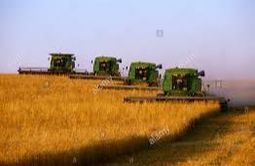
 Proverbs 10:5 He who gathers in summer is a son who acts wisely, but he who sleeps in harvest is a son who acts shamefully.
At first glance this looks like a common proverb concerning agrarian matters – or something along the lines of an admonition about hard work. Let’s begin our look at this proverb in this way. Anyone in agriculture will agree that there are only certain times when a person can plant, grow, cultivate, and harvest crops. The wise farmer takes this into account when planning when to work and when to take his leisure. Summer is the time for a farmer – or in this case his son – to work hard at producing a crop. The words used here are interesting though. One does not gather in the summer. One usually is working hard in the field on things like weed control or maybe some type of irrigation if the growing year is particularly dry. Yet God is saying to us that a person who is gathering in the summer is acting wisely. Here is the lesson for us. Summer is a time when the sun is hot – and it is easy to slack off in our work. But it is a very important time for the farmer. It is when the crop is being watched. It is when the farmer is showing great care on matters such as weed and pest control – and drought. Working at this time is exhausting and hard. But – it is also a time where if you do what you are supposed to do – you will guarantee a harvest. The word “wisely” here is the Hebrew word “sakal” which means to act with prudence, insight, and understanding. For the wise son – he sees hard work – even hot, difficult work. But what he also sees is work that WILL be rewarded if he sticks with it. He may have to remind himself that the hard work now pays off later in the harvest. The second part of the proverb speaks of the shame coming to the son who sleeps during harvest time. The word sleep here indicates a deep sleep – even a sleep with snoring. The harvest is crucial to a farmer. He MUST work hard and gather the harvest because if he does not, there is great risk of having it rot on the vine or stalk. There is a risk of losing it all if he does not work hard to gather it. A son who leaves all the work to his father is a truly shameful son. What we learn from the proverb on the surface level is that there are only certain times when work can be done – and it is a wise person who works hard during those times. The one who decides to be lazy, undisciplined, and slothful in those times is a fool. There is great value in hard work – and that value is only increased when the one working realizes the times when applying yourself to the work is even more important. It would be a disservice to not mention the spiritual parallels that this proverb has with the New Testament call for us to be involved in a spiritual harvest. In Luke 10 and John 4, Jesus reminds His disciples that the fields are white unto harvest spiritually – and that we are to cry out to God that He would send out laborers into His harvest fields. You see, now is the summertime and harvest for men and women to be cultivated for the gospel of Jesus Christ. Now is the acceptable time to go forth weeping, sowing our precious seed – knowing that we will surely come again rejoicing with our sheaves (i.e. those whom we’ve seen God draw and save as a result of our obedience). To be asleep spiritually in this – or any generation is a shameful thing. We should be working with our Lord – sowing the gospel among those who are lost. We should be speaking to them and praying for them that the wicked one would not blind their eyes to the glory of God in the face of Christ. We should be laboring in the Lord’s vineyard knowing that a harvest is coming if we do not faint. Oh to be the wise, prudent sons who see the end from the beginning and labor to rescue those shoes sins will destroy them. Oh to be about the work of sharing Jesus with the lost so that a glorious harvest of righteousness, peace, and men and women who are born again may be gathered on that wonderful day when He comes for His own at the end of the age! Let us therefore work while it is still the day – for the time is coming when no man can work.
0 Comments
He who tills his land will have plenty of food, but he who follows empty pursuits will have poverty in plenty. Proverbs 28:19
Do something worthwhile. Do something that will provide for you and for your family. Work hard at it and work consistently at it. When you do this you will be blessed with plenty for your family. You may not become rich or wealthy in the world's eyes - but you will have provided well for your family. Today's proverb helps us to understand that hard work will be rewarded with plenty of provision. Work ethic is something that is not natural to fallen mankind. It is something that needs to be instilled in children from a young age - and then encouraged as they grow older. Finally, a strong work ethic needs to be lauded in the public eye so that the entire society may be blessed. If we do not do this - the second half of this proverb will begin to infect an individual, a family, and from there, an entire society. God does not want us to follow what He calls, "empty pursuits." The King James Version refers to this as "vanities." What does it mean to follow an empty pursuit. At its core, an empty pursuit describes itself. It is something we do - or something we pursue - that in the end leaves us empty. It is something that is not productive. We give time and effort to it - but in the end it gives nothing back. The end affect of this kind of "empty pursuit" is that we wind up with plenty of poverty. These kind of pursuits take from us, but give nothing back when we've finished them. And from the term used here - we have to "pursue" them. We chase after them - and they have at least the promise of something valuable. The truth though is that when we catch them - we are left with a harvest of air. They give us nothing. I'm about to sound like a really old man to many who read this - so I wanted to offer a fair warning. The video game industry is one that has been slowly planting a crop in our society, that when fully harvested, will provide nothing. I am blown away when I talk with high school and college students who spend hours and at times entire days playing these games. They immerse themselves in these things and when they come up for air - they have nothing except a bountiful basket of poverty to show for it. One of the most dangerous parts of this trend is that it also manifests itself in addictive behavior in other ways. We have an entire generation (and if we are honest with ourselves, at least two now) who are bound up in activities that produce nothing. Between the video games, the time spent on facebook and twitter, as well as the growing trend to get on sites like Netflix and others that offer entire seasons of television shows (which are watched almost all day long) we are becoming a society that is following massive numbers of empty pursuits. What that is yielding is an ever growing populace that shuns hard work - and is completely entertainment-crazed. It is probably an appeal that may fall on deaf ears, but we need to shut down our games, get off the internet, and give ourselves to something called "hard work." If you have not noticed, our nation is coming apart at the seams. We see a pervasive laziness and lack of work ethic that will only bring us plenty of poverty in the end. Our educational institutions are dumbing down their programs and requiring less of their students. If you think I am eggagerating, look at how we rank in the world in things like science, math, and overall productivity. I am not against recreation and times of play - but our play used to be getting out and doing something with others. Now it is dominated by sedentary games that focus on fantasy, violence, or seeing our avatar get with it at some video activity. May God grant a revival - not just of religious activity - but one that also yields a return to a godly work ethic. If we don't do this, we will see the poverty a-plenty that God predicts. If we do return to the blessing of hard work, we will see a blessing that will last far beyond our own lives. It will bless many generations. Here's to hard work! Know well the condition of your flocks, and pay attention to your herds; for riches are not forever, nor does a crown endure to all generations. Proverbs 27:23-24 As we look at this passage in Proverbs 27, we are examining the Ministry of neglect. This proverb is encouraging us to know the condition of things in our lives well! The example used is for our flocks - and yet many of us do not have any livestock. The wisdom that is offered is that we know well the things that are important in our lives. Over the next week we'll be looking at six different areas of our lives in which it is wise for us to avoid the "Ministry of Neglect" that just seems to come to naturally to us all. The first area we will look at is our personal lives. In this area we need to know well the condition of our heart. This speaks to our spiritual condition before God. How are you doing spiritually? Are you being more Christlike in your actions and attitudes? Are you showing spiritual growth so that the fruit of the Spirit is evident in how you live? On a different level, are you reading the Word of God daily? What about prayer - are you praying? Are you sharing your faith with others - and being an instrument of God's grace and love in your local fellowship? A good thing to do, if you want to keep up with such things, is to occasionally have a brother or sister in Christ lovingly, yet honestly, answer these questions. Want a real challenge? Ask your wife and your children. Another area of our personal lives is our health. This is one that if often overlooked - and yet according to 1 Corinthians 6:19 - our bodies are a temple of the Holy Spirit. So the question is applicable - how is your health? Are you eating well - or is the sin of gluttony resulting in health issues for you? Are you exercising regularly? Are you getting enough sleep and resting on a regular basis (God suggests 1 out of every 7 days for this). If you do not take care of yourself - you should not be surprised if your body - and even your mental state begins to fall apart. I am not saying that we should turn into health and fitness fanatics - just that we should do a basic job of caring for ourselves physically, emotionally, mentally, and spiritually. How are you doing mentally and emotionally? Are you practicing good mental health? Do you live in reality - or is most of your time spent in a fantasy land - either on television or in an online game. Are you living for online relationships more than those around you in your home? Too many find themselves locked into the online world rather than the real one. Then there are mental habits. How are you doing with your mind? Are you reading and learning anything? This is something people don't grasp in our society. We are becoming a society of morons - because we don't do anything to benefit our minds. There is so much out there besides television (and especially besides reality TV) that can help you become a smarter person. Are your reasoning skills advancing - or are you letting the TV, radio, and others think for you? Oh, how much we lose when we don't practice good mental habits. The potential here is massive - and few if any of us tap into it. One last area that I'll meddle in is our personal finances. How are they going? Are we exercising wisdom in how we are handling the money God gives to us? Do we look like a wise or a foolish steward of what God places into our hands? It is actually wise to occasionally take a step back and see if we are being wise - and are practicing self-control over our spending habits. If not - we can suddenly find that our bank account will not sustain us at a level we are currently living. I can only imagine how much many have been offended by this particular post. We are not exactly an honest people when it comes to stepping back and taking a real look at ourselves. If it helps any - I was pretty convicted in several areas of my own life just writing this. Doing this can help us so much though. Remember - this post is about the Ministry of Neglect. It is too easy for us to forget areas of our lives - until they come back to bite us in the rear. That is why I would encourage you to schedule a quarterly check-up . . . for yourself. You might be shocked at how it helps keep you on track. I know that writing this has made me consider a few ways that the ministry of neglect has been active - and - I can see how if I continue to neglect things - I'll end up paying a lot more than I want to in my future.
The sluggard is wiser in his own eyes Than seven men who can give a discreet answer.
Proverbs 26:16 The fourth verse we come to about the sluggard has to do with how his lack of any work ethic eventually affects his reason as well as his ego. He is wise in his own eyes - even though he does not put any work into what he thinks. He is a stranger to hard physical work - but now we learn he is also one to mental work as well. When he looks to someone for wisdom - he looks to himself. This is because of his ego - which is vastly overgrown while having no real reason to be so. He is too lazy to study - yet he thinks he knows far more than those who do. He is wiser than seven men who give a reasoned, well-studied, well-thought out answer. He is a genius in his own estimation - while his supposed genius is honestly ignorance of anything other than what he himself thinks. A legend in his own mind, he mentally gives himself the Nobel prize for everything. Anyone who has ever done good academic work knows that this is no place for the sluggard. Good quality academic work requires painstaking study and hours of sacrifice both thinking and writing (not to mention re-writing). Someone who has expertice in a subject area has put in years of effort in order to have it. The whole idea of a "masters" degree is that someone has "mastered" a subject area. The seminary I attended required that we read a 300-500 page text for each course taken. But, this was not all we were required to do. We also were required to do extensive reading while preparing papers as well as do 1500 pages of outside reading on the subject. Even after all this effort, we were just barely beyond ignorant in the subjects we studied. Most areas of theology had literally thousands of texts written on it -some had hundreds of thousands. The mental sluggard stands against seven men who work hard at honing their minds - and mocks all of them. He will take what little learning he has and string it together so as to think he is a mental heavyweight - when he doesn't even tip the scales of learning at a single pound. He spouts his opinion and then closes his mind to anything other than his highly self-valued moronity. He has no need to listen to others since his own ultimate genius has been voiced. Thus the mental sluggard continues his self-imposed banishment to ignorance in a miniature land of his own making. A wise man knows that he does not yet know as he should know. He is teachable above all things - and is willing to spend more time gathering information than spouting it to others. He who holds his tongue and opens his mind is wise! He may not agree with what is said to him - yet he takes all things in an effort to become wiser still. He does not see himself as wise in his own eyes. He sees God as ultimately wise - and is actively looking for those who will speak according to God's wisdom. If you are a mental sluggard beware of lacking the wisdom of seeing yourself as not yet wise. Few things can dwarf your intellect and your spiritual acumen like being wise in your own eyes. It is proof that your field of spiritual and mental vision is extremely narrow. As the door turns on its hinges, So does the sluggard on his bed. Proverbs 26:14'
We are in a section of proverbs where the sluggard is being described for us. There are four verses in this section that describe the sluggard's excuses to not work, his sleeping habits, his overeating, and his tendency to be wise in his own eyes. None of these things are good habits to adopt in your life. Today's bad habit is that of oversleeping and being unwilling to get out of bed. The sluggard is like a door that turns back and forth on its hinges. In this way the sluggard turns back and forth on his bed and refuses to get up and get to work. Remember, the word "sluggard" speaks of more than just an occasional laziness. It actually speaks of someone who hates work - and who loves his bed and his chair and his lounging time in life. Therefore he despises having to get up and get going. Work ethic is important if we are going to be godly people. The one who does not want to get out of bed is lazy and undisciplined. The sluggard loves his bed - and does not want to get up and get going in the morning. I remember mornings like this - where it is so hard to get started. My mornings like this though, come more from being out late the night before - or from having a rough night. Unlike this - the sluggard is like this every day. Beware of being one who loves their bed - and who loves sleeping in. This promotes laziness in people - and makes it very hard for them to get going in the morning. One of the most deadly things to someone who struggles with these things is the "snooze-bar." This niffty invention allows us to simply hit a bar on top of our clocks and buys us 5 more minutes of sleep. I remember times when I've hit this bar 5-10 times as I deceive myself into thinking that that extra 5 minutes is going to help me - and it won't hurt anyone else. What usually happens is that just about the time I'm back to sleep - the alarm goes off again. This does not yield the best sleep - but perpetuates my laziness while giving me the illusion of rest. A wise man is resolute that unless he is sick - he will rise the first time the alarm goes off and begin his day. This keeps him from being a rusty old door turning back and forth on his hinges as he lays in bed. That will only encourage slothfulness - whereas even if he is tired when he first awakens - getting up and getting going will help him toward a far more productive day. The sluggard says, “There is a lion in the road! A lion is in the open square!” - Proverbs 26:13
Excuses, excuses . . . is something that men who have been used of God in my life used to say to me. They would say it when I would try to use an excuse to cover for something that was far more an instance of laziness than a problem that developed. This is something many of us are guilty of - and yet unlike my experience they have not had someone who would call them so openly on it. I will admit that hearing my mentors call me openly on these things hurt at first - but it has been invaluable to me over the years. We all need someone who would be so painfully honest with us. That is what this proverb illustrates by showing the absurdity of the sluggard's excuses for not doing what he should do. Here the sluggard makes statements that very well could be true. In Israel there are lions that are in the wilderness that surrounds the towns. This was especially the case when the country was far less developed than it is now. But in the day Solomon wrote this, it would not have been too odd to know that a lion was in any of these areas. Yet in saying this - it was not the everyday occurance to have a lion in these areas. And, if there was, a man's job was to get with other real men in the city and address the problem by going and driving the lion away or killing it to protect the people. This is NOT the response of the sluggard to this real or imagined situation. We are introduced to the one making these claims by hearing that he is a sluggard. That means he disdains work and labor of any kind. He avoids it at all costs - or in this case with all his many stories of danger and trouble. There is a lion in the road - therefore I cannot go on the road to work! Guess I'll just have to stay inside today and be safe (or lazy - which is his normal position). There is a lion in the open square! Therefore I cannot go into the square and see if there is any work for the day. Therefore I cannot go and get food for the family at the market. Therefore I cannot do anything - because it is too dangerous. Oh woe is me - guess I'll have to spend another day inside laying around. Too bad they didn't have xbox 360 or Nintendo back then - becasue he could have beaten every game his wife or mother bought for him as he sat around and was a lazy bum. Sorry if that reference was too close to home - but if the shoe fits (or in this case the controller) wear it. There are a myriad of excuses that the sluggard will use to avoid work and avoid doing the things he should be doing as a man or woman. God calls us to work - and it was something He commanded BEFORE the Fall! If we are not giving ourselves to valuable work - we are being lazy. I know that sounds harsh - but it is true. Honestly, it only sounds harsh because we've created a whole society that no longer values hard work. We've once again encouraged a welfare state where people wait for work to be given to them - and some don't even look for work, knowing that a bare subsistence living will be given to them by corrupt politicians who have long left the idea of compassion - and now are just creating a class of people who will support them as their power base - at least until the money runs out. God called us to be working. I don't mean that we should never rest because God desires for us to be balanced in such things. But if we are not working - there is potentially a very big problem. Work is a godly thing - and honestly - it keeps us from a whole host of problems that arise when we are sedentary. Remember this . . . God worked for six days and rested on the seventh. Therefore it is wise for us to mirror the activity of our Father and our God. To do otherwise is to risk becoming a sluggard who seems to always have an excuse why he is not working or doing something useful in society, for his family, and even for himself. Dearest saints - be wise - let go of all the excuses - and WORK! I passed by the field of the sluggard And by the vineyard of the man lacking sense, And behold, it was completely overgrown with thistles; Its surface was covered with nettles, And its stone wall was broken down. When I saw, I reflected upon it; I looked, and received instruction. "A little sleep, a little slumber, A little folding of the hands to rest," Then your poverty will come as a robber And your want like an armed man. Proverbs 24:30-34
There are certain things you can learn by making observations of physical things. These are not always universally true - but they are true more often than not. This particular observation was made by someone who knew that a field belonged to someone who was already known as a "sluggard." Therefore it was known that this man was lazy and undisciplined. The danger here is not knowing someone's character - and assuming things because of what you see physically. What we have here is someone who is making an observation about a sluggard's field or vineyard. This person is known for two things. First is that he is a sluggard. The term refers to someone who is lazy and who shuns any kind of work. The second observation is that he is also a man who seriously lacks sense. As usual in the book of Proverbs the word here is actually the Hebrew word, "leb" which means heart. What is referred to here is not this man's physical heart, but more his spiritual condition. God is concerned about the state of our hearts - because our actions and our words come out of the overflow of our hearts. Therefore the fact that this man lacks "heart" speaks more to the truth that he is lacking spiritual wisdom and a heart that turns to God for it. We continue to look at the sluggard and his field and we have this report given to us. It wa a field and vineyard completely overgrown with weeds and nettles, which refers to thorny plants that make for a very unfruitful, unproductive field. These things are there because of the laziness of the owner. Not only was this field ignored agriculturally - but it was ignored physically too. It is noted that the stone wall around it was broken down as well. This most likely was not due to vandalism, but rather simple neglect over a long period of time. Therefore there were serious weed problems - and also serious problems with animals getting in and destroying the crops as well. This was a field ignored completely - and therefore would be a field that was grossly underproducing for its owner. Seeing such a field in an agrarian society made the onlooker reflect on things - actually he reflected on the owner of the field. The word for "reflect" is the Hebrew word "siyt" and it means to focus one's heart and thinking on something. One might say that this writer was taking this matter to heart. He had God lay something on his heart as he looked. The author of these verses was spiritually astute enough to have the Lord speak to him as he looked on this sad scene. He received instruction as a result of what was before his eyes. The words here speak not merely of knowledge - but rather of a kind of instructing that disciplines us and uses things to turn us from a destructive path. That was what was happening here. Oh that we would open ourselves to such "at-the-moment" instruction like this - that God could take anything and use it to help us walk in His ways. Jesus spoke like this - using everyday pictures of life to help instruct His disciples (and us) how to walk with Him and honor His Father. This was the comment he received. It is said in a way that is placed in quotations. There are those moments when God is about to speak to our hearts. We need to be open and receptive to such "wisdom statements" from Him. As the writer mused on this scene - the Lord spoke to his heart. The statement made to his heart had to do with sleeping too much, slumbering too much - and wanting to fold our hands and "take it easy." God is not against rest - but He is against those who do not work hard. The sluggard did not want to work - he wanted to rest, slumber, and fold his hands and refuse to work. The state of his field was proof of these things. He didn't want to work and do the things that would make for a productive and protected field. He wanted a life of rest and relaxation. This brings me to comment on an oft-said phrase that I hear in our society. "Don't work too hard," is said to me often - and I understand that people are not urging me to slothfulness. But - in all honesty - I do need to work hard. God said that in a fallen world like ours - being a hard working person will have a tendency to protect me . . . from me! Too much time along - too much time without something productive to do - too much time to myself - and I will get into trouble. I know - because I've been there - and I know how hard it is to keep me from being stupid when there is too much time on my hands. Therefore I know that a life of hard work - of labor - and of productiveness (whether at work, or at home, or even in spiritual things) is good for me. The end of this proverb is telling. What hapens when you get lazy and undisciplined. God says that the end of such things is poverty. There will be a poverty of finances because the sluggard won't have any crops. There will be a poverty of character because the sluggard won't do what is necessary to develop it in cooperation with God. There will be a poverty of spirit because we won't grow spiritually without some kind of discipline in our lives. Poverty is coming - and is coming like a robber. This word speaks of a vagabond who comes upon you and takes what you have. Poverty will come if a man is lazy - and it will come like someone who walks up unannounced and steals your things. Poverty is also coming like an armed man. This speaks of those who came with armies - and who plundered after they took a city or town. Poverty was coming to the sluggard - and was coming to plunder everything he had. Laziness is costly - and it is a lesson that we too need to learn - even as we see its ravages all around us. The desire of the sluggard puts him to death, For his hands refuse to work; All day long he is craving, While the righteous gives and does not hold back. Proverbs 21:25-26
The wrong kind of desire in our lives can kill us according to this proverb. It is the desire of the sluggard that puts him to death. That seems strange because my first take on this would be that it is the lack of desire that would be his demise. The word for desire here is the Hebrew word "ta-awah" and it means to crave greedily. It indicates something that is attractive to the eyes - and therefore is desirable to the person who sees it. In the second verse of our proverb we are told that all day long the sluggard is craving. The literal here is that he is "desiring desire." So what is going on here that is so dangerous for the sluggard? The second word used for "craving" here means to be coveting - to strongly desire something that someone else has. Thus, we see from both verses that the sluggard is filled with a desire and a covetous craving for things. What kills the sluggard is that he is content with desiring and craving. He has plenty of desires, he just does not do anything to actually fulfill them. Consumed with desire, lust, and greed - he "craves" himself to death. Let's look at this a little closer. We read first in verse 25 that the sluggard refuses to work. This one is a dreamer - but not a worker. In fact he refuses to work or give hismelf to the kind of labor that would eventually cause him to prosper and succeed. When he "refuses to work" there is a rebellioin present in his refusal. This word was used of Pharaoh's rebelliousness toward God in refusing to let Israel go. Thus this is an outright rejection of work. And as he refuses to work - he begins coveting what others have who do work. His desires continue to grow - even while he does nothing to solve his situation. In the end his own desires are his demise. He is consumed with longing and with desire for things - but will never attain them. He sits in his chair longing - ever longing - but never doing. Thus he dies of intense desire and want - but will never lift a finger to get the things he desires. We are told at the end of this proverb that the righteous has a fundamentally different way of living than the sluggard. The righteous gives and does not hold back his generosity. He is not one ever filled with longing - but with a desire to bless others. The wicked, slothful man holds back his desire to give - because he wants all he has for himself. The strange thing is he has nothing because he won't work for it. The righteous works hard for what he has - and yet does not allow desire to kill him. He is looking for ways to give to others - to bless others - and to invest in others. He will not only know physical life - but he will also know spiritual life too. He will be a life-giving rather than just a stuff-wanting force on earth. He will not hold back his desire to bless others - and will be overjoyed and fulfilled again and again as he does. The sluggard buries his hand in the dish, But will not even bring it back to his mouth. Proverbs 19:24
Here we have one incredibly lazy man. In fact this man's laziness is so bad it is almost comical to picture it. Here is a man who has buried his hand in the dish of food that is set before him. The picture is not of someone who is picking at the top of the food on his plate. This guy has buried his hand into the dish of food, probably covering his entire hand with it. It is as if his appetite has led him to grab all that he can. So we do see initially a selfish attitude - and one who has a huge appetite for what is set before him. But there is a disconnect with this man - because although he can bury his hand in it - there will be little or no real satisfaction from it. The sluggard has a great appetite - and great desire for things - but he has no ability to bring those desires to pass. He buries his hand in the dish - but he won't work hard enough to even bring it up to his mouth. Again this picture is comical to us. Here is a man with his hand buried deep in the dish. He has grabbed all the food he can handle. The problem is that he is so lazy he won't lift his hand up to his mouth to eat it. This seems so comical that it is a farce to us. Who is so lazy that he won't even lift his food to his mouth to eat. Honestly - there is really no one who would do this at the supper table - but the farcial picture painted for us speaks beyond the supper table. It speaks to spiritual realities - and to the problem that exists with the sluggard. The sluggard is lazy - that is his problem. The picture before us is one of a man who has great desire - but no discipline to bring it to pass. He has a voracious appetite - but he won't work to see it move from desire to decision to completion. The burying of his hand in the dish speaks of the lazy man's desires. He speaks of wanting things - and speaks of desiring to accomplish great things. He lacks no vision for what he wants - because for many a lazy man - they want the whole world. They do this because they have all the time in the world to develop such fanciful dreams of what could be. The problem is though they can bury their hand in the dish of desire and dreams - they never work to bring their hand up to their mouth and actually fulfill those desires. Here is the crux of this proverb. The lazy man won't work to fulfill his dreams and his desires. He won't apply himself to the tasks that have to be done to accomplish what he wants. Oh the dreams will be huge - but the actual accomplishment of them will be miniscule. His planning box will be full, but the completion box will be empty. We see this every day - in a myriad of men who just won't work - who won't be disciplined to do what is necessary to succeed in their plans. Those who have just read this might be thinking, "Well why didn't God just say that the lazy man has plans, but he won't work to see them happen?" Because that would not catch our attention. If someone says that - people will ignore him - especially those who are lazy and undisciplined. The sluggard won't even pay attention to that statement. The genius therefore of the Scriptures is that they paint us a picture that catches our attention. To see a sluggard dreaming the hours away without working is . . . well, it's kind of boring. But to see a hungry man with his hand buried in a dish of food. To see that man leave it there, unwilling to even bring it up to his mouth so he can eat . . . well, that's weird! That catches our attention - and makes us think. The sheer ridiculousness of it catches our eye - and makes us look longer - look deeper. It is in that moment that we work to unlock a proverb that will speak volumes to us. In that moment we will see deeply and learn like we have never learned before. We might even learn that our laziness and sluggardly behavior looks almost as ridiculous as that guy sitting there with his hand buried in a plate of food. The way of the lazy is as a hedge of thorns, But the path of the upright is a highway. Proverbs 15:19
How are you at getting to things in life? Is it difficult to get going on things - to start projects - to get things done at work - at home - anywhere? This is an interesting thing to consider, especially in light of the proverb for today. We are going to see that this trait may point to things that may have cause for some serious thought - and possibly some repentance. The way of the lazy is as a hedge of thorns. This is the first thing we see as we look at today's proverb. First we see that God's word calls a man lazy. This is a character description. It means that he will not work - or better said from this verse - won't get around to working. He is probably undisciplined and most likely unprofitable to himself, his employer, his family, and ultimately his God. His way, we read here, is as a hedge of thorns. Biblically this is more than just our garden variety North American thorn hedge. In Israel they had some very serious thorn hedges. They were extremely thick and were excellent fences around their fields. Pretty much nothing could get through these hedges. For the lazy man - his way is as a hedge of thorns. The word "way" here means his lifestyle. This man is averse to work, therefore he can find a million different reasons why he does not work. They sound somewhat convincing until you realize he is just lazy and doesn't want to work. His excuses are lame - and simply are cover for his lack of character. The upright has a much different path. This man is godly and understands the value of faithfulness and working hard. Rather than constantly finding ways that he can get out of work - the godly man wants to do things that benefit his family, his friends, his community, and ultimately even himself. His path is like a highway - nothing blocking him and preventing him from accomplishing his goals. To answer the questions at the beginning of this article, we should turn and take a good look at our actions. Then we should turn again and look inward a little. What is it that is keeping us from getting things done like we want? It is not the things we might think. It is a lack of character and godliness. The Holy Spirit wants to bear fruit in our lives - fruit like faithfulness and self-control. If we do not see such things in our lifestyle - maybe we should take a closer look at things like our adherance to a biblical work ethic. Maybe we should also take a much closer look at our spiritual condition and walk with God. If our proverb is right, we may just find the answers to our questions there. |
 Proverb a DayEach day, we'll take a look at a verse from the chapter of Proverbs for the day. Our hope is to gain wisdom each day - and from that wisdom - to have understanding to make godly decisions in the throes of everyday life. 
Thank you for visiting our website! Everything on this site is offered for free. If, however, you would like to make a donation to help pay for its continued presence on the internet, you can do that by clicking here. The only thing we ask is that you give first to the local church you attend. Thank you!
Archives
August 2018

|
 RSS Feed