|
Proverbs 29:21 He who pampers his slave from childhood will in the end find him to be a son.
What is the proper way to treat an employee? As we have done for most of the proverbs dealing with slavery - we look at them through the prism of employee and employer relationships. There is much wisdom for people who are in business and who have employees if they will learn from these proverbs. What can we learn from today's proverb in this respect? The warning here is that an employer should not "pamper" their employees - just as the man in this proverb is told not to pamper his servants. The word "pamper" here means what is means today - to treat someone in a way where they are not disciplined and made to work as they should. There should be expectations on those who work for an employer. When I worked at UPS we were expected to load a certain number of packages per hour. When our work output went below that number - we were going to have a visit from a supervisor or boss - who would make it plain to us that we needed to work harder. This was not employer abuse - it was an employer making sure that we knew that we were expected to produce a certain amount of work for the hourly pay that we received. What is dangerous is when an employee or servant is allowed to be lazy and undisciplined at work without any kind of repercussions. This is pampering a worker. Allowing a worker to do shoddy work without rebuke is pampering them. Allowing a worker to be consistently late to work without rebuke is pampering the worker. Allowing a worker to abuse their fellow workers and supervisors without rebuke and punishment is pampering the worker. These things will hurt a business - or even cause it to fail. There needs to be an understanding of proper workplace behavior and proper workplace expectations. But our society is beginning to implode on itself because it rejects such things. People are getting to the point where they expect a paycheck - but do not think that they should work hard for it. Ours is a world where people feel they are entitled to a living - and a good one at that. The Bible is clear on the fact that, "if a man won't work - don't let him eat." There are also verses that say to let someone get hungry - and they will be willing to work. The business world is rough - and if we are going to have a strong economy people need to know that HARD work is required. We act today as if the words "hard work" are curse words - when in fact they are blessed words. It is good for us to have to work hard. When an employer does not have the proper expectations on his laborers, he will in the end wind up with sons rather than employees. What is meant by this is a certain kind of son - a spoiled one. He will wind up with people who do not want to work - but expect to be well paid and well cared for by their employer. One might call this the "spoiled brat" syndrome. You treat laborers a certain way and before long they will not be workers - but rather spoiled brats who constantly complain about their wages, about their work load, about their work environment - and just about anything else they can think of to complain about. No matter what the employer does, it is not enough. A good employer knows the balance between caring for his employees and calling them to work. He knows that he does need to be considerate and wise with things like workplace conditions and wages. He wants to bless his labor force - but he also wants them to work. There are Scripture passages that call the employer to be gracious and kind to his workers - but here he is warned of the dangers of having a plant filled with spoiled brats - rather than people who know how to work hard so that the business will be profitable. It is a delicate balance - but one that needs a serious swing toward a stronger work ethic in our day.
0 Comments
 Iron sharpens iron, So one man sharpens another. Proverbs 27:17
What a blessing it is to have godly accountability - especially between men. Today's proverb uses a very masculine picture to show how two men can be of great blessing to each other. That picture is of iron sharpening iron. You have a picture of two pieces of iron - most likely that of a pair of swords or other sharp instruments. As these two pieces of iron are rubbed against one another they have the affect of sharpening each other. The friction and the strengths of each wear away the edge on the other - and the result is a sharpened blade. As this process goes on there usually are sparks - but in the end both pieces of iron are benefited as they knock off the rough and unsharpened edges of each other. We are then introduced in the second part of this proverb to the fact that in the same way that iron sharpens iron, one man sharpens another. This is all about a brother helping a brother in an accountability relationship. This is something that I truly believe is indicative of manly relationships. It is not that women should not be accountable to each other - they should. But . . . it is usually the men that resemble iron sharpening iron in these relationships. Men want manly relationships. This is why you do not see guys lined up with other guys going to see a romantic comedy - but you do see them getting ready to see a war movie or a sports movie. Guys don't mind encouraging each other towards spiritual maturity - but they want to do it iron to iron! They want someone to challenge them to be a man of God. They do not want to polish each other - they want iron to iron, spark-throwing, metal-grinding imput into their lives. Too often we want to take the manliness out of such relationships - and we err in doing so. Over the years I've had a number of accountability relationships with other men. We meet beforehand to talk about what we want to address in these times. The ones that have been the most helpful are the ones where we don't mind being pretty blunt with each other. We are willing to look the other guy in the eye and tell him he is blowing it - and that he needs to suck it up and be a man in regard to some things. These are the kinds of relationships where we call each other higher - and we are not afraid to confront each other about sin in our lives. At times there is even a fox-hole mentality that we are fighting together for the things of the Lord - and we will stand shoulder to shoulder against the enemy. We will go out and chase down a brother who is going out into sin. We'll hunt our brothers down and ask them honest questions. "What are you doing!?" or "Where are you going, man!?" are often the kind of things we ask. We speak brutal truth - letting our brother know where his actions are taking him - and that we do not want to see him messed up as a result. These are relationships that have sparks fly - not in some kind of physical confrontation where someone gets beat up in the process. But there are sparks flying as we go to battle for each other. Sparks fly as we say what might seem as offensive things - but to a brother who needs to hear them - they are like music to our ears. Consider Nathan the prophet who shares a story of gross injustice. He shares with David, who is a former shepherd, about a man who takes a man's lamb and kills it for supper - rather than take one of his own flock to feed a visitor. David, in manly fashion, rises incensed by the injustice! He flashes with anger and rage calling for this man to be punished for his actions. Nathan has just stoked the manly vigor of David - and watched his eyes filled with fire! Then comes the sparks as iron touches iron. "David, YOU are the man!" David is the one who took another man's wife and committed adultery. Pretty strong stuff - a truly manly confrontation! Yet it is one that saved David's life - and led him back through repentance and confession of sin to God. Such relationships are rare - but they are wonderful. Men who have them are truly blessed by the fact that a brother will confront them in sin. They will be protected - and sharpened by such relationships. They will also be protected from their own tendencies toward sinfulness. If you have an iron sharpening iron relationship - be grateful to God for it. If you do not have one - cry out to God for one. Then go and look for brothers who will stand with you - and who even have the strength to confront your sin to your face. Sparks may fly - but in the end you will both wind up much sharper instruments in the hands of God!  Like one who takes a dog by the ears Is he who passes by and meddles with strife not belonging to him. Proverbs 26:17
In order to learn this proverb in the way we will never forget, we should find a large, doberman - whom we do not know - and grab him by the ears and shake him a little. Yeah - don't think you'd want to do that either. Want to know why? Because you'd come out of that situation with one less hand (possibly two if you are slower). I love when God uses pictures that are not only graphic - but pretty funny to consider. This sounds like a bad clip from "America's Funniest Videos." Nevertheless, it is great for those of us who have a bad tendency to get involved in "strife-filled" situations when we have no reason for doing so. There are just some of us who think it is our place to fix every situation where people are having problems. Note several things about this person. First, he is simply "passing by" a situation that is ongoing. He has not been invited to enter it and offer counsel. He just feels that these two people who are fighting need his particular expertise and wisdom. Second, this is a situation "not belonging to him." That removes him even further from the picture - or at least it should. Third, he enjoys "meddling" in other people's business. Add all these things up and you get a recipe for "relational disaster stew!" This is one of those proverbs that needs to be featured in the University of Duh. Anyone with a remote "lick of sense" knows better than to grab a dog by its ears. Do so and you will anger the dog - who will then bite your hand. Do it to the wrong dog and more than just your hand will be attacked. So also is the foolishness of someone who just will not stay out of other people's business. This particular fool won't stay out of other people's ANGRY business. The word "riybah" is used here - and it means strife, controversy, or contention. It speaks of a quarrel or dispute - which often involves open hostilities. Why would anyone want to step into something like that - when they don't even know the people all that well? To do so is stupid! But it seems that "stupid" here just cann't help himself or herself. They insert themselves into the conflict - and later are shocked when they walk away battered and bruised by the words or actions that they run into in the midst of it. Stay out of other people's business! That is something my mother taught me. It has been a very wise saying - and one that I did not know at the time was biblical. Whenever I have obeyed her counsel I was blessed. But I've ignored it a few times . . . and I have the emotional dog bites to show for it! 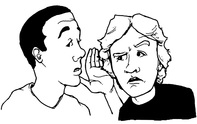 The north wind brings forth rain, And a backbiting tongue, an angry countenance. Proverbs 25:23
A wise man does not participate in backbiting or gossip. It is a very destructive thing when we do. Therefore a wise man does everything he can to make it very clear that he will not participate in it. That is what God wants to give us wisdom about in today's proverb of the day. This particular proverb creates a problem for us - in that in Israel the north wind does not bring rain. It is the southeastern winds that do that task. Some think that because of this that this proverb may be one Solomon learned from Egypt, because that particular area does have rain originate out of the north wind. Regardless of which geographic region this proverb originated, the fact is that when the wind blew from the north in this region, it brought with it clouds and rain. The one thing that is accepted by just about every commentator is that this cloudiness and stormy weather promised by the north wind is compared to the stormy, angry countenance that should be given to someone who is about to begin gossiping about someone else. The phrase, "a backbiting tongue" comes from the Hebrew word "seter" which means a covering or a secret hiding place. The idea it brings with it is that of secrecy. The problem with this word is that the one speaking is wanting secrecy only from one person - the one about whom he is talking. He is more than willing to talk about them - he just is not willing to talk TO them. This is the problem with gossip and backbiting (or secret talking). The one doint it is usually unwilling to make his complaint public where the other person can either answer or repent and initiate change. No such grace is extended to the focus of the gossip. The desire is not to help them - or to see them delivered from some sin or fault. The desire is to destroy the person. They are denigrated in the eyes of others. Since this is done behind their back - there is no way they can change. On top of all this - the people who hear about the gossiped-one's faults - are usually being turned against him. Thus the one who is the subject of the gossip is doubly damaged. First he is not being confronted about whatever sin led to the gossip - and second, he is being isolated by the gossip. In the end he or she is hated and shunned - which is what the gossip had as their goal in the first place. Most gossip is either started or continued due to a bitterness or lack of forgiveness of the one about whom they are gossipping. That is why this is such a wicked sin. How do you stop a gossip from pouring their poison into your soul? This passage tells you how. Just like a cold north wind brought clouds and rain into the area from which this proverb arose, so also an angry countenance brings a stop to the gossip and backbiting. This is not a brief glance, or a telling look. The word here in the Hebrew is "zaam" and it means to be indignant and enraged. The root word literally means to "foam at the mouth." So this is no quick glance - it is a look that says, "Stop this now!" That is how to do it. There is no real gracious way to deal with a gossip - except to be indignant that they would include you in their wicked work. That is accomplished by giving them a very angry look that says in effect, "Not with me, bro!" A wise man is a peacemaker - not a gossip. His desire is healing and grace - not to gather a group against someone with whom he has a gripe. Such things are to be dealt with face to face with the one with whom you have the problem. Oh, how much would be healed in the church this way. Oh, the damage that would be prevented by walking in such grace and loving truth with each other. But because such wisdom is ignored, relationships are destroyed, friendships and ended, and even churches are split. That is why whenever gossip comes to knock at the door of your soul, you should answer with an angry, enraged countenance that says, "No way! Don't bring that junk in here!" Let your foot rarely be in your neighbor's house, Or he will become weary of you and hate you. Proverbs 25:17
Here is a wise proverb concerning friendship that may seem strange at first glance. Having a friend is a wonderful thing - but there are friends who are what some call, "high-maintenance" people. They are the folks who start out as friends - but who soon so dominate your time that you start feeling like you want to avoid them. Yet the more you pull away - the more they seek to dominate your time. You wind up spending hours listening to them every day - and in the end - you wind up almost hating to see them - see their texts - or see their number come up when you look at your cell phone. This is what God is warning against in this proverb. Friendship does demand some time spent together. This proverb is not encouraging us to be distant to everyone - and rarely spend time with each other. It is just using hyperbole to warn us against being the "over-needy" friend who seems to have to spend every waking moment with their best bud. The warning is to rarely let your foot be in your neighbor's house. The concept here is actually more that you rarely let your foot be there by your own choosing. What is advised is to be a good friend in life - but to be careful about how often you show up at their house. If you are invited, that is one thing, but when you are coming on your own constantly, it can begin to be a bother to them. Therefore, when it is your choice, be careful, be wise, and be somewhat infrequent. Don't be rude - just let your friend be the one who primarily initiates you coming to their home. The word "weary" is telling us something important here. It lets us understand the hyperbole that is being employed in this proverb. We need to be careful to not "weary" someone else. The Hebrew word used here is "yisbaacha" and it means to be sated or full to the point of sickness. You know the feeling you get when you have eaten so much that you are about to throw up? That is what is being described here - in fact the same concept was used just a verse earlier to speak of eating too much honey. Now it is being used to describe a friend who spends too much time with you - and you are 'sated' with their presence to the point of being - honestly - sick of them. The warning here though is to us! Don't be that kind of friend. Be a friend naer enough to be a blessing - but yet still far away enough to NOT be an annoyance. It takes a wisdom to be able to discern which you are being. A brother offended is harder to be won than a strong city, And contentions are like the bars of a citadel. Proverbs 18:19
Here is a proverb that is not difficult to understand, nor is it hard for us to see the ramifications of it in our everyday lives. We've all been in a situation where either we have offended someone, or we've been the offended party. We also all know how difficult it can be to remedy those situations. Therefore today's proverb just helps us see it in a word picture that is very descriptive and instructional. The brother who is offended is harder to be won back to us than a strong city. The literal Hebrew here of the "strong city" is a walled city. To understand this we have to go back to days before there were air forces or artillery shells that could level a wall or a house. In those days a high, strong wall around a city was a formidible defense. When an army went within such a walled city, it was going to be very difficult to defeat them. The victorious strategy in these circumstances would involve a long seige of the city. It would involve starving the people until their ability to resist would be broken. It would also involve a final assault on the wall and the gates where they would be broken through - then the victory was assured. But such a seige might take months - and some of the more famous ones took even longer than a year. Therefore, when a brother is offended - he becomes like that walled city to our attempts to gain his trust and friendship again. That is why Proverbs 17:14 warns us that the beginning of a quarrel is like breaching a dam - therefore abandon the quarrel before it breaks out. Abandon your offensive actions and words - because if they come to the point of greatly offending someone, it will be very difficult to remedy the situation. The second statement speaks of the bars of a citadel. The citadel was the place, usually at the center of the city where a large fortified tower was. It usually was high and barred. It had large stores of food and weapons for a last stand. If all else failed, the last people of the city would go here to try to make a last ditch stand against those who had breached the walls of the city. It was usually the place they would go to fight to the death - to the very last man. Here is the picture shown to us about offending a brother. It is the one that warns us against having contentions, fights if you will, with a brother. Thus, we have MORE than just high walls to scale to overcome the problem of our brother being offended. We have to deal with the fact that even after we've breached the walls - they may retreat to the citadel to resist us to the bitter end. What a reminded to do all we can to be kind and gentle, loving and gracious, and patient and longsuffering in our dealings with our brothers. Too many don't practice such things and wind up seriously offending someone with their words or their actions. They don't think about the back end of such actions and choices. They don't consider how difficult this is going to be to fix. They don't see the walls being erected and the citadel of the heart being fortified against them. They are blind to all this - and blunder on in their offensive statements and actions. They are not wise in quickly diffusing arguments and abandoning quarrels. The sad result is broken relationships and long term bitterness in their familiies and with former friends. Be wise, dear brothers and sisters, and see the value of being gracious and kind when you face a difficult relational situation. See the value of a long-term relationship with the other person rather than just wanting to win that particular argument. Realize that confrontation - even biblical, godly confrontation is something that needs to be approached in love - speaking in love - and acting in love. That may require hard words - but it seeks to avoid hard feelings. It helps us to enter into the problem with our eyes wide open not just to what we want solved, but even more importantly to the person with whom we want to solve them. We never need to forget that we work with people and want them to know two things more than anythinig else. Those two things are that God loves them and that no matter what the problem is - the answer ultimately will involve God's grace. With this is mind we need to respond both lovingly and graciously in all we say and do. That way we won't have to face a lengthy love siege in order to win back our brother. A perverse man spreads strife, And a slanderer separates intimate friends. Proverbs 16:28
There are those who through their falsehood and gossip cause great harm to the relationships of others. This can be the case even with intimate friends. The first action of this man is to spread strife. The way that this man does this is through lies and slanderous falsehoods. He starts by lying to one friend of the other about the actions of their "so-called" friend. Those who will not listen to gossip will shut down this kind of ruiniation of another. The slanderer is just as dangerous - but his falsehood and lies have a far more sinister goal in mind. He is not content to just spread strife and discord. Look at the proverb for today and not that the one filled with slander - does so not just to cause arguments - but also to separate a man from his friend. He has a target in view - and that target is a friendship of which he is very jealous. Why else would he desire to see this relationship destroyed. Once someone can penetrate your mind with slanderous gossip - it is hard to remedy the situation. The desire is to serarate a man from his friend - so that the one who sabatoged this relationship can see it destroyed. That way he can have a better one - or at least keep the two former friends from making his relationships look weak and feeble. There are some who just are not happy unless they are making others miserable. Be careful around such perverse, small-hearted people. They are filled with bitterness and hatred because they usually want what you have with a friend - but cannot get it because of their ungodly ways and how they are unable to maintain a relationship due to their own selfishness. Avoid these people like you would avoid the plague! A fool's anger is known at once, But a prudent man conceals dishonor. Proverbs 12:16
Ours is a society driven by rights and by slights. We are told that we have rights - and as a result of this education we demand them all the time. One of the rights that evidently is near the top of the list is the right never to be offended. That is why we have political correct language that is being ever more strictly enforced in our nation. We cannot say things that will offend anyone else. If the society determines that a certain word or phrase is no longer allowed - that word or phrase is banished from our circles. If someone were so foolish as to speak that word of phrase - he too will be banished - even fired from his job. If he is in the public eye - he will be summarily destroyed and cast upon the trash heap for the foreseeable future - possibly forever. We are the nation with the greatest law protecting free speech (our first ammendment) but also the greatest number of unwritten laws that restrict our speech as well as punish any who dare step over the line. Our proverb today would help us greatly with our problems societally. We are first warned that only a fool's anger is known at once. The fool has no patience, therefore he is often disgusted and angry with others around him. He takes up the slighest offence - whether overt or covert - and becomes vexed about it immediately. The word for anger here is the Hebrew word "kaas" which means to be provoked to anger. The problem is that this man is easily provoked - and lets his anger blow the moment that he is. As we read here - his anger is know at once. He is unable to control himself - and also unable to let things roll off his back like water off of a duck. Every slight - every potential offence is taken to the deepest part of his being and fully embraced. There is little wonder therefore that he has a tendency to lose it whenever this happens. He is offended - angry - disgusted - and filled with rage toward whoever has knowingly or unknowingly slighted him. The prudent man is the one who conceals this anger and offence. He is able to ignore the slights and snubs of life. He is able to deal with the insults and general indignities of living in the fallen world. Because he knows the world is fallen - he is aware that things like this are bound to happen. Because he knows he too is fallen - he is aware of the need to be gracious and kind as he carries on life in this world. He has learned to conceal dishonor. The word for dishonor here parallels the Hebrew word for forgiveness. He chooses to forgive and show mercy and grace rather than demand judgment and justice for every slight. He has learned that the merciful are blessed, for they too receive mercy. Learning to be a prudent and wise man in this way will help you live much longer. The word prudent here is the Hebrew word "arum" which has the idea of being sensible. A sensible man knows that unless he wants his world to be in a continual state of stress, anger, rage, and bitter unforgiveness - he needs to let insults and vexation they can cause roll off of him. By this he keeps his blood pressure down - and his friendships up. If you are prone to become angry and blow off steam in almost every situation beware. You are ruining your own life and living like a fool. Be wise - be understanding - and be aware of the fallen world in which you live. Show mercy and grace - for it will bring you joy even in the midst of a world filled with plenty of ways to become frustrated and angered. Do not devise harm against your neighbor, While he lives securely beside you. Do not contend with a man without cause, If he has done you no harm. Proverbs 3:29-30
How are we to treat our neighbor? Here again we have a couple of verses in Proverbs that help us know how to love our neighbor as ourselves. This has to do with how we treat neighbors who are living next to us, around us - and who pose no threat to our lives. The reason for this instruction is to make sure that we truly do love our neighbor and treat them as we would have them treat us. When someone takes advantage of their neighbor - when that neighbor has done nothing to arouse suspicion or cause harm - there is a total breakdown of trust in a society. There should be a general safety that exists between neighbors that should make all of us not just feel safe - but actually be safe. When that general sense of a society governed by the golden rule is gone - that society suffers greatly. We are told not to devise harm against our neighbor who lives securely along with us in our society. There should not be any kind of ill will toward our neighbor unless they have done us harm. Even then we should embrace forgiveness rather than bitterness in our dealings with one another. In commenting on this verse J. Vernon McGee had this great statement, "In relationship to your neighbor, don't do things that would be to your advantage and his disadvantage. And don't try to keep up with the Jones by undermining the Joneses." Here is the crux of the wisdom that God is offering to us. When we truly love one another - and care for each other - we will not take advantage of one another nor seek to harm each other. This is the very core of how societies maintain a sense of well-being amongst the general population. The best government in any society is self-government. No human government can offer a sure protection to everyone in its borders. That would require a police force of millions - and even then you would have to answer tne question of whether you could trust the police. What is best for any society is self-government according to the Word of God. This is when the individual takes the responsiblity to govern their own heart according to a moral standard established by God. When this happens there is no need for a heavy police presence - because each person in the society is watching themselves first - to be sure that they are good citizens. When a society degenerates - it always begins with a degeneration of its view of God and practice of His principles on a personal level. To the extent that we are no longer governed by ourselves and God's Word and Spirit - to that extent society will have to add rules and enforcement officers to try and rein in the wickedness of the human heart. As the society continues to reject God and His ways, that society will continue to degenerate in how they treat one another. Laws will eventually be downgraded to allow more and more ungodliness in the society - with the end being that good is called evil and evil is called good. With each devaluation of God's Law not only will the morals of that society slide, but the sense of safety and well-being will slide along with it. When we first read these two verses they seemed almost too simplistic for us. Yet as we look at the true ramifications of a society with a high level of self-government versus one that has all but abandoned this concept, we suddenly realize the great wisdom of God in what is said here. This is how to have a peaceful, secure world. To the extent that we embrace this model - we will have the peace and sense of safety it will provide. But to the extend that we reject this - to that extent our society will lack safety, will lack peace, but worst of all it will lack among its people the nearness and blessing of God. Hatred stirs up strife, But love covers all transgressions. Proverbs 10:12
Two things are compared in this verse in Proverbs. They are hatred and love. We see the emotions and choices of both of these things - and because Proverbs is all about wisdom, we also see what they eventually will yield. If you need a proverb that will aid you in having good relationships, this would be a great one to learn. First we see hatred. The word used here is "sinah" and it means a strong feeling of hatred. It is used of hatred that one human feels toward another. This hatred can be so strong that it can lead to murder - but it doesn't always end this way. Usually the manifestation is that it leads to dissension and unrest between two people - and often a broken relationship. Hatred may begin as a feeling - but soon hatred will bring us to a choice. The choice that is illustrated here is that of strife. Where someone has hatred in their heart, strife and discord cannot be far behind. We can choose to deal with our hatred in a biblical fashion - which is what the second half of this proverb relates to us. But if we will not deal with our hatred biblically - then that hatred will result in strife. We are told that hatred "stirs up" strife. The concept here is that of arousing and awakening someone. It refers to an agitating action. Hatred is a motivator - and it wants to motivate someone and agitate them to where they start a fight. This can be verbal - or as we have seen in worst case scenarios - even physical to the point of death. That is why we must immediately respond to hate when it rises up within our hearts. We might find it interesting that God wants us to hate sin and hate evil. These are things God does not want us to have decent relationships with in life. We are to hate these things - and allow that hatred to stir us to stiving with sin and godlessness until we reject and refuse them in our lives. But when hatred is felt toward "someone" we are walking in dangerous territory. The second half of this proverb tells us that love covers all transgressions. The words used here are very expressive. The love that is mentioned here is the very love of a man for a woman or the love of God for His people. This kind of love is selfless, self-giving love. When we love like this - it covers all transgressions. The word "cover" is the Hebrew word "kasah" and it means to clothe or conceal something. This is not the "cover-up" that we refer to when speaking of illegal activity. It is the covering and concealing that happens when one thing covers another. This word was used to speak of what the water did to the Egyptians when God had the Red Sea cover them. It is also used metaphorically in the Scripture of something that covers the shame of the guilty. But in order to fully understand what is said here we need to combine all the words used. Love covers all transgression. Transgression speaks of rebellion against God and His Law. It speaks of rebellion of one individual against another. Love chooses to cover over these times of rebellion. When we look at this whole proverb we see that the usual response to transgression and rebellion is hatred and the strife that results from it. But what God desires is for us to respond with love - so that relationships will be blessed - even when one party doesn't contribute or want peace. The most awesome way we see this truth illustrated is by God Himself with sinful mankind. We have chosen rebellion and disobedience - even hatred of the things of God. Yet God in His love chooses not to judge us immediately. His love was manifest fully in Christ. He chose to love us - and God manifests His love in that while we were yet sinners, Christ died for us. This is love in its most glorious form. That love covers all transgressions - and makes it possible for grace to bring salvation to men. As we have reaped the glorious benefits of salvation from God's grace, may we also reap the blessings of donning His character in our response to slights of others. This is the way to redeem a relationship rather than let it take the fallen, natural course that is usually followed. What a wisdom is ours when we see a whole way of relating to one another in the cross. May God use it to bless you in your relationships in the weeks and months to come. |
 Proverb a DayEach day, we'll take a look at a verse from the chapter of Proverbs for the day. Our hope is to gain wisdom each day - and from that wisdom - to have understanding to make godly decisions in the throes of everyday life. 
Thank you for visiting our website! Everything on this site is offered for free. If, however, you would like to make a donation to help pay for its continued presence on the internet, you can do that by clicking here. The only thing we ask is that you give first to the local church you attend. Thank you!

Archives
August 2018

|
 RSS Feed