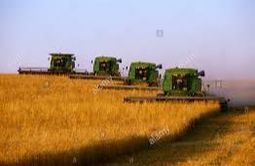
 Proverbs 10:5 He who gathers in summer is a son who acts wisely, but he who sleeps in harvest is a son who acts shamefully.
At first glance this looks like a common proverb concerning agrarian matters – or something along the lines of an admonition about hard work. Let’s begin our look at this proverb in this way. Anyone in agriculture will agree that there are only certain times when a person can plant, grow, cultivate, and harvest crops. The wise farmer takes this into account when planning when to work and when to take his leisure. Summer is the time for a farmer – or in this case his son – to work hard at producing a crop. The words used here are interesting though. One does not gather in the summer. One usually is working hard in the field on things like weed control or maybe some type of irrigation if the growing year is particularly dry. Yet God is saying to us that a person who is gathering in the summer is acting wisely. Here is the lesson for us. Summer is a time when the sun is hot – and it is easy to slack off in our work. But it is a very important time for the farmer. It is when the crop is being watched. It is when the farmer is showing great care on matters such as weed and pest control – and drought. Working at this time is exhausting and hard. But – it is also a time where if you do what you are supposed to do – you will guarantee a harvest. The word “wisely” here is the Hebrew word “sakal” which means to act with prudence, insight, and understanding. For the wise son – he sees hard work – even hot, difficult work. But what he also sees is work that WILL be rewarded if he sticks with it. He may have to remind himself that the hard work now pays off later in the harvest. The second part of the proverb speaks of the shame coming to the son who sleeps during harvest time. The word sleep here indicates a deep sleep – even a sleep with snoring. The harvest is crucial to a farmer. He MUST work hard and gather the harvest because if he does not, there is great risk of having it rot on the vine or stalk. There is a risk of losing it all if he does not work hard to gather it. A son who leaves all the work to his father is a truly shameful son. What we learn from the proverb on the surface level is that there are only certain times when work can be done – and it is a wise person who works hard during those times. The one who decides to be lazy, undisciplined, and slothful in those times is a fool. There is great value in hard work – and that value is only increased when the one working realizes the times when applying yourself to the work is even more important. It would be a disservice to not mention the spiritual parallels that this proverb has with the New Testament call for us to be involved in a spiritual harvest. In Luke 10 and John 4, Jesus reminds His disciples that the fields are white unto harvest spiritually – and that we are to cry out to God that He would send out laborers into His harvest fields. You see, now is the summertime and harvest for men and women to be cultivated for the gospel of Jesus Christ. Now is the acceptable time to go forth weeping, sowing our precious seed – knowing that we will surely come again rejoicing with our sheaves (i.e. those whom we’ve seen God draw and save as a result of our obedience). To be asleep spiritually in this – or any generation is a shameful thing. We should be working with our Lord – sowing the gospel among those who are lost. We should be speaking to them and praying for them that the wicked one would not blind their eyes to the glory of God in the face of Christ. We should be laboring in the Lord’s vineyard knowing that a harvest is coming if we do not faint. Oh to be the wise, prudent sons who see the end from the beginning and labor to rescue those shoes sins will destroy them. Oh to be about the work of sharing Jesus with the lost so that a glorious harvest of righteousness, peace, and men and women who are born again may be gathered on that wonderful day when He comes for His own at the end of the age! Let us therefore work while it is still the day – for the time is coming when no man can work.
0 Comments
When the grass disappears, the new growth is seen, And the herbs of the mountains are gathered in, The lambs will be for your clothing, And the goats will bring the price of a field, And there will be goats' milk enough for your food, For the food of your household, And sustenance for your maidens. Proverbs 27:25-27
These last three verses of Proverbs 27 are additional commentary on verses 23-24. Thus they deal with keeping watch or being aware of your flocks and herds. These verses are practical commentary on that activity. They are also very helpful to us who desire to build and maintain a godly work ethic in ours or any other society. The first statement here seems like common sense to us. It speaks of the fact of the seasons and how one who tills the ground needs to be aware of them. When the grasss disappears, then the new growth is seen. There will be a time each year when the grass of the field dies in the fall and winter. The farmer is also reminded that during this time the herbs of the mountains need to be gathered into the barns. Again, this may seem like something that does not need to be said. The reason it is said is because, due to the fall, men are undisciplined and lazy. There is only a brief window of time that this can be done - and if not done at this time - the farmer will lose yield. If left undone for a long period of time - he will lose everything to decay, mildew, and decomposition. This has something to say to us. We may not have grass oriented crops like hay, wheat, or barley. We may not have herbs on the mountains that should be gathered and put away for use in the next year. We do have responsibilities that fall to us though. Many of these things need to be done promptly. How many have received a late notice on a bill because we did not pay it "in season." Will this keep us out of heaven? No it won't, but for many it will mean anywhere from 20-50 dollars of lost wealth because we did not act "in season" to get something done that requires diligence in a certain time line. More is said to us in verses 26-27, this time about principles of building and using wealth. Note that we are told that the lambs will be for our clothing. There is a reason to do all that the farmer does. He does not just grow grass. He diversifies into raising livestock. He has lambs that are for clothing. He has goats he milks not just for his own family to drink, but to sell so that he can buy a field with the profit. There is the wisdom of provision for oneself, and for the continued growth of wealth and provision for a family and a growing number of people who are dependent on your growing enterprises. Mentioned here are one's own household as well as one's maidens. Thus a wise man knows that the current level of wealth and provision today needs to be expanded as he expands his family and his business. What does this require? Hard work - and an attention to detail - at least an attention to doing things as they need to be done. What is the wisdom for us today then, in light of these verses? The first wise thing we are to learn is that opportunity for blessings comes and goes. If we are not alert to the seasons of God's working, we will miss the blessing being unaware or lazy. Within the framework of His seasons, we need to act and work hard. The second piece of wisdom offered is this, our work blesses us for today - and for the future. The lifestyle lived from paycheck to paycheck is not a wise way to live. We work in such a way to bless us with today's provision - and to make wise choices for expansion of that provision as God blesses. The wise man lives in the moment and is thankful for what God has given him. There can be a danger of having greed enter our minds so that we make Nabalish choices to be selfish and self-centered. The rich farmer who thought his riches were only for his current enjoyment and pleasure found his soul in hell because he was not living for eternity. This, though, does not justify us in being foolish in expanding what we do for the sake of added family provision. There will be children and grandchildren. There will be expanded business opportunity that will bless additional employees. There will be changes in the market - changes in society - and changes even in the weather and providence. We should be wise enough to learn how to read such things and make adequate provision for them as God guides us. Being godly and wise does not mean throwing our brains away. We can acquire business acumen and wisdom concerning how to be more productive. We can build a business while trusting and relying upon the Lord. That is what is being said here. May God give us wisdom to look to Him day by day - and yet still be wise enough to provide for an expanded future of blessings all as we look to Him for the blessings of today's provision and tomorrow's expansion. The sluggard is wiser in his own eyes Than seven men who can give a discreet answer.
Proverbs 26:16 The fourth verse we come to about the sluggard has to do with how his lack of any work ethic eventually affects his reason as well as his ego. He is wise in his own eyes - even though he does not put any work into what he thinks. He is a stranger to hard physical work - but now we learn he is also one to mental work as well. When he looks to someone for wisdom - he looks to himself. This is because of his ego - which is vastly overgrown while having no real reason to be so. He is too lazy to study - yet he thinks he knows far more than those who do. He is wiser than seven men who give a reasoned, well-studied, well-thought out answer. He is a genius in his own estimation - while his supposed genius is honestly ignorance of anything other than what he himself thinks. A legend in his own mind, he mentally gives himself the Nobel prize for everything. Anyone who has ever done good academic work knows that this is no place for the sluggard. Good quality academic work requires painstaking study and hours of sacrifice both thinking and writing (not to mention re-writing). Someone who has expertice in a subject area has put in years of effort in order to have it. The whole idea of a "masters" degree is that someone has "mastered" a subject area. The seminary I attended required that we read a 300-500 page text for each course taken. But, this was not all we were required to do. We also were required to do extensive reading while preparing papers as well as do 1500 pages of outside reading on the subject. Even after all this effort, we were just barely beyond ignorant in the subjects we studied. Most areas of theology had literally thousands of texts written on it -some had hundreds of thousands. The mental sluggard stands against seven men who work hard at honing their minds - and mocks all of them. He will take what little learning he has and string it together so as to think he is a mental heavyweight - when he doesn't even tip the scales of learning at a single pound. He spouts his opinion and then closes his mind to anything other than his highly self-valued moronity. He has no need to listen to others since his own ultimate genius has been voiced. Thus the mental sluggard continues his self-imposed banishment to ignorance in a miniature land of his own making. A wise man knows that he does not yet know as he should know. He is teachable above all things - and is willing to spend more time gathering information than spouting it to others. He who holds his tongue and opens his mind is wise! He may not agree with what is said to him - yet he takes all things in an effort to become wiser still. He does not see himself as wise in his own eyes. He sees God as ultimately wise - and is actively looking for those who will speak according to God's wisdom. If you are a mental sluggard beware of lacking the wisdom of seeing yourself as not yet wise. Few things can dwarf your intellect and your spiritual acumen like being wise in your own eyes. It is proof that your field of spiritual and mental vision is extremely narrow. The sluggard buries his hand in the dish; he is weary of bringing it to his mouth again. Proverbs 26:15
We again come to our four day trek through the characteristics (and lack of any character at all) of the sluggard. Today we look at how he is given not just to laziness - but also to the sin of gluttony. Let's take a look at him again today and see what we can learn. The picture we have here is pretty descriptive. We see the sluggard reclining at the table with his hand left sitting in a dish of food before him. He is so lazy and overfed that he either cannot pull his hand from the dish of food - or - doesn't want to. Here is a lethal combination of both gluttony and laziness. The grotesque picture of a grown man who is so sated with food that he cannot even muster the strength to pull his hand out of a dish or bowl of rice or noodles. He just leaves it there soaking in what he was eating just moments ago. Yet this is what gluttony does to a society - it makes it lazy and unmotivated. I spent a little time reading on the internet about obesity and inactivity. It is both fascinating and alarming to read what is happening in our nation. One study done by the Get America Fit Foundation showed that since 1991 the problem of obesity has grown from about 10% of the population to 20-25% of the population by the year 2003. What is fascinating is that the rates of those in a completely sedentary lifestyle have risen to similar rates. Along with these two numbers rising - the number of very dangerous diseases that are killing larger numbers of people have risen sharply as well. A lifestyle given to gluttony (which we've renamed obesity) and laziness is dangerous for us. It is at epidemic rates throughout our nation. I know it will probably be offensive to many (and I am presently overweight) but we are fast becoming a nation of people who are like this sluggard in the proverbs. I am not advocating that we all become health and fitness freaks - who spend every moment of our day obsessing over our weight and our looks - but - we need to be wise and grasp the spiritual implications of being a people who are losing the battle as a society to gluttony and laziness. This problem is a spiritual one - not just a disease - or some kind of gene we've inherited from our parents. Wise men and women will realize this and will take the necessary steps to dealing with what is essentially a sin problem. It would be so helpful to our society to once again that words like sluggard and glutton are still applicable and helpful to us becoming a better individual - and a better culture. As the door turns on its hinges, So does the sluggard on his bed. Proverbs 26:14'
We are in a section of proverbs where the sluggard is being described for us. There are four verses in this section that describe the sluggard's excuses to not work, his sleeping habits, his overeating, and his tendency to be wise in his own eyes. None of these things are good habits to adopt in your life. Today's bad habit is that of oversleeping and being unwilling to get out of bed. The sluggard is like a door that turns back and forth on its hinges. In this way the sluggard turns back and forth on his bed and refuses to get up and get to work. Remember, the word "sluggard" speaks of more than just an occasional laziness. It actually speaks of someone who hates work - and who loves his bed and his chair and his lounging time in life. Therefore he despises having to get up and get going. Work ethic is important if we are going to be godly people. The one who does not want to get out of bed is lazy and undisciplined. The sluggard loves his bed - and does not want to get up and get going in the morning. I remember mornings like this - where it is so hard to get started. My mornings like this though, come more from being out late the night before - or from having a rough night. Unlike this - the sluggard is like this every day. Beware of being one who loves their bed - and who loves sleeping in. This promotes laziness in people - and makes it very hard for them to get going in the morning. One of the most deadly things to someone who struggles with these things is the "snooze-bar." This niffty invention allows us to simply hit a bar on top of our clocks and buys us 5 more minutes of sleep. I remember times when I've hit this bar 5-10 times as I deceive myself into thinking that that extra 5 minutes is going to help me - and it won't hurt anyone else. What usually happens is that just about the time I'm back to sleep - the alarm goes off again. This does not yield the best sleep - but perpetuates my laziness while giving me the illusion of rest. A wise man is resolute that unless he is sick - he will rise the first time the alarm goes off and begin his day. This keeps him from being a rusty old door turning back and forth on his hinges as he lays in bed. That will only encourage slothfulness - whereas even if he is tired when he first awakens - getting up and getting going will help him toward a far more productive day. The sluggard says, “There is a lion in the road! A lion is in the open square!” - Proverbs 26:13
Excuses, excuses . . . is something that men who have been used of God in my life used to say to me. They would say it when I would try to use an excuse to cover for something that was far more an instance of laziness than a problem that developed. This is something many of us are guilty of - and yet unlike my experience they have not had someone who would call them so openly on it. I will admit that hearing my mentors call me openly on these things hurt at first - but it has been invaluable to me over the years. We all need someone who would be so painfully honest with us. That is what this proverb illustrates by showing the absurdity of the sluggard's excuses for not doing what he should do. Here the sluggard makes statements that very well could be true. In Israel there are lions that are in the wilderness that surrounds the towns. This was especially the case when the country was far less developed than it is now. But in the day Solomon wrote this, it would not have been too odd to know that a lion was in any of these areas. Yet in saying this - it was not the everyday occurance to have a lion in these areas. And, if there was, a man's job was to get with other real men in the city and address the problem by going and driving the lion away or killing it to protect the people. This is NOT the response of the sluggard to this real or imagined situation. We are introduced to the one making these claims by hearing that he is a sluggard. That means he disdains work and labor of any kind. He avoids it at all costs - or in this case with all his many stories of danger and trouble. There is a lion in the road - therefore I cannot go on the road to work! Guess I'll just have to stay inside today and be safe (or lazy - which is his normal position). There is a lion in the open square! Therefore I cannot go into the square and see if there is any work for the day. Therefore I cannot go and get food for the family at the market. Therefore I cannot do anything - because it is too dangerous. Oh woe is me - guess I'll have to spend another day inside laying around. Too bad they didn't have xbox 360 or Nintendo back then - becasue he could have beaten every game his wife or mother bought for him as he sat around and was a lazy bum. Sorry if that reference was too close to home - but if the shoe fits (or in this case the controller) wear it. There are a myriad of excuses that the sluggard will use to avoid work and avoid doing the things he should be doing as a man or woman. God calls us to work - and it was something He commanded BEFORE the Fall! If we are not giving ourselves to valuable work - we are being lazy. I know that sounds harsh - but it is true. Honestly, it only sounds harsh because we've created a whole society that no longer values hard work. We've once again encouraged a welfare state where people wait for work to be given to them - and some don't even look for work, knowing that a bare subsistence living will be given to them by corrupt politicians who have long left the idea of compassion - and now are just creating a class of people who will support them as their power base - at least until the money runs out. God called us to be working. I don't mean that we should never rest because God desires for us to be balanced in such things. But if we are not working - there is potentially a very big problem. Work is a godly thing - and honestly - it keeps us from a whole host of problems that arise when we are sedentary. Remember this . . . God worked for six days and rested on the seventh. Therefore it is wise for us to mirror the activity of our Father and our God. To do otherwise is to risk becoming a sluggard who seems to always have an excuse why he is not working or doing something useful in society, for his family, and even for himself. Dearest saints - be wise - let go of all the excuses - and WORK! I passed by the field of the sluggard And by the vineyard of the man lacking sense, And behold, it was completely overgrown with thistles; Its surface was covered with nettles, And its stone wall was broken down. When I saw, I reflected upon it; I looked, and received instruction. "A little sleep, a little slumber, A little folding of the hands to rest," Then your poverty will come as a robber And your want like an armed man. Proverbs 24:30-34
There are certain things you can learn by making observations of physical things. These are not always universally true - but they are true more often than not. This particular observation was made by someone who knew that a field belonged to someone who was already known as a "sluggard." Therefore it was known that this man was lazy and undisciplined. The danger here is not knowing someone's character - and assuming things because of what you see physically. What we have here is someone who is making an observation about a sluggard's field or vineyard. This person is known for two things. First is that he is a sluggard. The term refers to someone who is lazy and who shuns any kind of work. The second observation is that he is also a man who seriously lacks sense. As usual in the book of Proverbs the word here is actually the Hebrew word, "leb" which means heart. What is referred to here is not this man's physical heart, but more his spiritual condition. God is concerned about the state of our hearts - because our actions and our words come out of the overflow of our hearts. Therefore the fact that this man lacks "heart" speaks more to the truth that he is lacking spiritual wisdom and a heart that turns to God for it. We continue to look at the sluggard and his field and we have this report given to us. It wa a field and vineyard completely overgrown with weeds and nettles, which refers to thorny plants that make for a very unfruitful, unproductive field. These things are there because of the laziness of the owner. Not only was this field ignored agriculturally - but it was ignored physically too. It is noted that the stone wall around it was broken down as well. This most likely was not due to vandalism, but rather simple neglect over a long period of time. Therefore there were serious weed problems - and also serious problems with animals getting in and destroying the crops as well. This was a field ignored completely - and therefore would be a field that was grossly underproducing for its owner. Seeing such a field in an agrarian society made the onlooker reflect on things - actually he reflected on the owner of the field. The word for "reflect" is the Hebrew word "siyt" and it means to focus one's heart and thinking on something. One might say that this writer was taking this matter to heart. He had God lay something on his heart as he looked. The author of these verses was spiritually astute enough to have the Lord speak to him as he looked on this sad scene. He received instruction as a result of what was before his eyes. The words here speak not merely of knowledge - but rather of a kind of instructing that disciplines us and uses things to turn us from a destructive path. That was what was happening here. Oh that we would open ourselves to such "at-the-moment" instruction like this - that God could take anything and use it to help us walk in His ways. Jesus spoke like this - using everyday pictures of life to help instruct His disciples (and us) how to walk with Him and honor His Father. This was the comment he received. It is said in a way that is placed in quotations. There are those moments when God is about to speak to our hearts. We need to be open and receptive to such "wisdom statements" from Him. As the writer mused on this scene - the Lord spoke to his heart. The statement made to his heart had to do with sleeping too much, slumbering too much - and wanting to fold our hands and "take it easy." God is not against rest - but He is against those who do not work hard. The sluggard did not want to work - he wanted to rest, slumber, and fold his hands and refuse to work. The state of his field was proof of these things. He didn't want to work and do the things that would make for a productive and protected field. He wanted a life of rest and relaxation. This brings me to comment on an oft-said phrase that I hear in our society. "Don't work too hard," is said to me often - and I understand that people are not urging me to slothfulness. But - in all honesty - I do need to work hard. God said that in a fallen world like ours - being a hard working person will have a tendency to protect me . . . from me! Too much time along - too much time without something productive to do - too much time to myself - and I will get into trouble. I know - because I've been there - and I know how hard it is to keep me from being stupid when there is too much time on my hands. Therefore I know that a life of hard work - of labor - and of productiveness (whether at work, or at home, or even in spiritual things) is good for me. The end of this proverb is telling. What hapens when you get lazy and undisciplined. God says that the end of such things is poverty. There will be a poverty of finances because the sluggard won't have any crops. There will be a poverty of character because the sluggard won't do what is necessary to develop it in cooperation with God. There will be a poverty of spirit because we won't grow spiritually without some kind of discipline in our lives. Poverty is coming - and is coming like a robber. This word speaks of a vagabond who comes upon you and takes what you have. Poverty will come if a man is lazy - and it will come like someone who walks up unannounced and steals your things. Poverty is also coming like an armed man. This speaks of those who came with armies - and who plundered after they took a city or town. Poverty was coming to the sluggard - and was coming to plunder everything he had. Laziness is costly - and it is a lesson that we too need to learn - even as we see its ravages all around us. The sluggard buries his hand in the dish, But will not even bring it back to his mouth. Proverbs 19:24
Here we have one incredibly lazy man. In fact this man's laziness is so bad it is almost comical to picture it. Here is a man who has buried his hand in the dish of food that is set before him. The picture is not of someone who is picking at the top of the food on his plate. This guy has buried his hand into the dish of food, probably covering his entire hand with it. It is as if his appetite has led him to grab all that he can. So we do see initially a selfish attitude - and one who has a huge appetite for what is set before him. But there is a disconnect with this man - because although he can bury his hand in it - there will be little or no real satisfaction from it. The sluggard has a great appetite - and great desire for things - but he has no ability to bring those desires to pass. He buries his hand in the dish - but he won't work hard enough to even bring it up to his mouth. Again this picture is comical to us. Here is a man with his hand buried deep in the dish. He has grabbed all the food he can handle. The problem is that he is so lazy he won't lift his hand up to his mouth to eat it. This seems so comical that it is a farce to us. Who is so lazy that he won't even lift his food to his mouth to eat. Honestly - there is really no one who would do this at the supper table - but the farcial picture painted for us speaks beyond the supper table. It speaks to spiritual realities - and to the problem that exists with the sluggard. The sluggard is lazy - that is his problem. The picture before us is one of a man who has great desire - but no discipline to bring it to pass. He has a voracious appetite - but he won't work to see it move from desire to decision to completion. The burying of his hand in the dish speaks of the lazy man's desires. He speaks of wanting things - and speaks of desiring to accomplish great things. He lacks no vision for what he wants - because for many a lazy man - they want the whole world. They do this because they have all the time in the world to develop such fanciful dreams of what could be. The problem is though they can bury their hand in the dish of desire and dreams - they never work to bring their hand up to their mouth and actually fulfill those desires. Here is the crux of this proverb. The lazy man won't work to fulfill his dreams and his desires. He won't apply himself to the tasks that have to be done to accomplish what he wants. Oh the dreams will be huge - but the actual accomplishment of them will be miniscule. His planning box will be full, but the completion box will be empty. We see this every day - in a myriad of men who just won't work - who won't be disciplined to do what is necessary to succeed in their plans. Those who have just read this might be thinking, "Well why didn't God just say that the lazy man has plans, but he won't work to see them happen?" Because that would not catch our attention. If someone says that - people will ignore him - especially those who are lazy and undisciplined. The sluggard won't even pay attention to that statement. The genius therefore of the Scriptures is that they paint us a picture that catches our attention. To see a sluggard dreaming the hours away without working is . . . well, it's kind of boring. But to see a hungry man with his hand buried in a dish of food. To see that man leave it there, unwilling to even bring it up to his mouth so he can eat . . . well, that's weird! That catches our attention - and makes us think. The sheer ridiculousness of it catches our eye - and makes us look longer - look deeper. It is in that moment that we work to unlock a proverb that will speak volumes to us. In that moment we will see deeply and learn like we have never learned before. We might even learn that our laziness and sluggardly behavior looks almost as ridiculous as that guy sitting there with his hand buried in a plate of food. Like vinegar to the teeth and smoke to the eyes, So is the lazy one to those who send him. Proverbs 10:26
It is ttruly irritating to have a lazy messenger or servant who should be taking care of something, but who is constantly late and ineffective in fulfilling their duties. That is what we learn about today in the proverb of the day. Two pictures are given to us from every day life. The first is the way that vinegar set our teeth on edge. The kind of vinegar spoken of here is wine vinegar that was very sour as well as being very strong in its effect on a person's teeth. This would result in the person who drank it being very annoyed and disgusted with its taste. The other picture is the effect of smoke upon someone's eyes. When smoke gets in our eyes it is very annoying as well. We blink and rub our eyes from the irritation that they experience from the smoke. These two pictures are now compared to a lazy person who does not do what they are supposed to do. To those who send the lazy person, there is great annoyance at their behavior as well as their inability to get the message to whom it should go - or get the work done that is assigned. Either way, there is great annoyance and disgust as they have to deal with another person's inability to do the job. Amasa in 2 Samuel was one of these people. David sent him out to gather the armies of Israel in a certain time period. But Amasa delayed and did not do the job in a timely manner. David soon sent Joab to finish this work - concerned that Amasa's lack of diligence would cost him his kingdom or at least prolong the rebellion that was at hand. Either way, Amasa's laziness was causing David great annoyance. In the end, it also cost Amasa his life - for when Joab caught up with him later - he killed him. If you have been given a task - wisdom is to be diligent in performing the task and doing it well. Make your authorities glad that they chose to work with you. Make them grateful to have someone who is not lazy and undisciplined in their work. To do otherwise is just to annoy them and possibly injure yourself with consequences for your laziness. Be diligent, work hard, and do not be an annoyance to those who send you. Laziness casts into a deep sleep, And an idle man will suffer hunger. Proverbs 19:15
Laziness will come to haunt a man. The effects of laziness are not immediately apparent - but in time they will show themselves. The word "laziness" here is the Hebrew word 'atslah' and it means to be sluggish, indolent, and lazy and describes someone who is in a state and attitude of doing nothing. Since the word idolent is not used much any more it might help to know that it means to be averse to activity, effort, or movement. The "deep sleep" into which one is cast due to laziness is the same word that was used when God put Adam into a deep sleep to create Eve from a rib He took from Adam's side. This word is used figuratively here to speak of a moral and spiritual stupor which is how Isaiah uses it in Isaiah 29:10, "For the LORD has poured over you a spirit of deep sleep, He has shut your eyes, the prophets; And He has covered your heads, the seers." In Isaiah the idea is that the deep sleep was spiritual and resulted in the people being completely blind to spiritual realities and the warnings they needed to heed to prevent disaster in their lives. The second half of this passage presents an interesting thing to us. The Hebrew speaks not just of a sure consequence of laziness, but of a hunger that must come upon the lazy person to that they will eventually work. The idle man will or must suffer hunger. That is the idea here. He won't get up and work and will continue in his aversion to activity and action - until hunger strikes and makes him get up and work. This is Scriptural for the New Testamant tells us plainly, "If anyone is not willing to work, then he is not to eat either." (2 Thessalonians 3:10) God's Word is not a great friend to a welfare state. The Scriptures tell us to work - and to do what we do with all our might. Work existed before the Fall of man - and it has always has been a good thing to have a godly work ethic. We are told to help the poor - but we are not counselled to put them in a state of continual dependency. This mistake will result in them becoming lazy in the end - and thinking that the state owes them a living. I realize that such words are very incindiary in our world - and I do not use them toward those who have genuine disabilities that prevent them from working. But the wise man knows that a laziness that is encouraged is one that will not only cause hunger - but it will blind the person to spiritual truth as well. We would do well not to encourage it in our children - or our nation. |
 Proverb a DayEach day, we'll take a look at a verse from the chapter of Proverbs for the day. Our hope is to gain wisdom each day - and from that wisdom - to have understanding to make godly decisions in the throes of everyday life. 
Thank you for visiting our website! Everything on this site is offered for free. If, however, you would like to make a donation to help pay for its continued presence on the internet, you can do that by clicking here. The only thing we ask is that you give first to the local church you attend. Thank you!
Archives
August 2018

|
 RSS Feed