 Proverbs 2:20-22 So you will walk in the way of good men And keep to the paths of the righteous. For the upright will live in the land And the blameless will remain in it; But the wicked will be cut off from the land And the treacherous will be uprooted from it.
One of the things that I like most about the wisdom that comes from studying Proverbs is that it both warns and encourages. This wonderful collection of wise sayings not only warns us of ungodly ways and people — and calls us to avoid them. It also encourages us to live positively — to both know godly good people and to follow in their footsteps. That is what we have here in the 3 verses that wrap up chapter 2. Earlier in this chapter we were told that wisdom would deliver us from the evil man and the strange (adulterous or sexually impure) woman. It is wise to know what evil looks like — acts like — thinks like — and therefore know what to avoid. But here in the wrap-up of the chapter we see that God also tells us that wisdom will help us “walk in the way of good men” as well as “keep to the paths of the righteous.” There is a walk that the good man has. It is a walk that here is spoken of as a lifestyle. The word “derek” which we’ve come to know throughout the Proverbs refers to a way of walking or a lifestyle is used here. It is referred to as the lifestyle of “good men.” This word good is one anyone would want to be descriptive of their life. The is the Hebrew word “tob” which means to have a happy lifestyle, a pleasing lifestyle, a loved lifestyle, and a favored lifestyle. The good man walks in the sight of God, seeking to please and honor Him by walking in HIs wisdom, which we’ve come to know is seeing things as God sees them. This good man experiences God’s joy, love, and favor because of this. This is also referred to as walking in “paths of the righteous.” This is simply walking in a path of life where we do what is right as God reveals to us what is right. When we live this way we will experience God’s blessing in our lives rather than His punishment. The father/teacher reminds his son of the two paths that are available for people to take in life. This was a theme that is throughout Scripture. We can choose obedience or disobedience. We can choose submission or rebellion. The two paths lay before us as we see God and His ways. We can either choose to live “upright,” which means to walk straight in God’s paths - not diverging from His way - OR - we can choose to be wicked - choosing a life that is unfaithful to God and therefore described as very evil. But the father/teacher wisely informs his son/pupil of the consequences of such choices. The evil way is pictured as a tree being first cut down and then uprooted so that there is no remnant of it around. That is the future for the one who chooses to be unfaithful to God. Even when we cannot see it immediately in this life, the fact is that there will be a day where the wicked will be utterly cut off for all eternity. The one who chooses the good way will stretch out and rest in the land. That is what is meant by the phrase “live in the land.” The godly person will also remain in the land. The word for remain is interesting. It is Hebrew word “yathar” and it means to jut out over - which meant to exceed or to abound. The word came to mean a situation in which so much abundance existed that it almost was too much. The man who walks in godly wisdom will have so much of God’s favor and goodness in his life that he will think it almost too much. “God You are blessing me beyond my ability to contain it all!” Someone might say after reading this, “But often I see the ungodly seeming to prosper right now — and the godly dealing with difficult times? If God has promised super-abounding blessing, I sure don’t see it.” Here is where we need to grasp the eternal perspective rather than one that dwells only in the here and now. We live on this earth maybe 70-80 years (if that long) and then it is over in this life. The Word of God reminds us that after this life is over — there is eternity either in God’s presence or in hell. For the wicked this means he is living on infinitely borrowed time. For the godly, wise man this means that at the very worst — he will have a few moments of difficulty and sorrow before everlasting joy and happiness in God’s presence. And to be perfectly honest with you - I know of people who have little and what little they have is experienced in difficulty. Yet they know joy that cannot be measured by an abundance of stuff — or even having an easily lived life. I also know of those who have had abundance and riches — an easy life — and who search, even in the midst of their abundance, for just a little true joy and find little to none. To know God and the wisdom of God is far better than riches, abundance, a life of ease, or anything else. For the light and momentary problems of this life (and remember Paul was referring to things like public floggings and shipwrecks) cannot compare to the eternal weight of glory that awaits us in His presence for all eternity.
0 Comments
 Proverbs 2:6-7 For the LORD gives wisdom; From His mouth come knowledge and understanding. He stores up sound wisdom for the upright; He is a shield to those who walk in integrity.
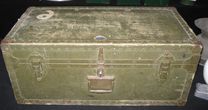
I can still remember when I first opened my father’s military trunk from the army. As I wiped off the dust and opened the latches on the big green U.S. Army foot locker my eyes were wide with wonder and awe at the old pictures, the Japanese flag, and the trinkets and treasures he brought home from Japan. It was as if I had an instant connection with him as I looked through the items and asked him what they were and the stories behind them. As he shared with me I wanted to soak up all I could from 1st Lieutenant Leroy Lawrence. I still have this trunk to this day. After he passed it was the item that seemed to always forge an instant connection with my dad. How would you like to have a huge trunk from your Father in heaven filled with all the information you need to walk through life successfully? How would you respond to an offer from God for a treasure trove of highly practical knowledge on how to live a safe, productive, life that is ever moving forward toward worthwhile goals? This is what God promises - along with a promise of HIs protection for you in Proverbs 2:6-7. In verse 7 the father, who is instructing his son, begins to speak of the benefits and blessings that come from having a heart that desires wisdom. He has taught his son to listen to him because he is offering him wisdom and understanding. The dad makes it clear in verse 6 that this wisdom and understanding does not come from him as the source. Jehovah is the One who gives wisdom. It is when He speaks that knowledge and understanding flow to us. All dads would be wise to remember this and to liberally season their instruction to their sons with the Word of God. What are the benefits that dad offers to his son? First of all when we turn to God and His Word for wisdom we will find that God begins storing up sound wisdom for us. The words “stores up” are the Hebrew word “saphan” which means to hide away resources. The idea here is that of God filling a treasure chest for us. What is He putting into it? Sound wisdom is being put there. This sound wisdom (tushiyyah) is a highly practical knowledge and understanding of things that will ensure success in God’s sight if followed. It ensures success when walking in God’s way - we will advance when following it. This is the treasure trove which God has for us as we learn His Word and desire His wisdom. What a wonderful thing to know that as we read, study, and treasure up His Word in our hearts - there are riches of wisdom and understanding that are being deposited into us for current or latter use. We are insuring our future spiritual growth as well as the leadership and guidance we will need to navigate a world that is becoming increasingly difficult to traverse. There is a second benefit to hearing and having wisdom in our hearts and lives. When we seek God for it - and listen when He gives it - we can be assured He is forging an ever growing shield that protects us as we walk through life. If you have yet to experience it, you will one day find that walking in wisdom will shield you from many things that would damage or even destroy your life. Paul spoke of this in Ephesians 6 when he mentioned the “shield of faith” which can extinguish all the flaming arrows of the evil one. Faith in the Word of God - that what it says is true and worthy of emulation - is what protects us. In a word - wisdom - is what protects us. These things are for the one who is upright. The one who walks in a straight path, ever quick to listen and to follow God’s directions and directives! It is also for those who walk in integrity. The word means - completeness - as in one who completely surrenders to God and is completely obedient to God’s commands. These things are the things God is storing up for us when we pursue a life of wisdom from Him. There is a second trunk I have come to treasure in my life. The second trunk is not visible. It is a storage chest of highly practical wisdom that God keeps deep within my heart and mind. There it can be opened whenever I need to know the right way to go in decisions large and small. It is filled with all the wonderful lessons I’ve learned as I’ve applied myself to read, study, and understand God’s Word. Such a treasure is not stagnant - but growing and expanding - even as I grow and expand my knowledge of what God has said - and Who He is. It is always there, ready to be opened, so that I can receive the counsel I need in that moment and walk in a manner pleasing to the Lord. May you be blessed to open His Word daily and by that choice - open the treasure chest of your heart so that God may fill it to overflowing with His Word - His wisdom - and with practical understanding of His way. A wicked man displays a bold face, But as for the upright, he makes his way sure. Proverbs 21:29
We have shown to us here two ways of confidence. What distinguishes them is two important things. The first is pretty obvious - which is that one involves a wicked man while the other is upright. The other is a little more subtle because it involves attitudes and ways that they approach the confidence that they have. The wicked man, we are told, displays a bold face. A better way to say this is that he displays his confidence with arrogance. He is a man who is not open to rebuke or correction. He is not open to anyone opposing his ideas or where he stands. This is due to a hardened heart. His confidence is a show - and often is not based on fact but on being able to bull their way through life - making others back down due to their confidence - even if it was based on false premises. The upright man is about truth. Note that the wicked man just "displays" a bold face. His confidence is an act that he keeps up before others. The upright man is interested in making his way "sure." He wants facts and a confidence that is based out of doing God's will and living in His ways. He makes his way sure by making it biblical, god-honoring, and god-glorifying. He seeks a God-oriented confidence not based on himself and being able to make others think he is confident. It is based on knowing God - and being confident that no matter what happens - if God is pleased he has done what needs to be done. He doesn't want to be "right" in his own mind, he wants to be right with and before God. What is important is being "sure" that God is pleased. As I close today's post, I want to share a little about the word "sure" because is it such an important concept for us if we want to understand biblical confidence. The word "sure" is from a Hebrew word that speaks of a firm, strong foundation. Confidence in our lives is not based on our works - but on God's grace that changes us. Worldly confidence is founded on the shifting sands of achievement based on this world's standards. God, though, says that what will we be profited if we gain the whole world, yet lose our souls? The core of confidence is knowing that we are living for something (or in our case Someone) that will never be subject to the destruction of moth or rust - something that cannot be stolen or taken from us. Thus to live for what is "sure" is to live for what God's Word teaches us is eternal. And as my former pastor, brother Al in Auburn, said - that is the Word of God and the souls of men. The wicked may put on a bold face in their lifestyles, their wealth, their short-lived happiness, and their godless choices, but these things are not sure. They WILL fade away. They WILL pass away. They WILL burn in the end. When time passes away and is exposed for the shadow world it truly is. When eternity establishes itself as the true substance - then we will iknow that the upright man made the right choice. He did not merely try to convince others of his confidence. He had a confidence rooted in God' grace, God's Word, and in God Himself, the Ultimate Reality. The wicked is a ransom for the righteous, And the treacherous is in the place of the upright. Proverbs 21:18
When reading this proverb one gets the idea that the wicked pay the price for the salvation of the righteous - but that is not what the Scriptures are saying here. What is being communicated is that often the wicked pays the price for how they treat the righteous. That cost is usually to have their own evil plans come down upon their own head. The best example of this is found in the book of Esther. Haman is the villian in the book of Esther. It is his evil mind that hatches the idea of getting revenge on Mordecai for his supposed irreverence by destroying not only him, but his entire race. Money is given to the king - a bargain is struck - letters are written - and soon the entire Jewish people are under a death sentence in the future. The rest of the book of Esther shows us God's sovereignty through the hand of His providence working again and again on behalf of His people Israel. In the end, the plot put in place by Haman comes down upon his own head - destroying not just him, but his entire family before the book ends. Throughout history attempt after attempt has been made to destroy the work of God by destroying the people of God. Again and again God has worked wonderfully to deliver His people individually and coporately. Daniel is thrown into a lion's den for his audacity to pray to anyone besides the earthly king - and yet is delivered by the hand of God. Who is destroyed in this plot? The very men who planned and put it into place where thrown into the lion's den and crushed and killed once Daniel was lifted out. Nebuchadnezzar casts the three friends of Daniel, Shadrach, Meshach, and Abed-nego into a firey furnace thinking to kill them in the process for not bowing down and worshipping his idol. Once his dastardly deed is done he is shocked to see the men walking around the fire with the pre-incarnate Christ unharmed - while the brave soldiers who threw them in are killed instantly in their task. Ahab sends 50 men to forcefully bring Elijah to himself - and yet fire falls from heaven and consumes two groups of them as they draw near. These historical accounts happen throughout the Scriptures revealing that the wicked and treacherous become the payment for their own wickedness while the righteous and upright are delivered. It is an unwise thing to try to annihilate the people of God. It is also an unwise thing to attempt to kill His spokesmen, the prophets. Those who try will learn an oft taught lesson that God will deliver His people - and bring the ways of the wicked upon their own heads and even at times on the heads of their children and followers. The truly wise man honors the upright and the righteous - knowing that their defender is strong - and also knowing that He can take any plot and any plan and turn it around so that the destroyer becomes the destroyed. It is also not good to fine the righteous, nor to strike the noble for their uprightness. Proverbs 17:26
Today's proverb has to do with the issues of injustice in a society. By the time this kind of injustice begins to take place, a society is beginning to experience its death throes. When what is good is called evil and what is evil is called good, very dangerous days lie ahead for that society. It will not endure long when this begins to happen. Then we read that is it not good to fine the righteous. These are the godly ones who follow the rules. They are being fined and punished by their government - which is wrongly defining the righteous and the wicked - the noble and the ignoble. According to this passage - the righteous are being fined. We are beginning to see this more often in our country. People, doing what is right and good - are being fined for being successful - fined for doing what is right. The reason for this is because the society itself is beginning to call what is good evil and what is evil good. That is a point where the society begins a downward spiral. Not only are the righteous being fined - but the noble and godly one is being struck simply because they are righteous. Consider today's world in which the godly man says homosexuality is a sin - agreeing with God and what He has revealed to us in His Word. This creates a problem with an ungodly society that says that we should not only tolerate all sexual choices – we should celebrate them! Thus in our society we have the righteous being fined and honestly, threatened with jail time if they continue to hold views contrary to those being forced upon the rest of the populace. Here is where we find the righteous being fined and the noble being struck. Consider the radical homosexual movement which has gone so far as to invade churches – throwing condoms on the membership while two lesbians passionately kiss on the stage area. In such a society righteousness and uprightness has been redefined by the more deviant parts of society. Anyone who holds to a biblical view of such things is labeled a “hater” or is called “intolerant” or even accused of committing a “hate crime” because of their views. Before you think I am picking on the Gay movement – we also have problems standing for biblical morality when it comes to other issues too. Issues like abortion, purity before marriage, racism, greed, work ethic, and a host of others also bring out the worst in our society. Let’s face it . . . we are a fallen people who do not appreciate biblical morality. We hate God’s ways – because we love sin. This is why societies get to the point where they fine the righteous and strike the upright. These are the signs or a rapidly declining cultures. They are signs that there are very serious problems within the society. The rotting morals of a nation have begun to taken hold when we see the abuse of the righteous and the upright. The proper thing to do at times like this is humble ourselves and pray that God will work in such a way to turn the society from their sinful thinking - and turn them instead to the Word of God. What is truly sad is that often the striking of the godly is even happening in the church by this point. Thus the first place a return to Godly principles is needed is among God’s people – the church. Only a God-sent, God-empowered revival can rescue such a culture from these kind of things. May God grant us such a gracious move soon! The way of the lazy is as a hedge of thorns, But the path of the upright is a highway. Proverbs 15:19
How are you at getting to things in life? Is it difficult to get going on things - to start projects - to get things done at work - at home - anywhere? This is an interesting thing to consider, especially in light of the proverb for today. We are going to see that this trait may point to things that may have cause for some serious thought - and possibly some repentance. The way of the lazy is as a hedge of thorns. This is the first thing we see as we look at today's proverb. First we see that God's word calls a man lazy. This is a character description. It means that he will not work - or better said from this verse - won't get around to working. He is probably undisciplined and most likely unprofitable to himself, his employer, his family, and ultimately his God. His way, we read here, is as a hedge of thorns. Biblically this is more than just our garden variety North American thorn hedge. In Israel they had some very serious thorn hedges. They were extremely thick and were excellent fences around their fields. Pretty much nothing could get through these hedges. For the lazy man - his way is as a hedge of thorns. The word "way" here means his lifestyle. This man is averse to work, therefore he can find a million different reasons why he does not work. They sound somewhat convincing until you realize he is just lazy and doesn't want to work. His excuses are lame - and simply are cover for his lack of character. The upright has a much different path. This man is godly and understands the value of faithfulness and working hard. Rather than constantly finding ways that he can get out of work - the godly man wants to do things that benefit his family, his friends, his community, and ultimately even himself. His path is like a highway - nothing blocking him and preventing him from accomplishing his goals. To answer the questions at the beginning of this article, we should turn and take a good look at our actions. Then we should turn again and look inward a little. What is it that is keeping us from getting things done like we want? It is not the things we might think. It is a lack of character and godliness. The Holy Spirit wants to bear fruit in our lives - fruit like faithfulness and self-control. If we do not see such things in our lifestyle - maybe we should take a closer look at things like our adherance to a biblical work ethic. Maybe we should also take a much closer look at our spiritual condition and walk with God. If our proverb is right, we may just find the answers to our questions there. The way of the LORD is a stronghold to the upright, But ruin to the workers of iniquity.
Proverbs 10:29 There is a lifestyle that comes with knowing and walking with the Lord. That lifestyle is laid out for us in the Scriptures as we read of the things that God loves and also the things that He hates. The proverb for today refers to these things as "the way of Jehovah." Let's take a look at this today and hopefully become wiser as a result. The word "way" here is the Hebrew word "derek" which refers to a way, a path, a road - and is used often to speak of a way of walking or living. That is why when we see this word we should think of a lifestyle that one has due to the daily choices they make. The way or lifestyle of which we speak is that of the Lord. This word is Jehovah - which is the covenant name of God. So often in Scripture God will speak with His chosen people and lay out a covenant promise. These are usually worded as "if-then" statements. If you will follow the Lord, then He will bless you. What God seeks to do when He says these things is not set up a works mentality in our relationship with Him. What He is seeking to do is to encourage us to understand that making choices consistent with His Word and way will bring great blessing to our lives. We are told here that this way of Jehovah - is a stronghold to the upright. The word for stronghold is the Hebrew word "maoz." It speaks of a fortress. That fortress is considered a shelter, a refuge, and a place of great safety. It is one that often worked in two ways. It provided natural defense points - but also was situated in such a way that one could easily see the enemy approaching. This gave those in the stronghold protection - and it gave them time to prepare for the coming enemy onslaught. Scripture indicates that God is that fortress - as well as our strength and defense (Psalm 27:1). As we walk with Him in His way - we will find a natural defense against sin - as well as warnings about the enemy and how he will seek to tempt us and get us to rebel against God. As we learn that "way" our lives will be changed by God's Word and His power. We will be delivered from sin - and will better know how to escape the lies of the devil daily. But the same "way of the Lord" that is a stronghold to the upright - is ruin to those who choose to rebel against God. The word "iniquity" is very important for us to understand if we are to grasp the protection of God afforded to us by walking in His way. The word is from the Hebrew word "awen" and it means, "nothingness, mischief, emptiness, and vanity." The word is used to signify those who pursue meaningless things. They do not walk in God's Word or in God's way. They choose instead ungodliness - which leads them to chase after falsehood. God told us His Word is truth. That protects us - but it also speaks ruin for those who decide they prefer deceit and the lies of this world and of the devil. Another way "awen" is used is to signify an idol - which tells us clearly that those who run after iniquity have made a god of their own. They are worshipping an idol they have created - and prefer to have their idol confirm "their own" truth - as opposed to living by the truth of God - His Word. This is the ruin of the ungodly. They will receive no protection from God's way. Instead they will run headlong into God's wrath and judgment for their disobedience and deceitful choices. Two ways are put before us in today's proverb. There is the way of making your own god and deciding your own truth. Such a way is foolish because it only amplifies the rebellion that is in the human heart due to the Fall of man. That way will ruin those who follow it. The other way is to choose a truth outside of ourselves. It is to realize the truth is not in us - it is in God. Therefore we choose to turn to Him. We choose to turn to the way He has given us His truth - the Word of God. We also choose daily to walk by His truth (the truth) knowing that by doing so we will have a refuge, a protection, indeed a stronghold to keep us from evil - and to keep us FOR fellowship with our loving, gracious God. By the blessing of the upright a city is exalted, But by the mouth of the wicked it is torn down. Proverbs 11:11
The upright and the wicked have a way of affecting the cities in which they live. The upright are said to exalt a city by the way they speak. They bless the city. The word for bless here is "berakah" and it means to bestow favor upon something or speak well of it. What is interesting about this word is that its root form has the idea of kneeling and blessing. What I see here is that the upright may doesn't just speak blessings over his city - he primarily blesses it when he falls to his knees and prays for it. The blessing here is when a city has many praying, godly men within it. I know a story of a small town in Alabama where three precious grandmothers began to have great concern for their city. Their concern was that the spiritual climate in the city was going down year after year. They watched with broken hearts as the children of the city grew up and no longer were concerned about spiritual things. Their response to this was to ask a local Methodist minister if they could pray at the altar of their church each night. The ladies began praying at 10 o'clock each evening and ended at 11. Soon, though, they could not finish their prayers at 11 so they prayed longer. Before long the ladies were praying through the night - night after night - crying out for the youth of the city - and for God to bring revival. God answered these prayers when an outpouring of the Holy Spirit came upon the city - first in that little Methodist church - then moving the meeting to the Baptist church because it could seat more people - and eventually to the local High School football field because only it could hold the people who began coming. They watched the entire atmosphere of that city radically changed because hundreds of children and youth came to Christ. Truly these little ladies - "the upright" - had blessed the city with their words of prayer and intercession. The wicked though, have no such blessing. They only tear a city down with their actions and words. It is telling what this passage calls these people. They are called, "the wicked" which is the Hebrew word "rasha." This term refers to the wicked - and one of the ways they are described is as the "criminally wicked." These men not only do not bless the city - they are taking from it - and promoting a criminal and lawless lifestyle. No wonder that the city is torn down by their actions. Their actions promote people disobeying the law and living a selfish and self-centered lifestyle. Our nation is in the midst of this very proverb today. For too many years we have had elected officials that disregard the laws they are elected to uphold and establish. Congress actually has the gall to exempt themselves from the laws they pass. If that were not bad enough, we seem to have an endless parade of Congressmen and Senators who are thrown into jail for breaking the law. What have these leaders given to us over the years? They have torn down the very country that was given to them. Instead of protecting and defending it - they are tearing it down with their very hands. It is absolutely essential for the future of our nation that we see this - and correct it immediately. It is essential that we learn about our leaders and hold them accountable to be men and women of character and integrity. If they prove to be other than this - we need to boot them out of office at the next election possible. We need men and women in office who will bless our land once again by their godly, praying leadership. Until we see this happen - we can only expect our nation to continue to spiral downward toward destruction. He who leads the upright astray in an evil way Will himself fall into his own pit, But the blameless will inherit good. Proverbs 28:10
It is one thing when the wicked are evil in their own ways and in their own thoughts, but that is not the case with some. They are not content unless they lead others astray into a similar lifestyle. This trait is at its worst when the one who has an ungodly lifestyle desires to lead the upright into that same wicked lifestyle. Yet God makes it plain that such choices - such attitudes will have to pay in the end. The upright are thsoe who are desiring to walk straight - and this refers to someone who desires to do what is morally pure and right. Of course, since this is a biblical reference, we can assume that the moral course that is sought is that of the Scriptures. The wicked man spoken of here wants to lead this morally upstanding person astray. The word used here implies that someone has been deceived into their error. Thus they are now wandering and straying like lost sheep. They used to know the way of the Lord, but now they are straying like lost sheep having somehow been deceived to where they no longer look to the Scriptures for their moral rudder in life. The path they are trying to lead them in is the "evil way." Evil here is "ra" which is the term used for active evil - and it carries with it the idea of distress, misery, injury, and calamity. I find it fascinating, living in a city with a major university, how often godly students are turned by professors who hate Christianity. What I find amazing is that the attacks that are made are almost always made at their trust and belief in God's Word. I think of the passage in Hosea that warns that if the foundations are destroyed, what can the righteous do? A very good question this is for us today. This is the reason why I take the time to teach high school and junior high students classes on worldviews and philosophy. During those classes I play devil's advocate and let them see what they will face in college. I challenge their statements as one of the professors at the university would - and do so mercilessly for 5 or 10 minutes. Then I back up and help them grasp what the philosophical backdrop was to that attack. We work on understanding the false reasoning that was in the attack and also how to raise up the shield of faith by holding fast to a biblical worldview. It is not easy for these students, because the barrage of questions, as well as the ignorance of other students is hard to stand in the midst of in class. Too often they are ganged up on in the midst of the discussion - and the teachers will use their authority to make the students stop talking before they can make their point. That is why we cover these things as well in class. They need to know that Christianity is credible as a worldview - but also that Paul said that the cross was as stumbling block to Jews - and considered foolishness by the Greeks (the philosophical eggheads of that age). Our passage, though, has a warning to the wicked ones who try to lead the upright astray. They will fall into the pit that they are trying to dig for the upright. They think they will make the upright fall into a pit - that they will destroy their faith - but the one who will ultimately fall into the pit is the ungodly person who is trying to deceive. He thinks that the believer is deceived - but he is the one who is deceived. In the end, the very foolishness and philosophical ignorance of this man will damn him to the ultimate pit. I know that this sounds pretty harsh - but it is what the Scriptures say is the end of those who mock the things of God - who oppose God and His Word. Just a note at the end for our instruction is given. The blameless will inherit good. Blameless here is the Hebrew word "tamim" and it means something or someone who is complete and tested. The word was used of the sacrificial animals that had been examined and found to be without flaw. What a marvelous word this is for this context. Here is the truth we need to see here. The wicked will seek to lead the upright astray into an immoral path - but we need to hold fast to the truth - to the Word of God. We need to stand through every trial - and oppose every falsehood that we face. Every time they try to deceive and undermine the foundation of our faith - we need to lift high the banner of Christ - hold fast to the Word of our God - and watch every argument fall infinitely short of the truth upon which we stand. When we do this we will be the blameless, tested, tried one who will inherit good. Be ready, precious saints, for what you will face in the world. Christianity is not just a religious practice - something we can tack on to our lives like we would put up a poster in our rooms. It is a way of life - a philosophy - a worldview that is superior to all other worldviews. It is a relationship with the living God that we are granted through Jesus Christ. We need to view it as that - a life-changing way of viewing the world. We need to therefore make understanding and knowing God our first and most important priority. The reason so many supposedly lose their faith in college is because they never had one. They had their religion - they had their denominational status - they had their childhood habit of going to church with mommy and daddy. But . . . they never took Christ to themselves, repented of their sin - and entered into a life-altering relationship with God. They never received a love of the truth so as to be saved. As a result all they had was the trappings of Christianity - without a mind honed by the Word. Therefore when tried and tested - when faced with someone who forced them to defend their faith with truth - they had nothing with which to fight back. Assuming that Christianity had failed them - when all that had failed them was their false faith - they turned and fell into the pit of the wicked. Oh saints, know your God! Know your Bible! Know that the faith once and for all handed to the saints in the Scriptures has withstood every attack of man for some 2000 years. Stand fast upon it - and stand strong with Him. When you do you will be tested, tried, and approved - and according to this passage - due to inherit good. I have directed you in the way of wisdom; I have led you in upright paths. 12 When you walk, your steps will not be impeded; And if you run, you will not stumble. Proverbs 4:11-12
Fathers, how well have you led and directed your sons? Would you be able to say what we have read here in Proverbs today? Would you be able to tell your sons that if they walk in your ways, they would live a godly life - one that would not hinder them from growing spiritually and one free from the stumbling blocks that often trip us up in life? The father here who is instructing his son tells him very plainly that he has directed him in a lifestyle that values wisdom. The word for "directed" is a very visual word - describing an arrow that has been shot straight. The way that fathers are to shoot their sons into this world is on a path that highly values wisdom and God's ways. I love that he uses the phrase, "the way of wisdom." Way is the Hebrew word "derek" which refers to a lifestyle - a long journey - a manner of living. The father taught in such a way that wisdom became a lifestyle, not just a series of choices every now and then. This is how we are to educate our children. I believe in education - but not as an end in itself. Education or the acquiring of information and learning - is just a stepping stone to a greater goal. We should educate our children (and everyone for that matter) so that they take the information they receive and use it to walk in wisdom and understanding in their lives. That is how this father taught his son - and what his goal was in the end. The second thing he says to his son is that he also led him in upright paths. Again we see a word here, paths, that tells us that this father led with a view toward having his son learn a pathway. This word refers to a track or a course. The father, by his example - led his son to know the track that leads to wisdom and godliness. He refers to it as an "upright" path. In Proverbs 2:13 the father speaks to his son about staying on the straight path - and not taking the crooked one. This upright path is one that is straight, godly, and filled with what is right. The dad took the time to teach his son godly, holy ways. He did so with such consistency in his life that his son learned these ways - not just from instruction alone. He "led" his son in these paths - meaning that he walked in front of his son - leading the way all throughout his life. The son knew godliness not just by precept, but by example. Here is the beauty of teaching and leading our sons in this manner. The father, in verse 12, now tells his son that there are wonderul rewards or walking in this way. The first benefit is that when he walks, this son will not be impeded. The word here is "yatsar" and it means to be in distress or frustrated. The word indicates a frustrated anxiety in situations. The idea therefore is that the son will not face impediments that will make him filled with anxiety and frustration. This seems like a wonderful promise. But can we truly walk throughout our lives without being frustrated? That seems a little more than we can swallow, being those who have frequently experienced varying levels of frustration and anxiety in life. God's promise here is not a lack of frustrating situations, but rather that when we walk, our steps will not be walked out in frustration. This God provides by teaching us wisdom - seeing life as He sees it. When we do this, we will begin to see all things as beneficial to us - even if they seem bad at the outset. We will find even the most difficult of moments being used by God for our good. We learn to have the same patience that our Father God has as we deal with people. Seeing life as He does makes us so much less frustrate-able. Knowing that all things work together for our good - as we are being conformed to the image and character of Jesus - makes life so very livable. The second benefit the father tells his son that wisdom will bring is that when it comes time to run, he will not stumble. The word for "run" used here had pretty specific contexts. Men ran in battle. Men ran to the defense. Men ran to bring important messages to others. Fathers, we need to teach our sons that there are times they need to run. But we also need to train them so that when it is time to run - to battle the enemy - to defend their family, their friends, the church, their freedom - to bring the message of the gospel and of godliness - that they will not trip and fall because they are not ready. The idea here of stumbling always carried with it that one stumbled either because he was weak or because he had a stumbling block before him. This is where an education of wisdom - to help a young man establish a lifestyle is so vital. Without it he will develop habits and choices that will put stumbling blocks before him. Without it he will be weak when he needs to be strong. Without it he will fall inevitably into the two traps of manhood. He will either become a man who is domineering who lacks a servant's heart toward his wie and children - or - he will fall into passivity and not have the strength o character to lead his family and lead in situations where the world around him desperately needs a man to step up and be a man. Fathers, an awesome task has been set before us. We are to train the next generation of men. That may seem like a daunting task - but it is one that God promises to help us and give us great grace to accomplish. There is no one, dad, who can take your place in this effort. You will be THE most effective teacher for your sons in this endeavor. Do it with all your hearts - because the blessing it will bring to your grandchildren and the world in which your son will live will be immeasurable. And beyond all this, the glory that will be brought to God for the ways that His wisdom will be displayed in your son's life and family - will adorn the gospel and the Word of God in a way that is desperately needed in our generation. |
 Proverb a DayEach day, we'll take a look at a verse from the chapter of Proverbs for the day. Our hope is to gain wisdom each day - and from that wisdom - to have understanding to make godly decisions in the throes of everyday life. 
Thank you for visiting our website! Everything on this site is offered for free. If, however, you would like to make a donation to help pay for its continued presence on the internet, you can do that by clicking here. The only thing we ask is that you give first to the local church you attend. Thank you!
Archives
August 2018
|
 RSS Feed