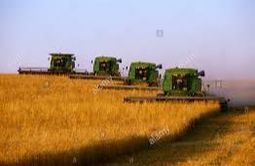
 Proverbs 10:5 He who gathers in summer is a son who acts wisely, but he who sleeps in harvest is a son who acts shamefully.
At first glance this looks like a common proverb concerning agrarian matters – or something along the lines of an admonition about hard work. Let’s begin our look at this proverb in this way. Anyone in agriculture will agree that there are only certain times when a person can plant, grow, cultivate, and harvest crops. The wise farmer takes this into account when planning when to work and when to take his leisure. Summer is the time for a farmer – or in this case his son – to work hard at producing a crop. The words used here are interesting though. One does not gather in the summer. One usually is working hard in the field on things like weed control or maybe some type of irrigation if the growing year is particularly dry. Yet God is saying to us that a person who is gathering in the summer is acting wisely. Here is the lesson for us. Summer is a time when the sun is hot – and it is easy to slack off in our work. But it is a very important time for the farmer. It is when the crop is being watched. It is when the farmer is showing great care on matters such as weed and pest control – and drought. Working at this time is exhausting and hard. But – it is also a time where if you do what you are supposed to do – you will guarantee a harvest. The word “wisely” here is the Hebrew word “sakal” which means to act with prudence, insight, and understanding. For the wise son – he sees hard work – even hot, difficult work. But what he also sees is work that WILL be rewarded if he sticks with it. He may have to remind himself that the hard work now pays off later in the harvest. The second part of the proverb speaks of the shame coming to the son who sleeps during harvest time. The word sleep here indicates a deep sleep – even a sleep with snoring. The harvest is crucial to a farmer. He MUST work hard and gather the harvest because if he does not, there is great risk of having it rot on the vine or stalk. There is a risk of losing it all if he does not work hard to gather it. A son who leaves all the work to his father is a truly shameful son. What we learn from the proverb on the surface level is that there are only certain times when work can be done – and it is a wise person who works hard during those times. The one who decides to be lazy, undisciplined, and slothful in those times is a fool. There is great value in hard work – and that value is only increased when the one working realizes the times when applying yourself to the work is even more important. It would be a disservice to not mention the spiritual parallels that this proverb has with the New Testament call for us to be involved in a spiritual harvest. In Luke 10 and John 4, Jesus reminds His disciples that the fields are white unto harvest spiritually – and that we are to cry out to God that He would send out laborers into His harvest fields. You see, now is the summertime and harvest for men and women to be cultivated for the gospel of Jesus Christ. Now is the acceptable time to go forth weeping, sowing our precious seed – knowing that we will surely come again rejoicing with our sheaves (i.e. those whom we’ve seen God draw and save as a result of our obedience). To be asleep spiritually in this – or any generation is a shameful thing. We should be working with our Lord – sowing the gospel among those who are lost. We should be speaking to them and praying for them that the wicked one would not blind their eyes to the glory of God in the face of Christ. We should be laboring in the Lord’s vineyard knowing that a harvest is coming if we do not faint. Oh to be the wise, prudent sons who see the end from the beginning and labor to rescue those shoes sins will destroy them. Oh to be about the work of sharing Jesus with the lost so that a glorious harvest of righteousness, peace, and men and women who are born again may be gathered on that wonderful day when He comes for His own at the end of the age! Let us therefore work while it is still the day – for the time is coming when no man can work.
0 Comments
Proverbs 10:1 The proverbs of Solomon. A wise son makes a father glad, But a foolish son is a grief to his mother.
This is the beginning of the collection of the proverbs of Solomon. Whereas the early chapters of Proverbs dealt with themes that lasted for multiple verses or the entire chapter, these will be the pithy statements that most people associate with a proverb. It is only fitting then that the man God used to speak the first 9 chapters that often addresses sons – would begin this part of proverbs with a proverb about the joy and grief a son can bring to his parents. Two things are contrasted here – a wise son and a foolish son. What is it to be a wise son? The word used for wisdom is “hakam” and it means to be skilled or experienced in something. Since the opening of the book of Proverbs tells us that the fear of the Lord is the beginning of wisdom, we know that the skill or experience spoken of is moral and directly associated with living in a way that honors and pleases God. The easiest way to understand wisdom is that it is the Holy Spirit given understanding of how God sees things. Thus the wise man is the one who lives in light of God, Who He is and What He desires. The word for fool is “kesil” and it means to be stupid or a dull person. The fool is stupid because he sets his desires against God and His ways. He is also dull and stupid when it comes to successfully navigating life itself. He doesn’t seem to understand how things work – or doesn’t care. He is unable to discern the good from the bad at all. The fool is the consummate personal autonomy advocate – thinking that his own personal wants and desires are to reign supreme. Thus he has little or no ability to figure out what is good in any greater sense than himself. The other contrast drawn here has to do with how this young man affects the demeanor of his parents. The wise son is a joy to his father. We’ve seen how proud a dad can be of his son when he is wise. That father will talk endlessly about his boy and the good things he is doing. It is not that the mom does not have joy – but usually her joy becomes something that shines from within. I love when the gospels speak of how Mary “treasured” all the things she heard and knew about her son, Jesus. As a dad, you just want the whole world to know about your godly, wise son. A mom feels the same way – she just expresses it differently. But the contrast here is the way that the mother’s life is affected when this son becomes foolish in his actions and attitudes. Over the years of watching my own wife respond to our children – it breaks a mother’s heart when her children begin to adopt foolish ways. It’s not that it doesn’t affect me as a dad, but I cannot come within miles of the way my wife grieves when her children begin to turn away from the Lord and wise living. I’ve watched as she is overwhelmed with sadness and begins to turn to prayer on their behalf. She would write out pages of Scripture that she would then use as she prayed for them. Her heart would not rest until she knew that they had returned to the Lord and to His ways. What should we take away from this first proverb of Solomon? First of all there is a takeaway for parents. We need to be wise in the way we rear our children. If we want them to be wise as they grow up – we will need to teach them this wisdom. That is what the first 9 chapters of Proverbs have already told us. But there is also something for the son as well. He is to realize that his actions affect more than himself. The choices he makes and the directions he takes will have a tremendous affect on his parents. Therefore he should make them carefully – being aware that wisdom has a blessing not only for him, but also for those who gave their lives to rear him as well. Proverbs 31:26 She opens her mouth in wisdom, And the teaching of kindness is on her tongue.
The excellent wife is a doer, which we have seen throughout this entire portrait. But we learn in verse 26 that she is also a teacher - and one whose words are a blessing to all those who hear them. Let's take a look at the two pictures that are painted for us, describing this aspect of the excellent wife. First we see that she speaks wisdom. The picture that is painted for us is a woman who when she sees the need of breaking silence with her mouth - speaks and wisdom pours from her. The phrase "opens her mouth," is a Hebraism meaning what is under her tongue or ready to proceed from her mouth. It has the idea that as soon as her mouth opens to speak - wisdom pours forth from it. The Jewish scholars believed that this woman's heart was so filled with this wisdom from God that the moment she opened her mouth it naturally flowed from it. This is the kind of woman you want to be around when she did speak. She was the female embodiment of E.F. Hutton - who when she speaks - you should listen! The second thing we learn about her is that "the teaching of kindness is on her tongue." There are two ways of reading this - and honestly I think either is correct. The first way would be to say that she teaches of kindness to others. The word for kindness here is the Hebrew word "chesed." This word is the one that is closest to the New Testament concept of agape love that we have in the Old Testament. The word meant both goodness and kindness - and referred to God's covenant love. She taught of God's great covenant love. She taught of a God who loved His people, showing them His kindness and His goodness to them. But the second way of seeing this is that she was loving as she taught. The reason I feel that either is applicable is that they compliment each other so well. One who teaches of God's love would, of course, be one who showed it as well even as she taught. The excellent wife is not just a worker - but a lover - and one who loves as God Himself does. She speaks wisdom and teaches of love. These are two wonderful aspects of God that every family member and especially the children need to learn. That is why the excellent wife is so ready to speak of such things whenever she opens her mouth. She is a source of blessing therefore not only in all that she does for this family - but also in all she speaks and teaches as well. Proverbs 28:27 He who gives to the poor will never want, but he who shuts his eyes will have many curses.
One of the things the Scriptures are certain about is the responsibility of the people of God to give to the poor. This proverb relates this responsibility in a way that reminds us of the Covenant God made with His people. That covenant often gets a bad reputation for being all about "thou shalt not's." Some think it is a religious buzz-kill - that only tells us what we cannot do. Those who think this way don't realize that there is great deal in the Old Testament Law that speaks of showing compassion and mercy. Israel was an agrarian society - and as such there were a number of laws that encouraged them to provide for the poor. One of the things that they were told was to only harvest the land once - and not go over it a second time. This was the case with ground crops as well as things like olives and fruit, which are grown on trees. The extra was to be left for the poor. This was one way they gave to the poor - as well as with what were called, "alms" which were specific financial gifts given to care for the poor in society. God intended for the poor to receive more than just money or food. The church is better equipped morally to help the poor than the government. Governments most often just give out money. Unfortunately this leads to government programs that do more to harm than help the poor. The phrase a hand up - rather than just a hand out comes to mind. Government has made laws that actually award immoral behavior by offering more help to those who have children out of wedlock. These kind of laws may help with the hand out - but they have a bad tendency to lock people into assisted living - rather than help them to eventually become self-reliant and self-sustaining. When the church offers help, they can address immoral behavior in a way that government cannot do. This is the way God desires for the poor to be blessed. He desires for a person's moral choices to be addressed, for often a moral choice leads to a blight on our financial state. We are told here that the one who gives to the poor will never want. Another proverb states that when we give to the poor, we are lending to the Lord. When we do this - God will be sure to bless us and meet our needs. The second half of this proverb addresses what often happens when the poor are neglected. We do this by closing our eyes to the problem and to their needs. We simply shut our eyes - and then shut our hearts to their plight. This, according to God's Word, will bring to the one who does it, many curses. First there is the curse, which comes from not obeying God's law. That comes with a withdrawal of blessings from God. But there is also a curse that comes from the poor as well. They watch as the rich pamper themselves and ignore their situation. In some situations this reaches a fever pitch and results in revolutions and other violent confrontations. The French Revolution was such a reaction to the abuses of the rich. God desires for His people - and His church - to care for and love the poor. Because the church has abdicated her role in this - the government has taken over this task. The result of our disobedience in this area is that the government begins to take greater and greater amounts of money to give to the poor. In the end, we are cursed with over-reaching government intrusion into our finances and our lives. We are also cursed with a government that in time realizes it can control the people through ever increasing gifts to the poor. This leads to a curse on those with any level of financial security in society, because the government must increase its revenues to continue the giveaways. This is why God wants His Word to govern such charity - because without something to guide us - our natural sinful tendencies will lead us to use our gifts to secure power or influence. Proverbs 28:26 He who trusts in his own heart is a fool, but he who walks wisely will be delivered.
One of the phrases I hear all the time is that I need to trust my heart in order to make a right decision. I know that this is popular - and that it makes for a good wall plaque (you know, Laugh, Love, Trust Your Heart), but it is unwise counsel for us to follow from a Biblical worldview. This is because one of the pillars of a Biblical worldview is the fall of man and the subsequent damage that has done to our ability to reason wisely. Our hearts are not trustworthy - and any decision based on what is in them is going to be an unwise one most likely. Before we move on I want to review the state of the human heart for us. Since we live in a worldview that says that we are basically good, it is wise for us to do such a review. Jeremiah 17:9 reminds us, "The heart is deceitful above all else, and is desperately wicked, who can understand it? After the fall of man in the garden the world was plunged into sin. By Genesis 6:5 we read the following summation of the human race. "Then the LORD saw that the wickedness of man was great on the earth, and that every intent of the thoughts of his heart was only evil continually." David helps us understand our hearts when he writes in Psalm 51:5, "Behold I was brought forth in iniquity, and in sin my mother conceived me." Our condition - and the state of our hearts - is that of being sinful and rebellious toward God. Just one last Scripture to bring this truth home. Romans 3:10-12 has a very damning indictment toward the human race. We read the following there. ". . . as it is written, There is none righteous, not even one; there is none who understand, there is none who seeks for God; all have turned aside, together they have become useless; there is none who does good, there is not even one." It doesn't get any worse than this for us - and this is simply a biblical conclusion to what Paul had been teaching for three chapters in Romans. So, to trust our hearts - without conversion - without the Holy Spirit to guide and teach us - without Scripture - is very foolish. The one who does this is called a fool. He is a fool because he walks and thinks with utter self-dependence. He lives apart from input, counsel or wisdom from others - and most importantly independent from God and His Word. As always, the fool here only wants to air what is in his own heart and in his own mind, thinking, and reasoning. He will consistently make decisions that are silly, stupid, and foolish. These kinds of decisions will actually cause great harm if they are followed fully. Solomon warns us that it is the one who walks wisely that will be delivered from the harm that comes from foolish thinking. If you are wondering what we would need to be delivered from - here are a few examples. - Samson trusted in his own heart - and rejected God's counsel on moral purity and sexual sin. In time his foolishness is truly astounding. Each night after a sexual romp with Delilah, she would probe him for information on where his strength was - and each night he would lie to her. He would not get that whatever he told her would happen to him - and he would be awakened by her to find men ready to harm him. Did that deter Samson and bring him to repentance? No - he continued to trust his heart and his romantic (more like lust-starved) feelings. In the end - he was NOT delivered - and it cost him his eyes and a radically different hairdo - which, by the way, cost him his strength. - Saul trusted in his own heart - and therefore let his jealousy run rampant. He distrusted David, thinking that he wanted to overthrow him and take his kingdom. That jealousy so warped his mind that he killed 70 priests and put to death an entire village because he believed a lie. In the end, he was not delivered. He trusted his own heart - which eventually led him to inquire of a witch what to do in battle. That was the last straw for God - who allowed Saul to die in battle the next day. - David trusted in his own heart - which was led astray by his loins when he saw Bathsheba naked as she bathed on a rooftop. His own heart decided to hatch several lame plans to cover his tracks when his adultery led to her pregnancy. The ultimate foolishness was having ordered Joab to act foolishly in battle so that Bathsheba's husband, Uriah, would be killed in battle. David was not delivered from the destruction his adultery would bring to his family. Two sons were killed, a daughter and 10 concubines were raped, and two costly rebellions killed thousands as a result. - Peter trusted his own heart - that he truly did love Jesus more than all the other disciples. That kind of foolish arrogance led him to follow Jesus - but only at a distance. Jesus warned him that denials - three to be exact - would come from him before others. But Peter knew better than the Christ - he trusted his own heart and strength to stand. He was not delivered as he heard a cock crow after his third denial. He was restored later by God's grace - but he never forgot what trusting his own heart cost him. Hopefully these four examples will help seal the deal for us in believing this Proverb. I know that I have far more than four examples of what trusting in my own heart has cost me. It is a foolish thing to do and one that always ends with a disaster. Walking wisely means walking in dependence on The Lord. Walking wisely means first coming to salvation by God's grace. Then it means walking in continued daily fellowship with God as we read His Word and desire the work of His Spirit within us. May God bless you and help you to walk wisely - and never do something so foolish as trust your own heart. If your enemy is hungry, give him food to eat; And if he is thirsty, give him water to drink; For you will heap burning coals on his head, And the Lord will reward you. Proverbs 25:21-22
Here is a proverb that is usually misunderstood because of the phrase that is used in it. The phrase to which I refer is where we are told that we will "heap burning coals on his head," when we are kind to our enemy. Of course, our intial thought is by doing good to our enemy - we will burn his head or melt it. Heaping burning coals on someone usually has that effect - scorching their head. But the phrase that is used does not mean this. It actually is a phrase that speaks of blessing another. Let's take a look at this phrase and how it counsels the wise man to act toward his enemies. The call for the wise man is to give his enemy food when he is hungry and water if he is thirsty. The reason he is to do this is to act with mercy and with love - even toward someone who considers him an enemy. This is a way that the world sees that we are radically different than they are. We do not seek revenge on our enemies, but rather to show mercy - even as we have been shown mercy by God. It is important for us to remember that at one time we were enemies with God. He did not pour out his wrath upon us, rather He gave us mercy and grace. He had His wrath poured out upon His Son, the Lord Jesus Christ - and instead gives us grace to be made righteous in His sight. Therefore the call to be merciful and loving toward our enemies is a call to be like God Himself. The problem comes when we look at why we do this. The passage says that by doing this we will pour burning coals upon our enemies - upon their foreheads. When we do this, God rewards us for acting in this way. One view of this is that conviction is in order - and that is what happens when the burning coals are put on our enemies. Thus this phrase is seen as judgment on them - because let's be honest - who wants their forehead burned up with burning coals? But the phrase used here is a Hebraism - a Hebrew expression they would understand - but we would not. The picture here is of a very loving, very merciful deed toward our enemies. The idea here is of placing coals that are already hot into a clay pot or some other kind of insulated container. That container would then be carried, often on the head, to the person's fire pit, which has been extinguished. They would then take the coals and re-ignite their fire so that they could cook their food. This was a very loving and merciful act on their behalf, because it was not an easy thing to have a fire of coals lit for someone. This act of mercy and love would be very beneficial to the enemy - and would help to melt their hardened heart against the one who acted with such grace. The wise man knows that winning an enemy is a difficult thing. He also knows that prolonging a fight is not to his advantage unless there is no way to reach his enemy - or his enemy is actively seeking to destroy him. In these cases one must defend himself. But if possible it is better to win over your enemy. There is a picture of this in the book of 2 Kings in the life of Elisha. The king of Aram was furious that Elisha could predict by God's power everywhere the Arameans would prepare to attack Israel. In a rage he sent his entire army to kill Elisha. As the army approached Elisha prayed that they would all be struck blind. Then he led them into Samaria where Israel could destroy them. But look at what God led them to do - and the result. "When they had come into Samaria, Elisha said, “O Lord, open the eyes of these men, that they may see.” So the Lord opened their eyes and they saw; and behold, they were in the midst of Samaria. Then the king of Israel when he saw them, said to Elisha, “My father, shall I kill them? Shall I kill them?” He answered, “You shall not kill them. Would you kill those you have taken captive with your sword and with your bow? Set bread and water before them, that they may eat and drink and go to their master.” So he prepared a great feast for them; and when they had eaten and drunk he sent them away, and they went to their master. And the marauding bands of Arameans did not come again into the land of Israel." It would have been easy to destroy the Arameans, but instead God led Elisha to counsel them to feed them with a feast. When they did so - it made their enemies turn away from their destrutive ways - and they no longer sent marauding bands into Israel any longer. Remember this, for it is wisdom of the highest order, mercy triumphs over judgment. Therefore God paid the judgment, and showed us mercy in Christ. Oh that we would be wise enough to do the same with our enemies. When we do, they will see a glorious display of the very gospel that is at the heart of what God is and does among men. Like one who takes off a garment on a cold day, or like vinegar on soda, Is he who sings songs to a troubled heart. Proverbs 25:20
There are three things mentioned here in this passage - all three of which are wrong. The first two are examples, while the third is what the proverb is seeking to help us understand is wisdom. This proverb is one that I would call a "considerate" proverb. God is trying to get us to understand what being considerate means. The situation is that of someone who is troubled or sad about a situation or situations in life. The trouble has reached the point of troubling their heart. When this is the case, we need to understand that we need to be gracious and kind. A person who sings songs to someone who it troubled - is being inconsiderate toward the person. They will not think it a blessing to have happy songs sung to them. Even less would be the suggestion that they join in singing, which would then be presented at the perfect thing to help them get out of their emotional doldrums. This kind of action is compared to someone who takes off their outer garment on a cold day. This would not be a blessing. The person would immediately react negatively to the cold and want to wrap up again. The other instance mentioned is someone who pours vinegar on soda. There would be an instand negative reaction as the soda vinegar mixture would begin bubbling up ruining both the soda and the vinegar. The purpose of giving these two examples if to remind us that as we would think either of them an unwise thing to do - so we should realize that someone who is dealing with a troubled heart should not do so by singing happy songs. A wise man ministers to someone based on their need - not based on his own feelings at the time. A man is troubled not just because he is not feeling good emotionally. He is troubled because there are genuine issues that are unmet. He needs godly counsel. He needs someone who wants to understand him and the circumstances that have him so troubled. That kind of loving counsel will minister to him effectively. By forbearance a ruler may be persuaded, And a soft tongue breaks the bone. Proverbs 25:15
Today's proverb has to do with the power of persuasion - especially when the one who is to be persuaded is someone in authority, like a ruler or a king. How is it that we persuade someone so high in office? The answer might shock you, because the Lord says that it is not the forceful man that will win the day. Patience and gentleness have much greater power to persuade than a blustery, arrogant person. Forbearance is what is needed, according to our proverb. The Hebrew word here is "orek" and it means something long or lengthy. It describes physical measurements. The word used to describe the length of Noah's ark as well as to describe things like large land measurements. But what is measured as long in this passage is the patience and willingness to stick with one's cause before someone in authority. The idea is that a person forbears the fact that the ruler has a different opinion - and seeks to bring the powers of persuasion to bear on him over time. Most rulers are not given to quick swings in opinion - and when they do - it has the danger of not lasing long. The influence of the wise man is applied to a decision over a long period of time. That is one reason he is effective in getting the ruler to think and reason as he does. William Wilberforce spent his entire lifetime forbearing with those who differed with him on the issue of slavery. Yet he held to his views and continued to persuade men by holding them no matter what the outcome of votes within Parliment. In the end, his willingness to remain in the fight and stay there for years won the day for him and his cause. There is a second tool that a wise man uses in persuading a ruler. We are instructed that a soft or gentle tongue can break a bone. What a powerful picture that is for us - and yet how contrary to the way that many of us are wired to think. It is not boisterousness and bravado that win the day with the ruler. It is the wise, soft spoken and gentle man who can eventually persuade the king on a matter. Consider Daniel for a moment on this matter. He was a very wise man who had tremendous influence on the king. Yet we do not have a single passage where Daniel speaks impassioned words to the king. Joseph was the same way. He was a man of controlled passions when it came to his dealings with Pharaoh. This kind of strength under control allies great power. The king and the Pharaoh came to have great confidence in these godly men. Their words - though gentle in their presentation - were powerful and could accomplish much. Of those who led with forbearance and gentle words, Jesus stands more significant among all. He was patient with His disciples - and submitted Himself to God and even to others when He Himself had once sat at the right hand of God Himself. He spoke in ways that made men marvel - and commanded even the elements to submit to His will. When standing before a corrupt pseudo-court of man - Jesus was able to be quiet - even amazing His captors with His behavior. And when it came to raw displays of power - His simple words, "I am He," in the garden caused a wicked mob to stagger backwards and fall to the ground on their backs. Gentleness bearing great power - Jesus was the epitome of it in life. Too many in our day think that to be influential you have to be a jerk. They see power as something wielded with an iron fist. You don't take anything from anybody - even someone in a position of authority. Such behavior may get you a temporary rung higher on the corporate ladder, but it will NOT bode well for you long into the future. The "gentle-tongued" man does not make the kind of enemies that the man with the macho attitude. He does not leave a trail of crushed egos and smashed careers along the way. The man who triumphs with power and a lack of gentleness will have many who will cheer for his fall. The gentle man learns to break a bone with the gentle and controlled way that he quietly and consistently speaks for his principles. Thus he comes to the point of persuasioin without all the baggage of his blustery counterparts. Learn to influence others wisely. Learn to stand in positions of principle steadfastly. Learn to persuade others with soft, gentle, bone-crushing power. The power you access in the process will not be that of the fleshly elite of this world, whose kingdoms are passing away. The power you access will be that of the Son of God - Who remained silent as a lamb before His shearers - and yet who crushed death and hell under the weight of His godly obedience to His Father. There, dear saints, is power! The naive inherit foolishness, But the sensible are crowned with knowledge. Proverbs 14:18
This verse in Proverbs is based on what has been said in the previous three verses before it. It has to do with the simple or naive person (whose simpleness is due to being foolish) as opposed to one who is sensible. Let's look at these two today - not just in light of this verse - but in light of the previous ones as well. We are told that the naive or simple inherit foolishness. This is because they act like and think like fools. Going back to verse 15 we see that these people "believe everything" and do not consider where their actions and choices are taking them. Verse 16 reveals that the naive one is both arrogant and careless. They do not practice proper caution but walk headlong into evil and godless choices. They do not consider what God says about these things, either ignoring Him or arrogantly thinking that they know more than He does. Finally we see that they are quick-tempered - and because of their quick temper they act foolishly in the midst of their uncontrolled passions. They resort to evil plans and deeds - and are hated because of these things. When you consider the full picture of the simple, naive one who bases their life not on God's Word, but rather their own flawed reasoning, you see why God says that their inheritance will be foolishness. They do not take the time to think - to consider the end of the matter - to calm themsevles and think rationally about the actions they are about to take. Thus they are fools - and what comes to them is the fruit of their own foolishness and stupidity. We are also sold though that the sensible one will be crowned with knowledge. Some call Christians simpletons and people who have a low I.Q. This is not the case - at least with the Christian who adheres to Scripture and who has gained wisdom over time. The true Christian does not shun study or knowledge - they embrace them. As they spend more and more time in the Scriptures - and specifically the book of Proverbs - they will become very wise, discerning, and knowledgeable. The word "sensible" here is the Hebrew word "arum" which means to be prudent. The idea here is that this one "takes careful thought" before doing things. He takes careful thought of his ways according to Proverbs 14:8. He takees careful thought before he acts according to Proverbs 14:15. In Proverbs 22:3 and 27:12 we are told that a man like this sees danger before it happens and avoids it. Thus this man walks with God in a way to where God's counsel is received and understood. This protects him from many things that would harm him. The promise here is that the prudent/sensible man will be crowned with knowledge. The word knowledge is the familiar word in Proverbs that deals with our lifestyle from the standpoint of the choices we make. The word is "daath" which means to have a knowledge that gives us discernment, insight, and a notion about what we are doing - and how it will end. The word spoke of a way of living and choosing, thus it was known as the word that meant a person's chosen lifestyle. This points us to the reality that when we live by a prudent, biblical thinking and reasoning way - we will be filled with a knowledge that grants us discernment and insight. We will even have the function of "notion" as well - which simply means that over time we will just sense at times that something is right or wrong. All this is said with the idea of being crowned with this blessing. Thinking and reasoning biblically will crown our minds with both wisdom and discernment. We will be able to know the difference between two choices - two ways of doing things - the simple idea of right and wrong. The world wants to blurr these lines of distinction. They want there to be little of no way of knowing truth of error, right or wrong. The world wants us to think everything is relative to a situation. But God's Word is true. God's Word is right. God's Word is sufficient to not only guide us in the big decisions of life, it will be what the Holy Spirit will use to guide us through every day. As we are guided - we will note that we are often crowned with the right choice - the right discernment - the right notion of which way to go. That is the blessing of being sensible and reasoning according to God's ways. He who gathers in summer is a son who acts wisely, But he who sleeps in harvest is a son who acts shamefully. Proverbs 10:5
Something that used to be said often was that the protestants in Christianity had a strong work ethic. In fact, this was known as the protestant work ethic. The place where such a strong motivation and exhortation to work was learned was from the Scriptures. Here we see one of those passages that encouraged and exhorted people to work hard. Work existed before the fall. It is a godly thing to work - and the very first work was tending a garden. Thus in Israel's agrarian world the idea of working in the fields, planting and harvesting crops was something that was valued highly. The son who gathered in summer, when the crops were ripened, was a son who acted wisely. He knew when hard work was required - and when it would yield great benefits. This is another area where work ethic is important to us. We work hard because we gain from the work that we do. The Lord encouraged a system where hard work by the individual and the family yielded gain and blessing to those individuals and families who worked hard. Only in extreme situations did the Lord have men live in a way that they worked so that they could equally share things. Too many look at the early days of the church and deduce that God wants us to live in a commune - or in some kind of socialist utopia. There is far more Scripture that tells us that we are rewarded individually for working hard. Socialism and Communism eventually break down into those who work hard - and others who benefit by taking what those who work hard produce. Thus these systems promote laziness and a lack of a work ethic. It is only when a man can personally benefit from his own hard labor that work will be encouraged throughout society. And . . . it is only when a lack of work results in shame, disgrace, and poverty that work will be respected and embraced by all in society. This is what the second half of our proverb today encourages. The son who sleeps in the harvest is one who acts shamefully. Shame will come upon him when he has nothing to show for his laziness and slothful attitude and actions. There is also a spiritual application to this passage that we should not miss - because the whole idea of gathering and harvesting are terms that God uses in reference to the work of evangelism that should be taking place in the life of a New Testament believer. The son who gathers as the Spirit of God is working is a wise son. He recognizes that the gospel must be planted and watered in the lives of those who need to know Christ. There is also a time to gather - as God brings a harvest in accordance with our diligence to share Christ with others. But the son who sleeps spiritually - who is too busy loving the world and the things of the world - is indeed a shameful son. He does not see that we only have a very limited amount of time to share the gospel in this life - and therefore wastes that time in foolish pursuits. God expects us to work - and to work hard. He wants us to work so that we can provide for ourselves and our families. He wants us to work so that the gospel can touch each and every generation. And just as important . . . He wants us to teach our sons and our daughters to also enter into work - the work of provision as well as the work of eternity. |
 Proverb a DayEach day, we'll take a look at a verse from the chapter of Proverbs for the day. Our hope is to gain wisdom each day - and from that wisdom - to have understanding to make godly decisions in the throes of everyday life. 
Thank you for visiting our website! Everything on this site is offered for free. If, however, you would like to make a donation to help pay for its continued presence on the internet, you can do that by clicking here. The only thing we ask is that you give first to the local church you attend. Thank you!
Archives
August 2018

|
 RSS Feed