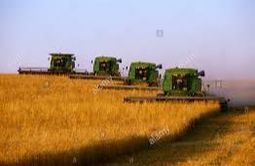
 Proverbs 10:5 He who gathers in summer is a son who acts wisely, but he who sleeps in harvest is a son who acts shamefully.
At first glance this looks like a common proverb concerning agrarian matters – or something along the lines of an admonition about hard work. Let’s begin our look at this proverb in this way. Anyone in agriculture will agree that there are only certain times when a person can plant, grow, cultivate, and harvest crops. The wise farmer takes this into account when planning when to work and when to take his leisure. Summer is the time for a farmer – or in this case his son – to work hard at producing a crop. The words used here are interesting though. One does not gather in the summer. One usually is working hard in the field on things like weed control or maybe some type of irrigation if the growing year is particularly dry. Yet God is saying to us that a person who is gathering in the summer is acting wisely. Here is the lesson for us. Summer is a time when the sun is hot – and it is easy to slack off in our work. But it is a very important time for the farmer. It is when the crop is being watched. It is when the farmer is showing great care on matters such as weed and pest control – and drought. Working at this time is exhausting and hard. But – it is also a time where if you do what you are supposed to do – you will guarantee a harvest. The word “wisely” here is the Hebrew word “sakal” which means to act with prudence, insight, and understanding. For the wise son – he sees hard work – even hot, difficult work. But what he also sees is work that WILL be rewarded if he sticks with it. He may have to remind himself that the hard work now pays off later in the harvest. The second part of the proverb speaks of the shame coming to the son who sleeps during harvest time. The word sleep here indicates a deep sleep – even a sleep with snoring. The harvest is crucial to a farmer. He MUST work hard and gather the harvest because if he does not, there is great risk of having it rot on the vine or stalk. There is a risk of losing it all if he does not work hard to gather it. A son who leaves all the work to his father is a truly shameful son. What we learn from the proverb on the surface level is that there are only certain times when work can be done – and it is a wise person who works hard during those times. The one who decides to be lazy, undisciplined, and slothful in those times is a fool. There is great value in hard work – and that value is only increased when the one working realizes the times when applying yourself to the work is even more important. It would be a disservice to not mention the spiritual parallels that this proverb has with the New Testament call for us to be involved in a spiritual harvest. In Luke 10 and John 4, Jesus reminds His disciples that the fields are white unto harvest spiritually – and that we are to cry out to God that He would send out laborers into His harvest fields. You see, now is the summertime and harvest for men and women to be cultivated for the gospel of Jesus Christ. Now is the acceptable time to go forth weeping, sowing our precious seed – knowing that we will surely come again rejoicing with our sheaves (i.e. those whom we’ve seen God draw and save as a result of our obedience). To be asleep spiritually in this – or any generation is a shameful thing. We should be working with our Lord – sowing the gospel among those who are lost. We should be speaking to them and praying for them that the wicked one would not blind their eyes to the glory of God in the face of Christ. We should be laboring in the Lord’s vineyard knowing that a harvest is coming if we do not faint. Oh to be the wise, prudent sons who see the end from the beginning and labor to rescue those shoes sins will destroy them. Oh to be about the work of sharing Jesus with the lost so that a glorious harvest of righteousness, peace, and men and women who are born again may be gathered on that wonderful day when He comes for His own at the end of the age! Let us therefore work while it is still the day – for the time is coming when no man can work.
0 Comments
 Proverbs 31:16-29 She considers a field and buys it; From her earnings she plants a vineyard. She girds herself with strength And makes her arms strong. She senses that her gain is good; Her lamp does not go out at night. She stretches out her hands to the distaff, And her hands grasp the spindle.
This is the third day that we have looked at qualities of the excellent wife. In the verses we look at today we see that this particular woman that Bathsheba is describing for her son is an industrious woman. Let’s look at the ways that she walks out her industriousness. First we see that she knows real estate – or at least how to “consider” a field in which she plans to plant a vineyard. The word here for “consider” is “zamam” and it means to speak to oneself in a low voice or a quiet one. The concept here is that of deliberating on something. It meant to formulate a plan of action – from beginning to end – and then counsel with yourself to make sure that the plan is a good one. It represents the inner thought process one has as they seek God and even converse within themselves when making a very important decision. For the excellent wife, this decision concerns whether a field is worth purchasing. This includes the thought of whether the field is acceptable for agriculture (in this case to plant a vineyard). Then it moves on to whether she has the money to make the purchase – as well as whether the field is going to be profitable in the endeavor. This lady is not a wall-flower – and neither is she so delicate that she shuns hard work. The second thing we see is that this woman is strong. She has girded her arms with strength. This strength is not from going to the gym all the time – but rather from good, old-fashioned hard work. She is planting a vineyard – working a field, then coming home to grasp the distaff and spindle to make yarn and eventually fabric from which to clothe and bless her family. Whatever the work – it is a good thing to have a wife who knows how to work hard. All this is delightful to her – for she senses that her work is good. She sees that the things she is doing are going to be a blessing to her family. She is earning money from which they can be blessed. She is planting a vineyard from which they can get grapes, grape juice, and wine. She is working hard to turn the lamb and sheep’s wool and cotton into cloth and eventually garments for her, her family, her servants, and even those to whom she sells them later in the passage. She even works in the evening time – not having her lamp go out at night for the purpose of blessing those whom she loves. The excellent wife knows work – knows strength that comes from work – and senses and knows that a good work ethic is a blessing to her and to her family. First there is the direct gain to herself that comes from it. It is a good thing to desire to bless ourselves with our work. There is a self-interest that God has built into each of us that is beneficial to us if we use it to work hard. That self-interest though must go to bless others around us as well. The excellent wife wanted to bless her husband, her children, her servants, and even the men and women in the city as she worked hard to produce things of benefit. That selfless self-interest is what drives a beneficial economy. Things like socialism and communism have NEVER blessed a country and its economy. That is because they do not encourage work ethic. They do not encourage a selfless self-interest to be productive. They encourage instead a growing dependence on government as the driver of all things – and the one that determines who gets what in the end. Everywhere that has been practiced it has encouraged laziness and greater dependence on someone to give us more and more – even if we did not work to get it. The excellent wife knows that her example of hard work will do more than give the family a few more shekels. She will promote that same hard working ethic in her children and in others around her. She will provide goods for others – and will show people that hard work and frugality does bring blessing on those who practice it. In the end, the excellent wife knows that there is more to this than raising grapes . . . she needs to raise children and their children to many generations with the same hard-working mindset. That will last far longer than a bunch of grapes or any other products she labors to produce. Proverbs 31:18-19 She senses that her gain is good; Her lamp does not go out at night. She stretches out her hands to the distaff, And her hands grasp the spindle.
The wise and godly woman here knows the taste of success. When it says that she "senses" her gain is good - God uses the word for tasting something. She works hard, which we see consistently in the previous verses. But more than that, she tastes that what she is doing it good. The things that she sells to the merchants brings her gain - it helps her to earn money. She knows and tastes the success that hard work brings. It is important that people experience the fruit of their labor. I am not one who believes in the economic systems of socialism or communism. Those two systems tout a false idea of community goods that are shared by all. The problem is that such systems kill the benefits of hard work and labor for the individual. In the end, the collective works only as hard as they want to - and since they receive nothing but the same allotment for their labors - they are not motivated to excel at them. The result of tasting the fruit of your labors will be far less labors. When we are allowed to taste that sweet fruit, we are motivated to labor harder, smarter, and wiser for the good of our own benefit - and by that for the good of our family and others around us. This godly woman knows that her gain is good. Here we have another confrontation with the current thoughts on economics. In our world gain is bad! How dare Capitalists relish the fact that they are making a profit? We wrongly call them evil - yet it is their "so-called" profit that allows so many others to enjoy benefits. This godly lady knew in her heart that hard work would yield good things - and would bless her - bless her family - bless others who bought them - and eventually would bless her community. When governments try to "equalize" the playing field - what they mean is that they are going to promise everyone the same outcome - because that is what they say is fair. What is amazing is that they want an equal misery for the masses - but for themselves luxury. Every socialist and communist leader has evidenced the sin nature. They talk a certain egalitarianism among others - but they themselves will have the most. They will have the best of everything. What they deliver to the people is equal poverty and misery. It is self-interest that will drive men and women to their best efforts. They must receive some reward for hard labor - and once they taste this fruit - they will want more. This results in hard work - work ethic as it is called. This woman knows that. Because she tastes that her gain is good - she works hard. She labors into the night as her lamp can testify. She stretches out her hands to make clothing - which is what the terms distaff and spindle indicate. This is because she is working toward her own self-interest. In this case that means her own clothing - the clothing of her family - and clothing that can be sold to others to earn more money for the welfare of her home. This is the kind of work God encourages - and blesses. May He give us wisdom to reject the false philosophies that promote powerful government officials who speak of equality and egalitarianism - but who only deliver a corporate misery to the masses as they live high on the hog themselves. May we instead see the value of hard work, frugality, and wisdom in taking what God gives us and using it for the benefit of our families. The fascinating thing about this kind of life is that as families (which are the basic unit of society in God's economy) multiply with these views, a village, city, region, and even nation is blessed and prosperous as a result. Proverbs 29:21 He who pampers his slave from childhood will in the end find him to be a son.
What is the proper way to treat an employee? As we have done for most of the proverbs dealing with slavery - we look at them through the prism of employee and employer relationships. There is much wisdom for people who are in business and who have employees if they will learn from these proverbs. What can we learn from today's proverb in this respect? The warning here is that an employer should not "pamper" their employees - just as the man in this proverb is told not to pamper his servants. The word "pamper" here means what is means today - to treat someone in a way where they are not disciplined and made to work as they should. There should be expectations on those who work for an employer. When I worked at UPS we were expected to load a certain number of packages per hour. When our work output went below that number - we were going to have a visit from a supervisor or boss - who would make it plain to us that we needed to work harder. This was not employer abuse - it was an employer making sure that we knew that we were expected to produce a certain amount of work for the hourly pay that we received. What is dangerous is when an employee or servant is allowed to be lazy and undisciplined at work without any kind of repercussions. This is pampering a worker. Allowing a worker to do shoddy work without rebuke is pampering them. Allowing a worker to be consistently late to work without rebuke is pampering the worker. Allowing a worker to abuse their fellow workers and supervisors without rebuke and punishment is pampering the worker. These things will hurt a business - or even cause it to fail. There needs to be an understanding of proper workplace behavior and proper workplace expectations. But our society is beginning to implode on itself because it rejects such things. People are getting to the point where they expect a paycheck - but do not think that they should work hard for it. Ours is a world where people feel they are entitled to a living - and a good one at that. The Bible is clear on the fact that, "if a man won't work - don't let him eat." There are also verses that say to let someone get hungry - and they will be willing to work. The business world is rough - and if we are going to have a strong economy people need to know that HARD work is required. We act today as if the words "hard work" are curse words - when in fact they are blessed words. It is good for us to have to work hard. When an employer does not have the proper expectations on his laborers, he will in the end wind up with sons rather than employees. What is meant by this is a certain kind of son - a spoiled one. He will wind up with people who do not want to work - but expect to be well paid and well cared for by their employer. One might call this the "spoiled brat" syndrome. You treat laborers a certain way and before long they will not be workers - but rather spoiled brats who constantly complain about their wages, about their work load, about their work environment - and just about anything else they can think of to complain about. No matter what the employer does, it is not enough. A good employer knows the balance between caring for his employees and calling them to work. He knows that he does need to be considerate and wise with things like workplace conditions and wages. He wants to bless his labor force - but he also wants them to work. There are Scripture passages that call the employer to be gracious and kind to his workers - but here he is warned of the dangers of having a plant filled with spoiled brats - rather than people who know how to work hard so that the business will be profitable. It is a delicate balance - but one that needs a serious swing toward a stronger work ethic in our day.  Proverbs 29:19 A slave will not be instructed by words alone; for though he understand, there will be no response.
Ever wonder how to deal with someone who works for you - but is not really willing to listen all that well to what you tell them? That is what today's proverb addresses. It speaks of the workplace and relationships within it. This especially relates to those who have employees who are either not working - or - are guilty of slipshod work or work that is counterproductive to what the business is seeking to accomplish. There are those who will not be instructed by words alone. Solomon speaks to his sons about this fact. Finding a good employee is often a difficult thing to do. There is an attitude that is being fostered today among those who are in the laboring class that will prove to do great damage to our nation - and in fact it already has. That attitude is one of jealousy and envy toward the business owner - and anyone else who makes more than they do for their work. This leads to an attitude where the worker does not listen to his boss when he instructs him on what to do. This brings about poor work habits - a poor work ethic - and an even poorer attitude toward authority. This will cost us millions in lost profit and the benefit that would come from it in future business expansion and growth. The problem though is not in whether the employee can hear or not. Note from the passage before us that he hears fine - he even understands what has been said to him. The employee has a serious attitude problem though - and refuses to respond to his employer. This lack of respect will result in the worker also not taking the boss seriously. In the end he will do his work with the same attitude with which he listens. So what is an employer to do when these things happen to him? First, the employer (at least the one in this culture) needs to know that such attitudes will always exist. As long as there is a sin nature in man there will be jealousy and envy in the work environment. The wise employer will work to defuse such things so that the work environment is healthier. Decrying the sin in workers will do little good - because sin will always be present. What the employer needs to do is to find ways to defuse the problem. A wise employer seeks to hire people of character. You do background checks and seek information from other employers for this reason. If someone has a bad attitude - don't hire them. They will only bring that bad attitude into your workplace as well. If someone has a history of causing problems in the workplace - they will have that same problem in your situation as well. When you have people with good character - reward them and do all you can to keep them around. A wise employer also will incentivize his workplace. Just as no employer starts a business for the purpose of providing employment for others - no worker gets a job for the joy of working alone. The employer starts his business to make money. He puts in the hours, makes the sacrifice, and labors hard to make a profit for himself and for his family. He grows the business so that it will expand his profitability - so he can provide better for his family. The worker is motivated by the same thing. He does not work for the joy of working alone. He wants to provide for his family - and would like to see that provision become greater over time. When the workman knows that he will be blessed as the company is blessed - he will work hard. The wise employer will not merely instruct with words - he will make a case for his employees that if things become more profitable for the company, things will be more profitable for everyone who works for the company. Words alone won't elicit response - but a share of the bounty of the company over time will. A wise employer will also build a servant's heart in his people. He will do this first by his own example. He will not be so detached from his people that they think he does nothing but play and collect a check. He will spend time with his people - and will let them know that he is a servant to the company as well. They all work together to serve their clientele. That attitude needs to spread to every level of management in the company. It also needs to spread to everyone who works in any position there is. They are not there to be served (which will lead to a bad attitude as they want more and more done FOR them) but to serve, and by so serving to make the company more successful. They are a success when their clients are happy. Ultimately - the wise employer will let his employees know and see that he does not work for himself - he works for God. This will only be for those employers who submit themselves to God and realize that everything they have is from God. Not only will their employees be judged for their performance - even they as an employer will be as well - by God. God warns both employee and employer that they are responsible to Him. They will have to answer for their actions in the end before His throne. When an employee sees that even his boss submits to God - and wrestles with what is right before Him - it will give the employee a sense of confidence and safety knowing that his boss is not a law unto himself. Words alone do not often bring about a response when we speak them. Words and promises are cheap - when they are not backed up with character and action. But when we speak the basic self-interest that exists within all of us - and do so with character, godliness, and a servant's heart toward those we lead - we will see response where previously there has been none. Whether it is in reference to a slave - a paid worker - or even family and friends, people want to know that they are doing something that will matter - and will profit them in the end. The truly wise boss will do this - and will let his employees know that the ultimate goal of any business venture in which he is involved is to serve their clients unto the glory of God. Want to have them listen, hear, understand, and respond? Live like this! He who tills his land will have plenty of food, but he who follows empty pursuits will have poverty in plenty. Proverbs 28:19
Do something worthwhile. Do something that will provide for you and for your family. Work hard at it and work consistently at it. When you do this you will be blessed with plenty for your family. You may not become rich or wealthy in the world's eyes - but you will have provided well for your family. Today's proverb helps us to understand that hard work will be rewarded with plenty of provision. Work ethic is something that is not natural to fallen mankind. It is something that needs to be instilled in children from a young age - and then encouraged as they grow older. Finally, a strong work ethic needs to be lauded in the public eye so that the entire society may be blessed. If we do not do this - the second half of this proverb will begin to infect an individual, a family, and from there, an entire society. God does not want us to follow what He calls, "empty pursuits." The King James Version refers to this as "vanities." What does it mean to follow an empty pursuit. At its core, an empty pursuit describes itself. It is something we do - or something we pursue - that in the end leaves us empty. It is something that is not productive. We give time and effort to it - but in the end it gives nothing back. The end affect of this kind of "empty pursuit" is that we wind up with plenty of poverty. These kind of pursuits take from us, but give nothing back when we've finished them. And from the term used here - we have to "pursue" them. We chase after them - and they have at least the promise of something valuable. The truth though is that when we catch them - we are left with a harvest of air. They give us nothing. I'm about to sound like a really old man to many who read this - so I wanted to offer a fair warning. The video game industry is one that has been slowly planting a crop in our society, that when fully harvested, will provide nothing. I am blown away when I talk with high school and college students who spend hours and at times entire days playing these games. They immerse themselves in these things and when they come up for air - they have nothing except a bountiful basket of poverty to show for it. One of the most dangerous parts of this trend is that it also manifests itself in addictive behavior in other ways. We have an entire generation (and if we are honest with ourselves, at least two now) who are bound up in activities that produce nothing. Between the video games, the time spent on facebook and twitter, as well as the growing trend to get on sites like Netflix and others that offer entire seasons of television shows (which are watched almost all day long) we are becoming a society that is following massive numbers of empty pursuits. What that is yielding is an ever growing populace that shuns hard work - and is completely entertainment-crazed. It is probably an appeal that may fall on deaf ears, but we need to shut down our games, get off the internet, and give ourselves to something called "hard work." If you have not noticed, our nation is coming apart at the seams. We see a pervasive laziness and lack of work ethic that will only bring us plenty of poverty in the end. Our educational institutions are dumbing down their programs and requiring less of their students. If you think I am eggagerating, look at how we rank in the world in things like science, math, and overall productivity. I am not against recreation and times of play - but our play used to be getting out and doing something with others. Now it is dominated by sedentary games that focus on fantasy, violence, or seeing our avatar get with it at some video activity. May God grant a revival - not just of religious activity - but one that also yields a return to a godly work ethic. If we don't do this, we will see the poverty a-plenty that God predicts. If we do return to the blessing of hard work, we will see a blessing that will last far beyond our own lives. It will bless many generations. Here's to hard work! When the grass disappears, the new growth is seen, And the herbs of the mountains are gathered in, The lambs will be for your clothing, And the goats will bring the price of a field, And there will be goats' milk enough for your food, For the food of your household, And sustenance for your maidens. Proverbs 27:25-27
These last three verses of Proverbs 27 are additional commentary on verses 23-24. Thus they deal with keeping watch or being aware of your flocks and herds. These verses are practical commentary on that activity. They are also very helpful to us who desire to build and maintain a godly work ethic in ours or any other society. The first statement here seems like common sense to us. It speaks of the fact of the seasons and how one who tills the ground needs to be aware of them. When the grasss disappears, then the new growth is seen. There will be a time each year when the grass of the field dies in the fall and winter. The farmer is also reminded that during this time the herbs of the mountains need to be gathered into the barns. Again, this may seem like something that does not need to be said. The reason it is said is because, due to the fall, men are undisciplined and lazy. There is only a brief window of time that this can be done - and if not done at this time - the farmer will lose yield. If left undone for a long period of time - he will lose everything to decay, mildew, and decomposition. This has something to say to us. We may not have grass oriented crops like hay, wheat, or barley. We may not have herbs on the mountains that should be gathered and put away for use in the next year. We do have responsibilities that fall to us though. Many of these things need to be done promptly. How many have received a late notice on a bill because we did not pay it "in season." Will this keep us out of heaven? No it won't, but for many it will mean anywhere from 20-50 dollars of lost wealth because we did not act "in season" to get something done that requires diligence in a certain time line. More is said to us in verses 26-27, this time about principles of building and using wealth. Note that we are told that the lambs will be for our clothing. There is a reason to do all that the farmer does. He does not just grow grass. He diversifies into raising livestock. He has lambs that are for clothing. He has goats he milks not just for his own family to drink, but to sell so that he can buy a field with the profit. There is the wisdom of provision for oneself, and for the continued growth of wealth and provision for a family and a growing number of people who are dependent on your growing enterprises. Mentioned here are one's own household as well as one's maidens. Thus a wise man knows that the current level of wealth and provision today needs to be expanded as he expands his family and his business. What does this require? Hard work - and an attention to detail - at least an attention to doing things as they need to be done. What is the wisdom for us today then, in light of these verses? The first wise thing we are to learn is that opportunity for blessings comes and goes. If we are not alert to the seasons of God's working, we will miss the blessing being unaware or lazy. Within the framework of His seasons, we need to act and work hard. The second piece of wisdom offered is this, our work blesses us for today - and for the future. The lifestyle lived from paycheck to paycheck is not a wise way to live. We work in such a way to bless us with today's provision - and to make wise choices for expansion of that provision as God blesses. The wise man lives in the moment and is thankful for what God has given him. There can be a danger of having greed enter our minds so that we make Nabalish choices to be selfish and self-centered. The rich farmer who thought his riches were only for his current enjoyment and pleasure found his soul in hell because he was not living for eternity. This, though, does not justify us in being foolish in expanding what we do for the sake of added family provision. There will be children and grandchildren. There will be expanded business opportunity that will bless additional employees. There will be changes in the market - changes in society - and changes even in the weather and providence. We should be wise enough to learn how to read such things and make adequate provision for them as God guides us. Being godly and wise does not mean throwing our brains away. We can acquire business acumen and wisdom concerning how to be more productive. We can build a business while trusting and relying upon the Lord. That is what is being said here. May God give us wisdom to look to Him day by day - and yet still be wise enough to provide for an expanded future of blessings all as we look to Him for the blessings of today's provision and tomorrow's expansion. Know well the condition of your flocks, and pay attention to your herds; for riches are not forever, nor does a crown endure to all generations. Proverbs 27:23-24
Today as we look at the Ministry of Neglect and how to avoid it, we are going to look at the area of our jobs or businesses. This admontion goes in two directions - one is for the man who works for someone else and needs to know and not neglect his job. The second direction is for the man who own his own business and therefore is the one in charge of all things - and therefore truly does need to know the condtion of his business because if he does not, then no one will. How do you watch the condition of your flocks if you simply work for someone else. The way you do this is by first working hard at your job. You do what your boss desires for you to do - and you do what you can to care for and make your boss successful (as long as it is legal). Those of you who spend too much time listening to the world may think to yourself that you see no reason why you should work so hard for "the man." But this is an ungodly attitude. We are to work hard as unto the Lord according to Scripture - and that means working so as to bless your boss. Your attitude should be selfless - even unto him. Let me share an illustration from my own life in this regard. When I was in school I had a job at UPS. This was a very hard job - and the people for whom I worked were not the most grateful folks in the world. But I appreciated having the job and knew that God had given it to me. As a result, I worked hard and sought to make my bosses successful. I was working for THE Man - the God-man, Jesus Christ. The wonderful thing about this is that you will stick out like a sore thumb in our society. Hard workers who don't constantly complain are in short supply - and believe me - your boss will appreciate having one. And even if he doesn't you can know you will receive reward from The Lord in the end. If you are the boss - and own your own business - you had better know well the condition of your business. The truth is (and all those of you who own businesses know this) that if you don't do this, no one else will. That is why it is important to keep up with what is happening with your customers, your employees, and the financial health of your business. The wise man knows that no matter what place he has in the workforce, he needs to pay attention to his role and do it as unto The Lord. That way he is blessed whether he is the one who receives the profits from the business or he just receives a weekly paycheck. Either way you will be blessed - bless others - and in the end receive a blessing from The Lord in all that you do. He who tends the fig tree will eat its fruit, And he who cares for his master will be honored.
Proverbs 27:18 Today's proverb will instruct us on how to be blessed by your master or your employer. For those who lived as slaves in the day in which this proverb was written, it applied to those who cared for their masters. In our day, when slavery is not practiced as it was in Biblical days, it refers to our relationship with our employers - of for that matter - anyone under whose authority we find oursevles. The picture used here is that of someone who is tending a fig tree. The one who does this task will get to eat from the fruit of the fig tree. There may be an encouragment here to serve over a long period of time, due to the fact that a fig tree is a tree that lives a long time. It is also one that matures rather slowly. A great reminder for us who have been conditioned to think a certain way in our "fast-food" society. We think if we serve a week, or month, or even a year or two, we should be rewarded richly. The use of the fig tree should point us to faithful service over the long haul - not just a few weeks, months, or years. When we serve faithfully over a long period of time - our master or employer will consider us worthy to be honored. This is especially the case with wise employers. The word used for "cares" in the second part of this verse is the Hebrew word "samar." This is a word that means to watch over, keep, preserve, or guard. The idea is not of grudging service. It points to a careful watchfulness. IT refers to those who pay closer attention to what their master needs. It also reminds us that this kind of "care" is not done with a bitter, resentful heart. It is done with a loving watchcare. There is another reason to live this way towards those in authority over us. When we do this, we are leaving the sweet savory aroma of Christ with them. They watch how we love and serve them - and wonder at what it is that motivates us to live as we do. There will most likely be some kind of reward or blessing for that hard work - but there will be something far more valuable than silver, gold, or awards. There will be the questions that we can answer as they ask, "Why do you work harder than anyone else? Why is it that you work this way without complaining? Why do you live this way - with such a different work ethic as well as a desire to honor me as your employer?" These are the questions that they should be asking as we work as unto God in their business. When they do ask, our reply will be first to give glory to God for our work ethic - and then to turn to the gospel whereby our hearts were transformed to be different than the rest of the world. You see, our work ethic - our willingness to work as unto God - our desire to care for our master/employer with love and hard work - are all for the purpose of glorifying God and the gospel of His Son, the Lord Jesus Christ. So . . . let me ask you in closing - through your work ethic have you glorified God today? Has how you worked made a way for the gospel that has changed your heart? You see, we do not work to bless our master for the reward of his favor alone. We work for our Lord and Master first and foremost for the glory of His grace and mercy. The fact that our earthly master notices and rewards us are just perks that come as we live to make much of our Heavenly Master. The sluggard is wiser in his own eyes Than seven men who can give a discreet answer.
Proverbs 26:16 The fourth verse we come to about the sluggard has to do with how his lack of any work ethic eventually affects his reason as well as his ego. He is wise in his own eyes - even though he does not put any work into what he thinks. He is a stranger to hard physical work - but now we learn he is also one to mental work as well. When he looks to someone for wisdom - he looks to himself. This is because of his ego - which is vastly overgrown while having no real reason to be so. He is too lazy to study - yet he thinks he knows far more than those who do. He is wiser than seven men who give a reasoned, well-studied, well-thought out answer. He is a genius in his own estimation - while his supposed genius is honestly ignorance of anything other than what he himself thinks. A legend in his own mind, he mentally gives himself the Nobel prize for everything. Anyone who has ever done good academic work knows that this is no place for the sluggard. Good quality academic work requires painstaking study and hours of sacrifice both thinking and writing (not to mention re-writing). Someone who has expertice in a subject area has put in years of effort in order to have it. The whole idea of a "masters" degree is that someone has "mastered" a subject area. The seminary I attended required that we read a 300-500 page text for each course taken. But, this was not all we were required to do. We also were required to do extensive reading while preparing papers as well as do 1500 pages of outside reading on the subject. Even after all this effort, we were just barely beyond ignorant in the subjects we studied. Most areas of theology had literally thousands of texts written on it -some had hundreds of thousands. The mental sluggard stands against seven men who work hard at honing their minds - and mocks all of them. He will take what little learning he has and string it together so as to think he is a mental heavyweight - when he doesn't even tip the scales of learning at a single pound. He spouts his opinion and then closes his mind to anything other than his highly self-valued moronity. He has no need to listen to others since his own ultimate genius has been voiced. Thus the mental sluggard continues his self-imposed banishment to ignorance in a miniature land of his own making. A wise man knows that he does not yet know as he should know. He is teachable above all things - and is willing to spend more time gathering information than spouting it to others. He who holds his tongue and opens his mind is wise! He may not agree with what is said to him - yet he takes all things in an effort to become wiser still. He does not see himself as wise in his own eyes. He sees God as ultimately wise - and is actively looking for those who will speak according to God's wisdom. If you are a mental sluggard beware of lacking the wisdom of seeing yourself as not yet wise. Few things can dwarf your intellect and your spiritual acumen like being wise in your own eyes. It is proof that your field of spiritual and mental vision is extremely narrow. |
 Proverb a DayEach day, we'll take a look at a verse from the chapter of Proverbs for the day. Our hope is to gain wisdom each day - and from that wisdom - to have understanding to make godly decisions in the throes of everyday life. 
Thank you for visiting our website! Everything on this site is offered for free. If, however, you would like to make a donation to help pay for its continued presence on the internet, you can do that by clicking here. The only thing we ask is that you give first to the local church you attend. Thank you!
Archives
August 2018

|
 RSS Feed