 Proverbs 31:20-24 She extends her hand to the poor, And she stretches out her hands to the needy. She is not afraid of the snow for her household, For all her household are clothed with scarlet. She makes coverings for herself; Her clothing is fine linen and purple. Her husband is known in the gates, When he sits among the elders of the land. She makes linen garments and sells them, And supplies belts to the tradesmen.
The wise and godly woman here knows the taste of success. When it says that she "senses" her gain is good - God uses the word for tasting something. She works hard, which we see consistently in the previous verses. But more than that, she tastes that what she is doing it good. The things that she sells to the merchants brings her gain - it helps her to earn money. She knows and tastes the success that hard work brings. It is important that people experience the fruit of their labor. I am not one who believes in the economic systems of socialism or communism. Those two systems tout a false idea of community goods that are shared by all. The problem is that such systems kill the benefits of hard work and labor for the individual. In the end, the collective works only as hard as they want to - and since they receive nothing but the same allotment for their labors - they are not motivated to excel at them. The result of tasting the fruit of your labors will be far less labors. When we are allowed to taste that sweet fruit, we are motivated to labor harder, smarter, and wiser for the good of our own benefit - and by that for the good of our family and others around us. This godly woman knows that her gain is good. Here we have another confrontation with the current thoughts on economics. In our world gain is bad! How dare Capitalists relish the fact that they are making a profit? We wrongly call them evil - yet it is their "so-called profit that allows so many others to enjoy benefits. This godly lady knew in her heart that hard work would yield good things - and would bless her - bless her family - bless others who bought them - and eventually would bless her community. When governments try to "equalize" the playing field - what they mean is that they are going to promise everyone the same outcome - because that is what they say is fair. What is amazing is that they want an equal misery for the masses - but for themselves luxury. Every socialist and communist leader has evidenced the sin nature. They talk a certain egalitarianism among others - but they themselves will have the most. They will have the best of everything. What they deliver to the people is equal poverty and misery. It is self-interest that will drive men and women to their best efforts. They must receive some reward for hard labor - and once they taste this fruit - they will want more. This results in hard work - work ethic as it is called. This woman knows that. Because she tastes that her gain is good - she works hard. She labors into the night as her lamp can testify. She stretches out her hands to make clothing - which is what the terms distaff and spindle indicate. This is because she is working toward her own self-interest. In this case that means her own clothing - the clothing of her family - and clothing that can be sold to others to earn more money for the welfare of her home. This is the kind of work God encourages - and blesses. May He give us wisdom to reject the false philosophies that promote powerful government officials who speak of equality and egalitarianism - but who only deliver a corporate misery to the masses as they live high on the hog themselves. May we instead see the value of hard work, frugality, and wisdom in taking what God gives us and using it for the benefit of our families. The fascinating thing about this kind of life is that as families (which are the basic unit of society in God's economy) multiply with these views, a village, city, region, and even nation is blessed and prosperous as a result. Verse 21 introduces us to the way that this woman is generous toward her own household. She does this by knowing of their needs. She lives in a climate where snow and cold affect her children and family. Therefore she labors to make sure that they are clothed with scarlet. The imagery here is that of seeing the heaviness of the clothing she provides for her family. She makes sure that they are warm when it is cold outside. The word household even goes a step further. This word also referred to the servants one might have in and out of their home. She is gracious and kind enough to make sure that even they are warm and well taken care of especially when it is cold outside and they need warm clothing. This next verse may seem strange to us - but she also provides for herself. This indicates her frugality, as clothes made by her own hands would cost less than those made by others. But it also indicates that she cares about her appearance. Her clothing is fine linen and purple. These are expensive and fine fabrics she uses and it indicates that her household (who are all clothed in this fashion as well - from verse 21) is dressed as those who are proud of their appearance. This is not because they are clothed in the latest fashions from Gapstein, Eyptian Eagle, or Old Testament Navy. These are clothes their mother produced by the labor of her own hand. There is class here - but not class that arises out of buying things from others. It is the class that arises from quality made at home. In this way she blesses her children, her husband, and even herself. The excellent wife is generous toward her husband as well. We find it said that he is known in the gates and sits among the elders of the land. He is successful and wise. Working with and for him and her family is this godly woman who takes great joy in seeing her husband respected. That takes for granted that she herself respects him - and respect for him grows in concentric circles from what men see in her heart and actions. When a man's household is in order and respectable - men want him to rise to other positions of leadership where he can do the same. The wisdom and discretion they see in his choice of a wife makes them want him to lead them. His wife, in this way, is his crown (Proverbs 12:4). We see this attitude in Ruth - who delighted in seeing her husband Boaz honored in the gates of the land. She was indeed an excellent wife, even though she was a Gentile. Those who saw and experienced her wisdom and servant heart praised her to Boaz - and spoke to her mother-in-law of how she was better to her than seven sons. To bring honor to those around us by the way we carry ourselves is a high task. Too many live only for the honor brought to themselves - and are content with the compliments being spent there. The true servant and generous person is the one who gives of herself with no thought of herself. She is content to receive praise by seeing those she loved praised. Truly that is a generous person. The excellent wife is generous even in business with others. Her skill is such that she is not just able to make garments for her own family - but she makes them for others. The quality of her work creates a demand for what she makes. She sells garments she makes to others who desire them for their beauty and quality. Even the tradesmen want her products. This is quite a compliment because a tradesman is one who offers quality merchandise. They learn their trade and perfect it over years. What we have here is a woman of excellence - who makes garments excellently so that those who know excellent merchandise want it when they see it. She is generous even to them for what she makes . . . sells and sells well. The excellent wife is a generous woman. That generosity moves out in circles blessing first those she loves and calls family. Eventually though, she is so skilled in what she does that the demand for her work is great. Being selfish most often hurts the one who is this way. But being generous will bless the one who is in ways that only someone who is truly giving can understand.
0 Comments
 Proverbs 31:16-29 She considers a field and buys it; From her earnings she plants a vineyard. She girds herself with strength And makes her arms strong. She senses that her gain is good; Her lamp does not go out at night. She stretches out her hands to the distaff, And her hands grasp the spindle.
This is the third day that we have looked at qualities of the excellent wife. In the verses we look at today we see that this particular woman that Bathsheba is describing for her son is an industrious woman. Let’s look at the ways that she walks out her industriousness. First we see that she knows real estate – or at least how to “consider” a field in which she plans to plant a vineyard. The word here for “consider” is “zamam” and it means to speak to oneself in a low voice or a quiet one. The concept here is that of deliberating on something. It meant to formulate a plan of action – from beginning to end – and then counsel with yourself to make sure that the plan is a good one. It represents the inner thought process one has as they seek God and even converse within themselves when making a very important decision. For the excellent wife, this decision concerns whether a field is worth purchasing. This includes the thought of whether the field is acceptable for agriculture (in this case to plant a vineyard). Then it moves on to whether she has the money to make the purchase – as well as whether the field is going to be profitable in the endeavor. This lady is not a wall-flower – and neither is she so delicate that she shuns hard work. The second thing we see is that this woman is strong. She has girded her arms with strength. This strength is not from going to the gym all the time – but rather from good, old-fashioned hard work. She is planting a vineyard – working a field, then coming home to grasp the distaff and spindle to make yarn and eventually fabric from which to clothe and bless her family. Whatever the work – it is a good thing to have a wife who knows how to work hard. All this is delightful to her – for she senses that her work is good. She sees that the things she is doing are going to be a blessing to her family. She is earning money from which they can be blessed. She is planting a vineyard from which they can get grapes, grape juice, and wine. She is working hard to turn the lamb and sheep’s wool and cotton into cloth and eventually garments for her, her family, her servants, and even those to whom she sells them later in the passage. She even works in the evening time – not having her lamp go out at night for the purpose of blessing those whom she loves. The excellent wife knows work – knows strength that comes from work – and senses and knows that a good work ethic is a blessing to her and to her family. First there is the direct gain to herself that comes from it. It is a good thing to desire to bless ourselves with our work. There is a self-interest that God has built into each of us that is beneficial to us if we use it to work hard. That self-interest though must go to bless others around us as well. The excellent wife wanted to bless her husband, her children, her servants, and even the men and women in the city as she worked hard to produce things of benefit. That selfless self-interest is what drives a beneficial economy. Things like socialism and communism have NEVER blessed a country and its economy. That is because they do not encourage work ethic. They do not encourage a selfless self-interest to be productive. They encourage instead a growing dependence on government as the driver of all things – and the one that determines who gets what in the end. Everywhere that has been practiced it has encouraged laziness and greater dependence on someone to give us more and more – even if we did not work to get it. The excellent wife knows that her example of hard work will do more than give the family a few more shekels. She will promote that same hard working ethic in her children and in others around her. She will provide goods for others – and will show people that hard work and frugality does bring blessing on those who practice it. In the end, the excellent wife knows that there is more to this than raising grapes . . . she needs to raise children and their children to many generations with the same hard-working mindset. That will last far longer than a bunch of grapes or any other products she labors to produce. Proverbs 31:18-19 She senses that her gain is good; Her lamp does not go out at night. She stretches out her hands to the distaff, And her hands grasp the spindle.
The wise and godly woman here knows the taste of success. When it says that she "senses" her gain is good - God uses the word for tasting something. She works hard, which we see consistently in the previous verses. But more than that, she tastes that what she is doing it good. The things that she sells to the merchants brings her gain - it helps her to earn money. She knows and tastes the success that hard work brings. It is important that people experience the fruit of their labor. I am not one who believes in the economic systems of socialism or communism. Those two systems tout a false idea of community goods that are shared by all. The problem is that such systems kill the benefits of hard work and labor for the individual. In the end, the collective works only as hard as they want to - and since they receive nothing but the same allotment for their labors - they are not motivated to excel at them. The result of tasting the fruit of your labors will be far less labors. When we are allowed to taste that sweet fruit, we are motivated to labor harder, smarter, and wiser for the good of our own benefit - and by that for the good of our family and others around us. This godly woman knows that her gain is good. Here we have another confrontation with the current thoughts on economics. In our world gain is bad! How dare Capitalists relish the fact that they are making a profit? We wrongly call them evil - yet it is their "so-called" profit that allows so many others to enjoy benefits. This godly lady knew in her heart that hard work would yield good things - and would bless her - bless her family - bless others who bought them - and eventually would bless her community. When governments try to "equalize" the playing field - what they mean is that they are going to promise everyone the same outcome - because that is what they say is fair. What is amazing is that they want an equal misery for the masses - but for themselves luxury. Every socialist and communist leader has evidenced the sin nature. They talk a certain egalitarianism among others - but they themselves will have the most. They will have the best of everything. What they deliver to the people is equal poverty and misery. It is self-interest that will drive men and women to their best efforts. They must receive some reward for hard labor - and once they taste this fruit - they will want more. This results in hard work - work ethic as it is called. This woman knows that. Because she tastes that her gain is good - she works hard. She labors into the night as her lamp can testify. She stretches out her hands to make clothing - which is what the terms distaff and spindle indicate. This is because she is working toward her own self-interest. In this case that means her own clothing - the clothing of her family - and clothing that can be sold to others to earn more money for the welfare of her home. This is the kind of work God encourages - and blesses. May He give us wisdom to reject the false philosophies that promote powerful government officials who speak of equality and egalitarianism - but who only deliver a corporate misery to the masses as they live high on the hog themselves. May we instead see the value of hard work, frugality, and wisdom in taking what God gives us and using it for the benefit of our families. The fascinating thing about this kind of life is that as families (which are the basic unit of society in God's economy) multiply with these views, a village, city, region, and even nation is blessed and prosperous as a result. 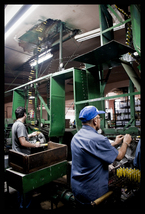 Proverbs 29:19 A slave will not be instructed by words alone; for though he understand, there will be no response.
Ever wonder how to deal with someone who works for you - but is not really willing to listen all that well to what you tell them? That is what today's proverb addresses. It speaks of the workplace and relationships within it. This especially relates to those who have employees who are either not working - or - are guilty of slipshod work or work that is counterproductive to what the business is seeking to accomplish. There are those who will not be instructed by words alone. Solomon speaks to his sons about this fact. Finding a good employee is often a difficult thing to do. There is an attitude that is being fostered today among those who are in the laboring class that will prove to do great damage to our nation - and in fact it already has. That attitude is one of jealousy and envy toward the business owner - and anyone else who makes more than they do for their work. This leads to an attitude where the worker does not listen to his boss when he instructs him on what to do. This brings about poor work habits - a poor work ethic - and an even poorer attitude toward authority. This will cost us millions in lost profit and the benefit that would come from it in future business expansion and growth. The problem though is not in whether the employee can hear or not. Note from the passage before us that he hears fine - he even understands what has been said to him. The employee has a serious attitude problem though - and refuses to respond to his employer. This lack of respect will result in the worker also not taking the boss seriously. In the end he will do his work with the same attitude with which he listens. So what is an employer to do when these things happen to him? First, the employer (at least the one in this culture) needs to know that such attitudes will always exist. As long as there is a sin nature in man there will be jealousy and envy in the work environment. The wise employer will work to defuse such things so that the work environment is healthier. Decrying the sin in workers will do little good - because sin will always be present. What the employer needs to do is to find ways to defuse the problem. A wise employer seeks to hire people of character. You do background checks and seek information from other employers for this reason. If someone has a bad attitude - don't hire them. They will only bring that bad attitude into your workplace as well. If someone has a history of causing problems in the workplace - they will have that same problem in your situation as well. When you have people with good character - reward them and do all you can to keep them around. A wise employer also will incentivize his workplace. Just as no employer starts a business for the purpose of providing employment for others - no worker gets a job for the joy of working alone. The employer starts his business to make money. He puts in the hours, makes the sacrifice, and labors hard to make a profit for himself and for his family. He grows the business so that it will expand his profitability - so he can provide better for his family. The worker is motivated by the same thing. He does not work for the joy of working alone. He wants to provide for his family - and would like to see that provision become greater over time. When the workman knows that he will be blessed as the company is blessed - he will work hard. The wise employer will not merely instruct with words - he will make a case for his employees that if things become more profitable for the company, things will be more profitable for everyone who works for the company. Words alone won't elicit response - but a share of the bounty of the company over time will. A wise employer will also build a servant's heart in his people. He will do this first by his own example. He will not be so detached from his people that they think he does nothing but play and collect a check. He will spend time with his people - and will let them know that he is a servant to the company as well. They all work together to serve their clientele. That attitude needs to spread to every level of management in the company. It also needs to spread to everyone who works in any position there is. They are not there to be served (which will lead to a bad attitude as they want more and more done FOR them) but to serve, and by so serving to make the company more successful. They are a success when their clients are happy. Ultimately - the wise employer will let his employees know and see that he does not work for himself - he works for God. This will only be for those employers who submit themselves to God and realize that everything they have is from God. Not only will their employees be judged for their performance - even they as an employer will be as well - by God. God warns both employee and employer that they are responsible to Him. They will have to answer for their actions in the end before His throne. When an employee sees that even his boss submits to God - and wrestles with what is right before Him - it will give the employee a sense of confidence and safety knowing that his boss is not a law unto himself. Words alone do not often bring about a response when we speak them. Words and promises are cheap - when they are not backed up with character and action. But when we speak the basic self-interest that exists within all of us - and do so with character, godliness, and a servant's heart toward those we lead - we will see response where previously there has been none. Whether it is in reference to a slave - a paid worker - or even family and friends, people want to know that they are doing something that will matter - and will profit them in the end. The truly wise boss will do this - and will let his employees know that the ultimate goal of any business venture in which he is involved is to serve their clients unto the glory of God. Want to have them listen, hear, understand, and respond? Live like this! A faithful man will abound with blessings, but he who makes haste to be rich will not go unpunished. Proverbs 28:20
Get rich quick schemes usually come with some form of sin involved in it. The quick riches come at the expense of others. The lottery is such a scheme - everyone is buying a chance to strike it rich - and only one does. All the others waste their money. The lottery is for those who are bad at mathmatics or who are wanting to get rich so that they can quit working. Either way - their riches come with a burden of sin. That is what today's proverb counsels against. Let's look at the last half of this proverb first. The one who makes "haste" to be rich is going to face punishment in the end. It is never wise to be hasty in decisions or in following schemes that others hatch to make you rich. The corporate world is filled with those who learn to become rich on the backs of other's misfortune. Companies are bought and gutted for the purpose of making the investor rich - and people in the Stock Market are always talking of plans whereby you get rich quickly. The problem is that in every case - someone has to pay a price for your quick wealth. The phrase at the end of this proverb that reads, "will not go unpunished" is a Hebrew phrase that also means, "will not be innocent." The idea is that some form of sin is entered into that leaves them guilty - and eventually will lead to them being punished. Just know that every scheme that makes someone rich hastily - will leave them with an aspect of guilt in the end. God is not against people becoming rich. God promised riches to the patriarchs and to Israel if they would follow Him with all their heart. He also warned them that when they became rich they would have a tendency to forget God and trust in their riches. God is against those who make haste to be rich - and cut corners morally to do so. The Lord wants us to be faithful. Work is NOT EVIL! There are so many who think work is some sort of evil activity that came with the fall of man into sin. Work was something God gave man in the garden before the fall. Therefore to do faithful work puts us in a position for God to bless us. That is why The Lord says here that the faithful man will abound with blessings. Those blessings may include financial riches - but for many it does not. The blessings abound in numerous areas. I am blessed with my work associates - and the friendships that have been built over the years. I am blessed with projects that we do together that bring a very real sense of accomplishment. I am blessed with less temptation because my hands and my mind is busy doing work. I am blessed with being able to see my children learn the value of a strong work ethic because they've watched their father do what he learned from his father. I am blessed with a good night's sleep because I am tired and ready to go to bed each evenring. For some there is a blessing of an expanding business where others can be blessed with employment. And there is the blessing of serving others in your work - and building more and more of a servant's heart. Regardless of whether the blessings are financial or through moral character building - there is such a blessing that is ours when we embrace faithful work. May God help us to once again embrace the value of lifelong faithful work - and shun the get rich quick schemes that always involve some aspect of guilt and sin.  A leader who is a great oppressor lacks understanding, But he who hates unjust gain will prolong his days. Proverbs 28:16
When a leader becomes an extortioner either through bribes or through taxation - he is not a wise leader at all. Today's Proverb has to do with governing officials and how they receive the money with which they work - and by which they are paid. We are presented with a leader who according to Solomon is a "great oppressor." The word "oppressor" is very interesting because it, along with the second half of this proverb, opens up the meaning for us. The Hebrew word is "masaqqot" and it means one who oppresses by extortion. Zhodiates' dictionary defines this word this way, "It indicates a leader abusing his people by forcing them to pay money or contribute goods against their will. This he then uses to enrich himself and those ruling with him. An unwise leader is one who decides that the money of the people he rules is his money. It belongs to the government - and therefore to him and those who serve with him. There are numerous instances where government leaders tax their people - and use that money to enrich themselves. They also use it to enrich those who support them - making sure that anyone who is their friend, supporter (or in our society, voter, campaign contributor) is rewarded richly for their efforts. In the times of kings this group was their nobles and knights - in today's society it is donors and voters. God allowed for His people to be taxed for the purpose of their governmental leaders. He also warned the leaders not to oppress His people by taxing them exorbitantly. Bribes also were expressly forbidden by God. The proverbs are filled with wisdom that promotes hard work and labor so that we can be blessed and become more and more financially blessed by it. Nowhere in Scripture does God encourage government to take confiscatory taxes from the people and redistribute it to those whom the government desires to bless. We are told that any leader who does this kind of thing is lacking understanding. To understand something meant that you had gathered data together and were putting the pieces together so that you got a much bigger picture of things. In the context in which we find this proverb we are speaking of God's wisdom and knowledge being gathered so that we have an understanding of things beyond that of just this earth. It is seeing far enough into the future to make a wise decision and follow wise actions. The financially oppressive leader truly lacks any vision into the future. Government leaders have authority - but it is high level authority to lead and serve people as God would have them go. Their role, like any other is to serve the people - and bless them with how they lead a nation. Unfortunately for some people, their leaders see their authority and misuse it to get rich or to stay in authority by oppressing the people with ridiculous, oppressive taxes. The king and his officials live lavishly off the people's money - and care little for the plight of the average man. They think the tax money of the people is their own to use as they see fit. They then see fit to line their pockets and their supporter's pockets. Often this is done as the rest of the nation suffers under the load of larger and larger taxed amounts. We are told that the one who hates this kind of unjust gain will prolong his days. Two things we see here. First, God calls this kind of ungodly confiscation of the goods of hard working people "unjust." It is not good - and God does not approve of it. Second, we see that this kind of activity in government will not last long. The people will inevitably rise up and call for this to stop! History has shown that leaders who oppress their people with extortionary taxes will eventually be overthrown. Kings and queens have been beheaded - dictators overthrown, and elected officials voted out of office because they were making themselves rich on the people's taxes. Unfortunately for us, we've watched over the years as our leaders on both sides of the aisle have voted themselves to wealth and to pensions that are beyond imagination - while taxing us out of more and more of the money we earn. Over the past four years alone - the Washington D. C. area has grown in wealth and luxury, while the populace is either given the wealth of others through taxation - or taxed barren to provide such things. As I studied this passage - and looked over history - I saw again and again leaders who loved their unjust gain. This was the case whether the government was a monarchy or a representative republic like our own. Men are greedy and want to be rich. They will do so even while falsely championing the "little guy" in their speeches. The one thing that we can be sure of though is that these governments will not long endure. They will fall just like all the others have over the years who have oppressed their people with their taxation and schemes to be rich on the people's dime. When the grass disappears, the new growth is seen, And the herbs of the mountains are gathered in, The lambs will be for your clothing, And the goats will bring the price of a field, And there will be goats' milk enough for your food, For the food of your household, And sustenance for your maidens. Proverbs 27:25-27
These last three verses of Proverbs 27 are additional commentary on verses 23-24. Thus they deal with keeping watch or being aware of your flocks and herds. These verses are practical commentary on that activity. They are also very helpful to us who desire to build and maintain a godly work ethic in ours or any other society. The first statement here seems like common sense to us. It speaks of the fact of the seasons and how one who tills the ground needs to be aware of them. When the grasss disappears, then the new growth is seen. There will be a time each year when the grass of the field dies in the fall and winter. The farmer is also reminded that during this time the herbs of the mountains need to be gathered into the barns. Again, this may seem like something that does not need to be said. The reason it is said is because, due to the fall, men are undisciplined and lazy. There is only a brief window of time that this can be done - and if not done at this time - the farmer will lose yield. If left undone for a long period of time - he will lose everything to decay, mildew, and decomposition. This has something to say to us. We may not have grass oriented crops like hay, wheat, or barley. We may not have herbs on the mountains that should be gathered and put away for use in the next year. We do have responsibilities that fall to us though. Many of these things need to be done promptly. How many have received a late notice on a bill because we did not pay it "in season." Will this keep us out of heaven? No it won't, but for many it will mean anywhere from 20-50 dollars of lost wealth because we did not act "in season" to get something done that requires diligence in a certain time line. More is said to us in verses 26-27, this time about principles of building and using wealth. Note that we are told that the lambs will be for our clothing. There is a reason to do all that the farmer does. He does not just grow grass. He diversifies into raising livestock. He has lambs that are for clothing. He has goats he milks not just for his own family to drink, but to sell so that he can buy a field with the profit. There is the wisdom of provision for oneself, and for the continued growth of wealth and provision for a family and a growing number of people who are dependent on your growing enterprises. Mentioned here are one's own household as well as one's maidens. Thus a wise man knows that the current level of wealth and provision today needs to be expanded as he expands his family and his business. What does this require? Hard work - and an attention to detail - at least an attention to doing things as they need to be done. What is the wisdom for us today then, in light of these verses? The first wise thing we are to learn is that opportunity for blessings comes and goes. If we are not alert to the seasons of God's working, we will miss the blessing being unaware or lazy. Within the framework of His seasons, we need to act and work hard. The second piece of wisdom offered is this, our work blesses us for today - and for the future. The lifestyle lived from paycheck to paycheck is not a wise way to live. We work in such a way to bless us with today's provision - and to make wise choices for expansion of that provision as God blesses. The wise man lives in the moment and is thankful for what God has given him. There can be a danger of having greed enter our minds so that we make Nabalish choices to be selfish and self-centered. The rich farmer who thought his riches were only for his current enjoyment and pleasure found his soul in hell because he was not living for eternity. This, though, does not justify us in being foolish in expanding what we do for the sake of added family provision. There will be children and grandchildren. There will be expanded business opportunity that will bless additional employees. There will be changes in the market - changes in society - and changes even in the weather and providence. We should be wise enough to learn how to read such things and make adequate provision for them as God guides us. Being godly and wise does not mean throwing our brains away. We can acquire business acumen and wisdom concerning how to be more productive. We can build a business while trusting and relying upon the Lord. That is what is being said here. May God give us wisdom to look to Him day by day - and yet still be wise enough to provide for an expanded future of blessings all as we look to Him for the blessings of today's provision and tomorrow's expansion.  Sheol and Abaddon are never satisfied, nor are the eyes of man ever satisfied. Proverbs 27:20
This is what I would call the iPhone 5 proverb. Now, before you think that I've become a sellout to the Apple Corportation, let me explain myself. This proverb has to do with the fact that since the fall of man there has been a condition called "sin" that radically affects man. One of the conditions from which we suffer is the "lust of the eyes." That is the specific thing this proverb addresses. Let me start from the back side of this proverb first. We read that the eyes of man are not satisfied - in fact we see that they are NEVER satisfied. Now let me return to the iPhone 5. This was released within weeks of this post - and I believe was greeted with over 2 million people who wanted it as soon as it was released. The vast majority of these people had bought the iPhone 4S, which was an upgrade from the iPhone 4, which was an improvement over the iPhone 3. I hope you can see what is happening here. We are never satisfied with what our cell phones can do. We want something else - and all it takes for us to stand in line for the next upgrade is for Apple to dangle a few "exciting" changes before our eyes. When they do this, we are soon hooked - and just "have to have" this newest phone. Want to know why? It is because the eyes of our lusts are never satisfied. There will always be another "new and improved" that will command our attention - command our lusts - which will command us to lay down another several hundred dollars so that we have the latest. This is the case until the latest becomes outdated by the new latest, which is bound to come within a year of the last "latest" we had to have. Thus I have explained, I hope to your satisfaction (or possibly conviction) the iPhone 5 proverb. Next year, I'll have t rewrite this post to be the iPhone 6 proverb. By the way, the post will be new and improved, and will contain words that you will just have to read in order to be truly satisfied and fulfilled. How strong is this desire of our eyes? That is where the opening part of our proverb comes into play. We read that Sheol and Abbadon are never satisfied. To the extent that these two are now satisfied - that is the extent to which we won't be either - at least in what we want to see. What are Sheol and Abaddon? They are two Hebrew names for the place of the dead - and the place of ultimate punishment. If we were to truly translate these two words they would be translated, "Death and Hell." One would think that after thousands of years of consuming mankind and all of nature that Death would be satisfied. (Note that these two - Sheol and Abaddon - are personalized. They are not just a state of being - they are almost humanized so that we feel we are dealing with an actual entity.) Death is not satisfied with the billions that he has. He consumes daily those who join his ranks. Wars, disease, violence, and old age swell the ranks of those in his grasp. He consumes kings and paupers and everyone in between. Yesterday he consumed thousands - and yet today his appetite for more is not satiated. Abaddon is also placed before us. Many Hebrew scholars consider this to be the "second death" which is equivilent to hell. Whereas death consumes mankind in general - hell consumes the wicked of mankind with the same voracious appetite. No matter how evil man is in this generation - there will be more in the next. And just as the previous generation was consumed by the judgment and by hell itself - it seems that the next does not heed the warning, rushing headlong into the same eternal destruction. Does hell ever reach a point of being satisfied with his latest meal of the wicked and the ungodly? Contrary to the thought, hell wants even more men and women - never being satisfied with the last batch of fools who ignore God's call to their eternal damnation. It is truly fascinating that God chooses to compare our unsanctified and uncontrolled eyes to both death and hell. So many wind up with a liberal harvest of death and hell because they never learn to submit what their eyes see to the will and Word of God. Lives are consumed, marriages destroyed, fortunes lost, and families disintegrated all because the eyes of men run wild. So what is our response to such a terrifying proverb? It should be to come to God and to cry out for grace to redeem our eyes from their natural course and uncontrolled desires. We need to call out to God for His work of salvation - that we would be saved from the sins of our eyes. We need to also continuously call out to Him for His work of sanctification - that He would purify our eyes and keep us from having them be a starting point for all kinds of wicked thoughts and actions. Here is a promise of God for all of us. Jesus says to come to Him - all of us who are weary and heavy laden and He will give us rest for our souls. We do not have to be lead by our eyes into every sin - and every new iPhone - that comes our way, or is dangled before our eyes. We can take His yoke upon us and learn of Him - of a life satisfied with the only thing that will bring fullness to our souls. We were made for God - and anything but Him will never satisfy us. When we do this - we will no longer be driven by the deathly and hell-bent desire of our eyes, which only want something new to see and to lust after. We will learn, in participating in our Lord's life, that there is rest for our souls. Who knows - if we learn to look at Jesus, realizing that true fullness of life is found in Him - we might even find ourselves manifesting enough self-control and satisfaction to resist the iPhone 6. There is precious treasure and oil in the dwelling of the wise, But a foolish man swallows it up. Proverbs 21:20
The wise man takes what God has given him and uses it wisely. He spends some and uses it for himself, his family, and his friends. He also saves some and puts it away for future use as well as for lean times. Today let's take a look at the acts of the wise man who saves for his future and the foolish man who simply swallows everything God grants to him. We are told that precious treasure and oil are in the house of the wise man. Whether he received these things from the practices of industry and frugality - or whether he received them as an inheritance from godly, thoughtful parents - the wise man knows how to save. Precious treasure is an interesting word as it has two connotations. The first is from how the word is used to refer to things like gold, silver, and other commodities. He saves money, food, and other valuable things so that he will have access to them in the future. Why does he do this? Because a wise man knows that since the world in which we live is fallen and affected by sin - there will be times of shortage and leanness. Throughout all human history there have been both abundance and famine in our world. Joseph knew such things from God Himself when he interpreted the dreams of Pharaoh. He did not waste time in the purcuit of gluttony and over-indulgence. Joseph was a wise man and saved and stored much so that when the famine came he would be ready. His foresight and obedience to God saved all of Egypt, saved his own family, and made Egypt rich beyond their imaginations. There is a second way this word "treasure" is used. The word can also mean "temple treasures." These spoke of treasures that were given so as to build up and maintain the worship of God in the temple. In the dwelling of the wise there is provision stored up not only for physical welfare - but for the spiritual welfare of the home as well. There is little more foolish among mankind than to think this world is all that there is. They live ignorant of God and ignorant of their responsiblity to Him. The wise man stores up for both the physical and the spiritual. There is in his house a physical inheritance - but also a spiritual one as well. He lives godly and rears his children to love and honor God. He makes sure that the Word dwells richly within their hearts - desiring for them to walk with God and know Him intimately. Not only is there treasure within this house of the wise, there is also oil. When speaking of oil - this could speak of the olive oil that was used in almost every aspect of a Jewish family. They needed this for food preparation - for spiritual worship for annointing oil - and for medical reasons like softening wounds and helping them heal. There was also the idea of savings - because some oils were very expensive. Mary offered a container of very expensive oil as she annointed Jesus with it in preparation for His crucifixion and burial. This alabaster vial was worth a whole year's wages. When one of the prpohetic students of Elisha died, his widow was in debt and in danger of haring her chidlren sold into debt slavery. Elisha answered this by having her collect numerous vials which later were supernaturally filled with oil. This she sold, paid her debt, and even had plenty to kep her and her children alive and well. This kind of oil would signify that a family was preparint for their future - for the needs of their children and grandchildren. On a spiritual note - oil was a picture of the Holy Spirit - so one could even consider this the way that a family cherished the work of the Spirit in their lives and encouraged it in themselves and in their children. The foolish ones don't save any of these things - either physical or spiritual. Theirs is a consumer mentality. They swallow up whatever they receive with no thought of the future. They live by their lusts and desires - and therefore do not even consider anyone except themselves. The end of such a life is that they are broke, both physically and spiritually. The saddest example of this is the prodigal son. He took a large inheritance and wasted it on the party life. In the end he was broke. His so-called friends abandoned him and left him to fend for himself. This was only after he abandoned any kind of spiritual preparation for the future by rejecting his father and his father's God. He was left with nothing - except the grace his faher would give him in the end. If we are wise we will realize we live in a fallen world. This will necessitate preparation for our future - both physically and spiritually. We will face famines physically that will require that lay up wise stores for that day in order for us and for our families to survive. But there is also a need to prepare spiritually - for there will also be a day when we will face being ready for the judgment of God. Oh to be wise and understanding so that our preparations will have our homes and lives filled with treasures both temporal and eternal so that we will be well provided for when the day comes that we need them. May God, in His grace, work in and deliver us from a life lived for self and for the moment. May we be ready for anything - famine in life - and fatal spiritual thinking in eternity. He who loves pleasure will become a poor man; He who loves wine and oil will not become rich. Proverbs 21:17
Much can be discerned about a society and people by those it deems as their heros. Ours is a society in very serious decline - and that can be fairly easily discerned when one examines our heros. Those considered our heros today are people in the entertainment industry and sports stars. Singers and actors are paraded before us day after day even though they offer little of nothing to us outside of entertainment. Their broken lives are the source of the headlines of our tabliods. Each a little more lurid than the last one - we are watch them self-destruct with baited breath. When the next star arises (especially a child star) we can predict the sad trail that will be followed. We will find that if they are rich intially, their riches will vanish - or be consumed by the wreckage of failed marriages, arrests, and stints in drug rehabilitation facilities. The plot of such lives is as predictable as the plot of a soap opera - and usually as ungodly as well. Take for example Mike Tyson, of boxing fame. Tyson squandered a $350 million to $400 million dollar fortune. What did he do to lose all this money? He dropped half a million dollars on a 420-horsepower Bentley Continental SC with lamb’s wool rugs, a phone and a removable glass roof. He definitely loved expensive cars because he spent over $4.5 million dollars on cars alone. Throw in a $2 million dollar bathtub and $140,000 for two Bengal tigers and you can see why Tyson’s fortune went down the drain and he filed for bankruptcy in 2003. We are warned that the ones who love pleasure will become poor. Often for these people hard work, frugality, and restraint are not in their vocabulary. They are far more interested in parties, pleasure, and indugence of their lusts. They are living for the so-called "good time" that they can have here and now - with little or no thought of what lies beyond the end of the week. Their lives are spent on pleasure, the pursuit of things, and often on sexual immorality. Wine and oil are mentioned in this warning. Those who love these two things, it warns, will not become rich. Wine and oil were the usual things to be had at expensive banquets. This was not ordinary wine, but expensive wine. When I go to higher class restaurants that serve wine, I am shocked that some wines cost over 200 to 300 dollars per bottle. There are wines out there priced at over $1000 to $5000 each bottle. Someone wanting to impress their friends with an expensive banquet would purchase the very best wines to be served there. The oils could also be very extravagant in their price range. Mary was criticized for using an ointment to annoint Jesus that cost almost an entire year's worth of wages. For the rich, such ointments were given to their guests as a sign of their wealth. Their parties and banquets would be filled with the expensive smell of high priced oils. Doing this would cost a fortune - and would assure that the one doing it would not be wealthy for long. The prodigal son had great wealth when he left his father's house. But he soon squandered it with rich, loose living. His parties were probably the stuff of legend to those who attended. The only problem was that when the money ran out - and the parties became austere in their appearance - all his so-called friends left. The one who loves the pleasures of his flesh will not become rich. His riches and wealth will be swallowed whole by his wicked appetite. This is why we are counselled not to love such things. We are instead told that the wise man is the one who leaves an inheritance to his grandchildren. He is the one who invests so as to reap long-term benefits and rewards. Ultimately he knows that he will take nothing with him when he dies. Thus the wisest man invests in the kingdom of God and the advance of the gospel - sending true riches ahead of him to the one place where moth and rust do not destroy and where no thief can break in or steal. The wise man knows to invest in heavenly things that glorify God is the safest investment of all. Therefore he lives with God's glory as his goal in all things - financial, physical, and spiritual. This will be a rich man, now, as well as for all eternity. |
 Proverb a DayEach day, we'll take a look at a verse from the chapter of Proverbs for the day. Our hope is to gain wisdom each day - and from that wisdom - to have understanding to make godly decisions in the throes of everyday life. 
Thank you for visiting our website! Everything on this site is offered for free. If, however, you would like to make a donation to help pay for its continued presence on the internet, you can do that by clicking here. The only thing we ask is that you give first to the local church you attend. Thank you!
Archives
August 2018

|
 RSS Feed